Madagascar Almond
Scientific Name: Terminalia mantaly
Plant Family: Combretaceae
Native Region: Madagascar; widely cultivated in tropical and subtropical regions of Africa, Asia, and the Americas.
Brief Description
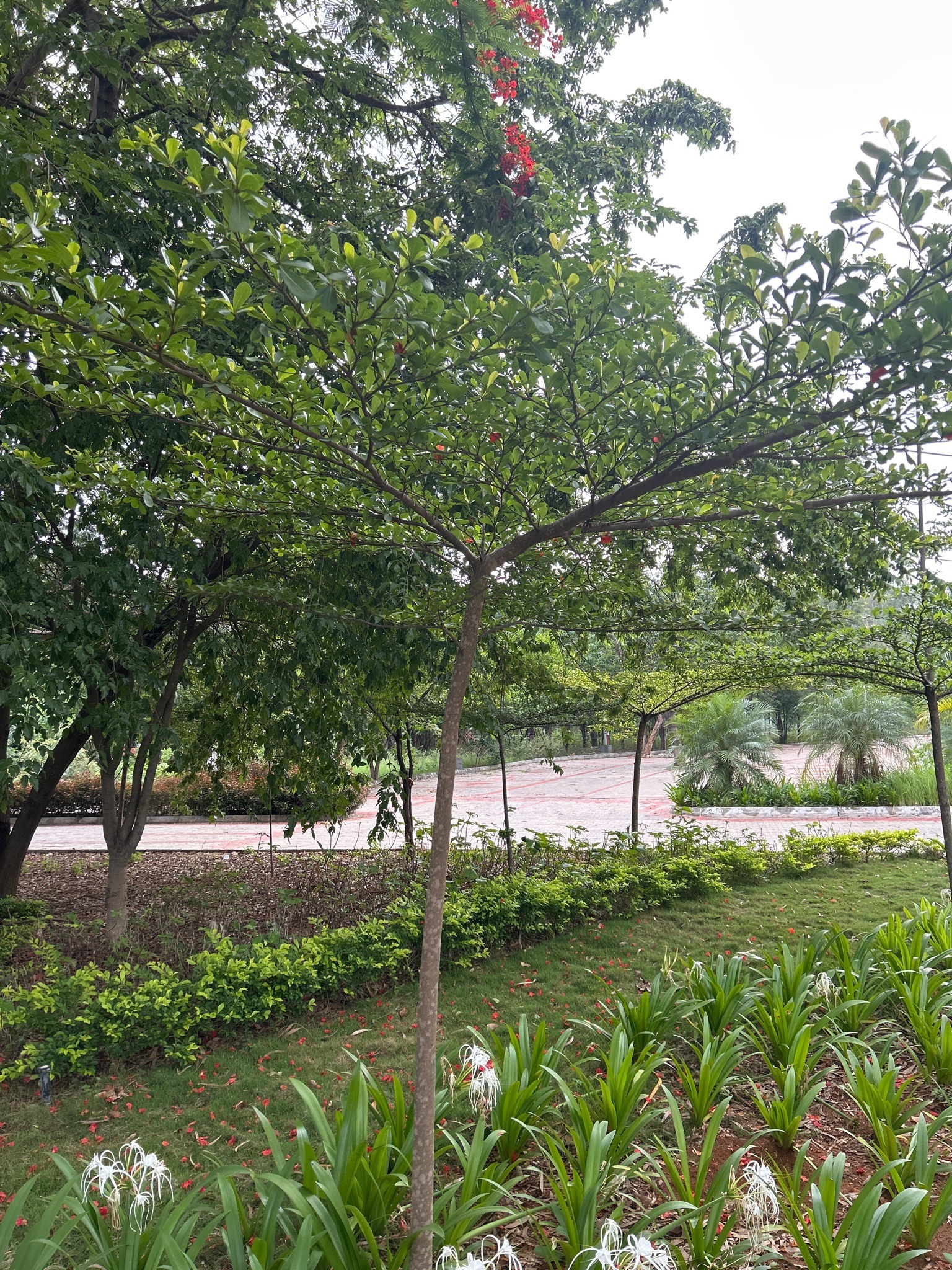
A medium-sized deciduous tree notable for its unique layered, horizontal branching pattern and small, bright green obovate leaves that grow in clusters at the branch tips.
Care Instructions
Thrives in full sun and well-drained soil. Maintain consistent moisture during the establishment phase, then water moderately. Apply a balanced fertilizer once or twice a year during the growing season.
Medicinal Value
We do not currently provide medicinal value for plant identifications.
Sunlight
Full sun preferred (6+ hours per day) for optimal canopy development, though it can tolerate light partial shade.
Watering
Moderate watering; drought-tolerant once established but prefers consistent moisture. Over-watering in poorly drained soil can cause root rot.
Soil
Adaptable to various soil types including sandy, loamy, or clay soils, provided they are well-draining. Prefers a neutral to slightly acidic pH.
Hardiness Zone
USDA zones 10-11; very sensitive to frost and cold temperatures below 40°F (4°C).
Growth Habit
Perennial deciduous tree; pagoda-like growth form with horizontal tiers. Reaches 10-20 meters (30-60 feet) in height with a spread of 5-10 meters.
Bloom Season
Generally flowers in spring and summer. Small, inconspicuous greenish-white flowers arranged in spikes, followed by small green fruits.
Toxicity
Not widely considered toxic to humans or common pets, though ingestion of any non-food plant material should be avoided as it may cause mild digestive upset.
Propagation
Primarily by seeds, which should be soaked before planting. Can also be propagated via semi-hardwood cuttings.
Common Pests & Issues
Leaf spot fungi and aphids can occasionally occur. The most common cultural issue is chlorosis if grown in highly alkaline soils.
Similar Species
Terminalia catappa (Tropical Almond), which has much larger leaves and a broader spread. Bucida buceras (Black Olive) also shares a similar layered growth habit.
Interesting Facts
The tree is often called a 'Pagoda tree' because its layered branches resemble the tiers of a traditional Asian pagoda. It is highly valued in urban landscaping for providing deep shade while maintaining a neat, architectural silhouette.
Created At: 2026-06-09T01:14:29.216222