Witch Hazel
Scientific Name: Hamamelis virginiana
Plant Family: Hamamelidaceae
Native Region: Eastern North America
Brief Description
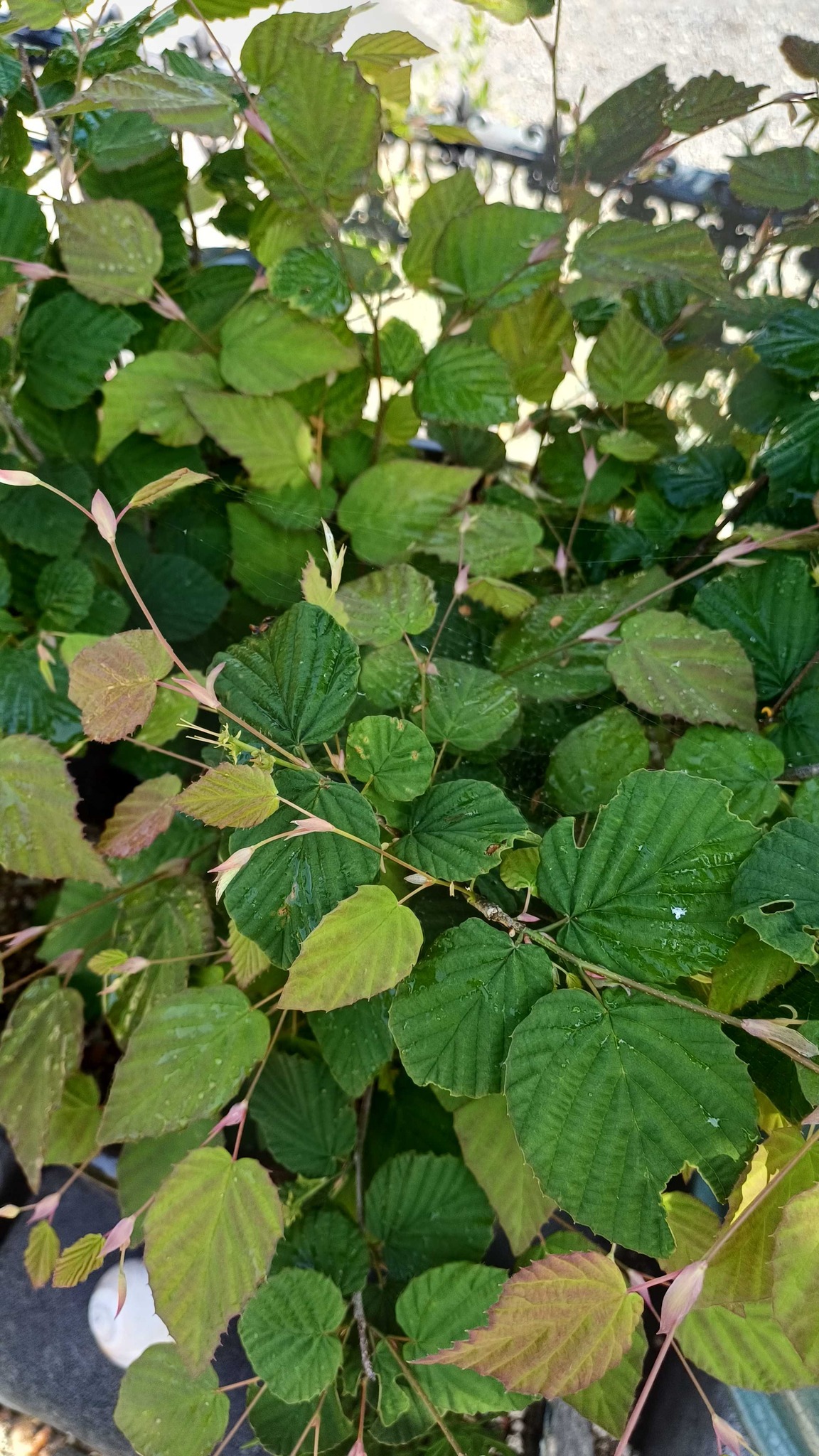
A deciduous shrub or small tree with oval, wavy-edged green leaves that turn vibrant yellow in the fall. It is unique for blooming in late autumn or winter with spider-like yellow flowers.
Care Instructions
Plant in a location with full sun to partial shade. Keep soil consistently moist but well-drained. Mulch to retain moisture and prune in late winter to maintain shape if needed.
Medicinal Value
We do not currently provide medicinal value for plant identifications.
Sunlight
Full sun to partial shade (4-6 hours of sunlight daily). More sun leads to better fall color and flowering.
Watering
Medium watering needs; prefers moist soil. Water regularly during dry spells. Not highly drought tolerant.
Soil
Well-drained, loamy, acidic soil (pH 5.5 to 6.5) enriched with organic matter.
Hardiness Zone
3 to 8
Growth Habit
Deciduous perennial shrub; grows in a rounded, multi-stemmed form reaching 15–20 feet tall and wide.
Bloom Season
October to December; produces fragrant, ribbon-like yellow flowers after its leaves have fallen or as they turn yellow.
Toxicity
Generally non-toxic to humans and pets in small amounts, but can cause digestive upset if large quantities are ingested.
Propagation
Typically via softwood cuttings in summer or by seeds, which require a complex two-year stratification process to germinate.
Common Pests & Issues
Relatively pest-free but can occasionally be affected by leaf gall aphids, powdery mildew, or leaf spot. Deer sometimes browse the foliage.
Similar Species
Corylopsis (Winter Hazel) blooms in early spring and has different flower shapes. Hamamelis vernalis (Vernal Witch Hazel) blooms in late winter/early spring with smaller flowers.
Interesting Facts
Witch hazel was used by Native Americans for medicinal purposes and for 'water witching,' where branches were used as dowsing rods to find underground water.
Created At: 2026-05-22T14:49:18.725004