Petunia
Scientific Name: Petunia × atkinsiana
Plant Family: Solanaceae
Native Region: South America; now cultivated globally
Brief Description
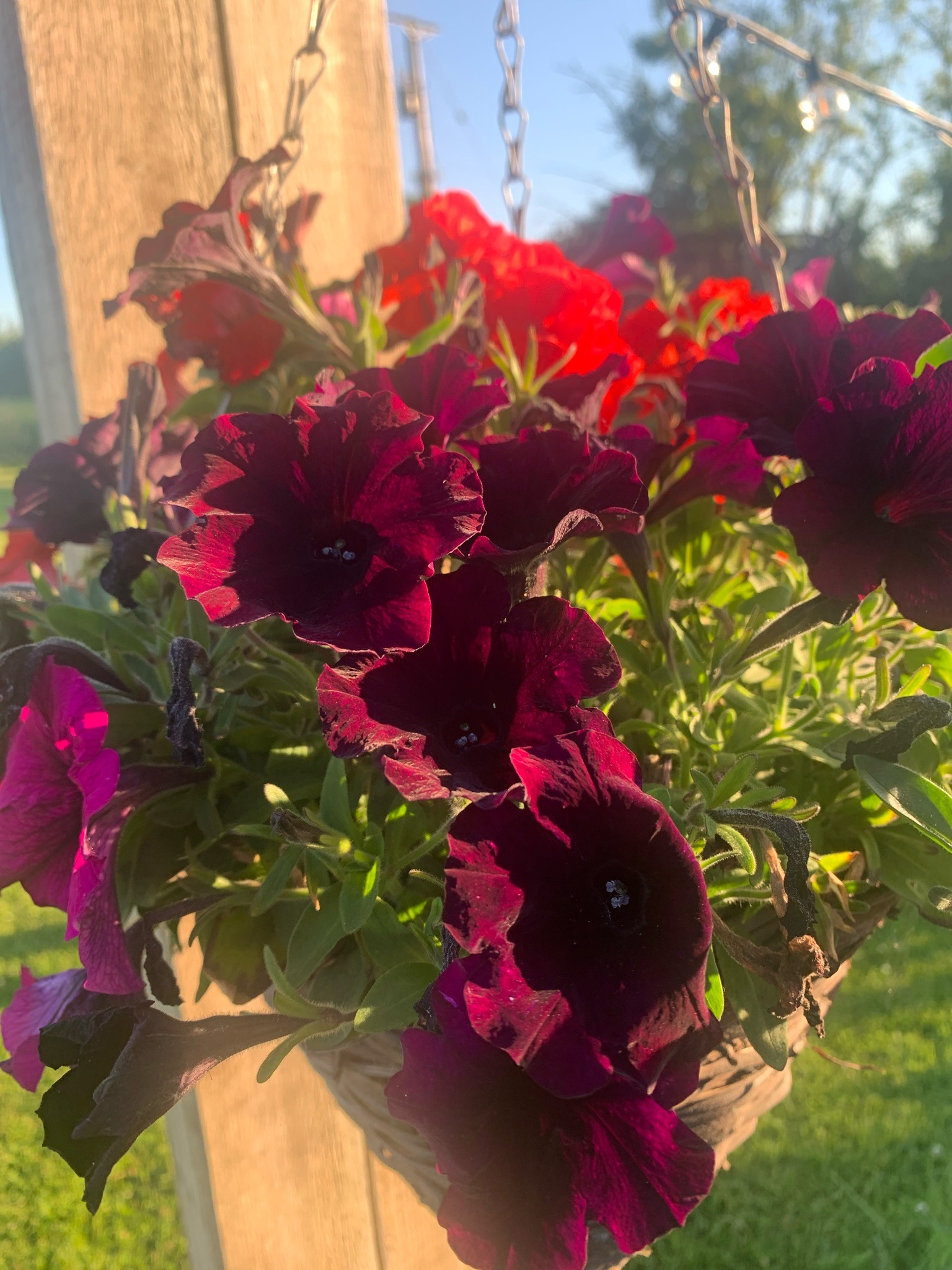
Popular annual flowers known for their funnel-shaped blossoms and hairy, somewhat sticky foliage. These particular specimens show deep burgundy/purple velvety petals.
Care Instructions
Provide full sun and well-drained soil; water regularly but avoid waterlogging; feed weekly with a balanced water-soluble fertilizer; deadhead spent blooms to encourage new growth.
Medicinal Value
We do not currently provide medicinal value for plant identifications.
Sunlight
Full sun, at least 6-8 hours per day
Watering
Consistent moisture; water when the top inch of soil feels dry. Drought tolerant once established but blooms better with regular water.
Soil
Well-draining, fertile soil with a slightly acidic pH (6.0 to 6.5).
Hardiness Zone
Usually grown as annuals; perennial in USDA zones 9-11.
Growth Habit
Mounding or trailing annual; typically 6-18 inches tall and wide depending on variety.
Bloom Season
Spring until the first frost in autumn. Flowers are trumpet-shaped and available in almost every color.
Toxicity
Generally considered non-toxic to humans, dogs, and cats, though ingestion of large amounts should be avoided.
Propagation
Easily propagated through softwood cuttings or seeds started indoors 10-12 weeks before the last frost.
Common Pests & Issues
Aphids, budworms, and fungal diseases like root rot or powdery mildew if overwatered or crowded.
Similar Species
Calibrachoa (Million Bells) which have significantly smaller flowers and more heat tolerance.
Interesting Facts
The word Petunia comes from a Brazilian Tupi-Guarani word 'petun' which means 'a tobacco that doesn't smoke' because they are related to tobacco plants.
Created At: 2026-06-23T19:10:32.699200