
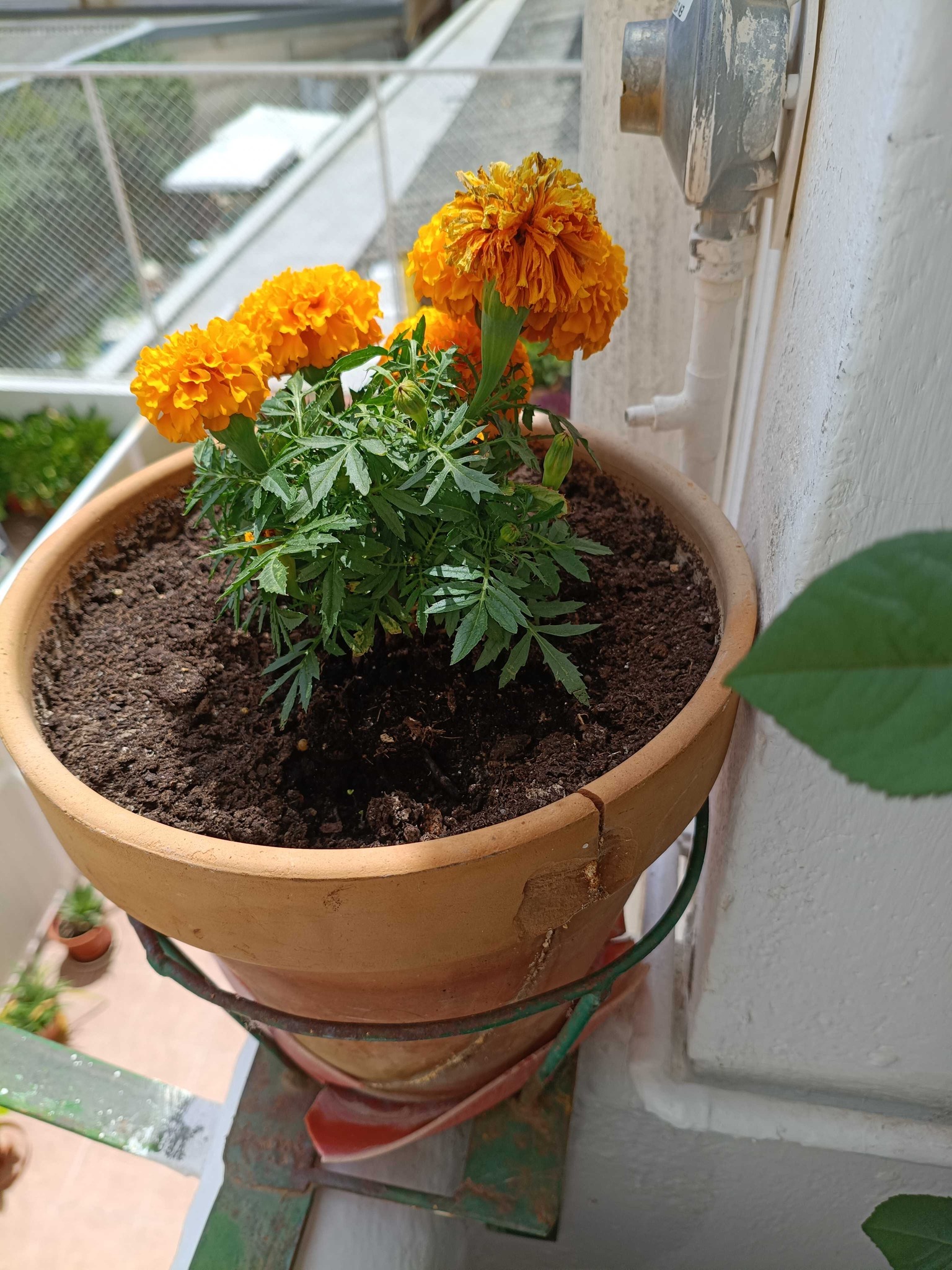
African Marigold (also known as Mexican Marigold)
Tagetes erecta
A bushy annual with deeply divided, fern-like green leaves and large, globular, pom-pom-like flower heads in shades of yellow and orange.
- Light
- Full sun (6+ hours per day); will become leggy and produce fewer flowers in shade.
- Water
- Moderate watering. Water whenever the top 1-2 inches of soil feel dry. Drought tolerant once established but blooms best with consistent moisture.
- Growth
- Bushy upright annual; typically grows 1 to 3 feet tall and 1 foot wide depending on the cultivar.
Care instructions
Thrives in full sun and well-draining soil. Water regularly when the top inch of soil is dry, avoid overhead watering to prevent fungal issues. Deadhead spent blooms to encourage continuous flowering.
Growing details
Sunlight
Full sun (6+ hours per day); will become leggy and produce fewer flowers in shade.
Watering
Moderate watering. Water whenever the top 1-2 inches of soil feel dry. Drought tolerant once established but blooms best with consistent moisture.
Soil
Well-draining, moderately fertile soil; pH 6.0 to 7.0.
Hardiness zone
USDA Zones 2-11 (grown as a frost-sensitive summer annual).
Growth habit
Bushy upright annual; typically grows 1 to 3 feet tall and 1 foot wide depending on the cultivar.
Bloom season
Early summer until the first frost. Large, double-crested flowers in orange, yellow, or gold.
Propagation
Easily grown from seeds sown indoors 4-6 weeks before last frost or directly in the garden.
Common pests & issues
Prone to spider mites, aphids, and powdery mildew. Botrytis blight can occur in humid conditions or with overhead watering.
Similar species
French Marigold (Tagetes patula), which is smaller, more compact, and often has bicolor (burgundy and orange) petals.