
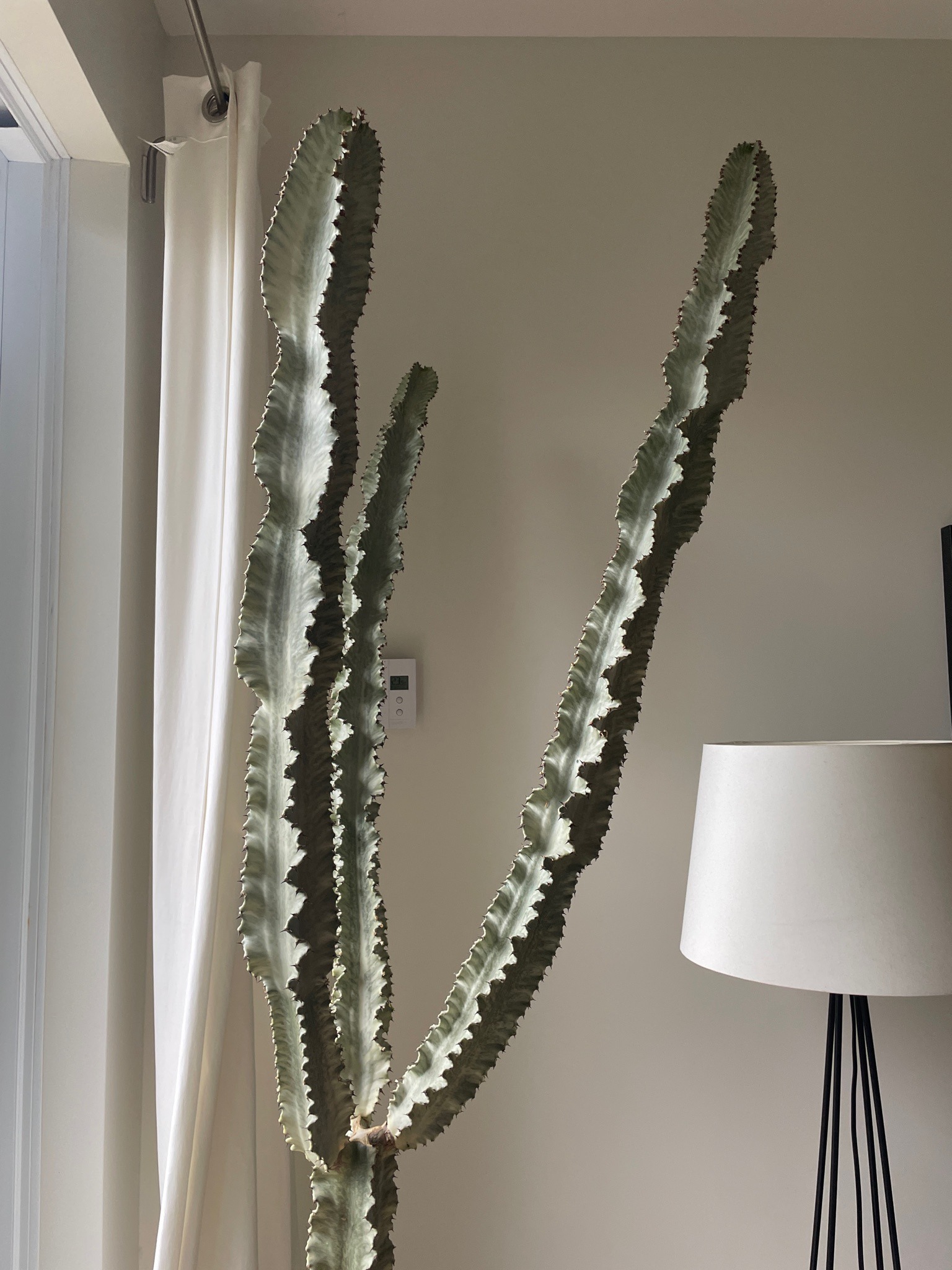
African Milk Tree 'Amak'
Euphorbia amak
A tall, cactus-like succulent tree with upright, winged branches characterized by wavy, dark edges and pairs of sharp thorns. The variegated 'Amak' variety features a pale green to creamy-yellow marbled appearance.
- Light
- Full sun to bright indirect light; thrives with at least 6 hours of direct sunlight per day.
- Water
- Low water requirements. Water deeply then allow the soil to dry out completely. Reduce watering significantly in winter or when dormant.
- Growth
- Perennial succulent tree. Can grow to 15-20 feet outdoors, but manageable at 4-8 feet indoors. It has an upright, candelabra-like growth habit.
Care instructions
Provide bright, direct light for several hours daily. Use a well-draining cactus mix and water only when the soil has completely dried out. Apply a balanced liquid fertilizer at half-strength during the spring and summer growing season.
Growing details
Sunlight
Full sun to bright indirect light; thrives with at least 6 hours of direct sunlight per day.
Watering
Low water requirements. Water deeply then allow the soil to dry out completely. Reduce watering significantly in winter or when dormant.
Soil
Well-draining succulent or cactus potting mix, preferably with added perlite or pumice for drainage. Prefers a neutral to slightly acidic pH.
Hardiness zone
USDA zones 9b-11; not cold tolerant and must be kept above 50°F (10°C).
Growth habit
Perennial succulent tree. Can grow to 15-20 feet outdoors, but manageable at 4-8 feet indoors. It has an upright, candelabra-like growth habit.
Bloom season
Rarely blooms indoors; outdoors it may produce small yellow-green cyathia (flowers) during the summer.
Propagation
Propagated via stem cuttings. Cuttings should be allowed to callus over for several days before being placed in dry soil.
Common pests & issues
Susceptible to root rot if overwatered. Mealybugs and scale can occasionally occur. Brown spots may indicate fungal issues from high humidity.
Similar species
Euphorbia ingens (Candelabra Tree) which usually lacks the distinct variegation, and Euphorbia trigona, which has more prominent leaves and a more columnar, ribbed structure.