
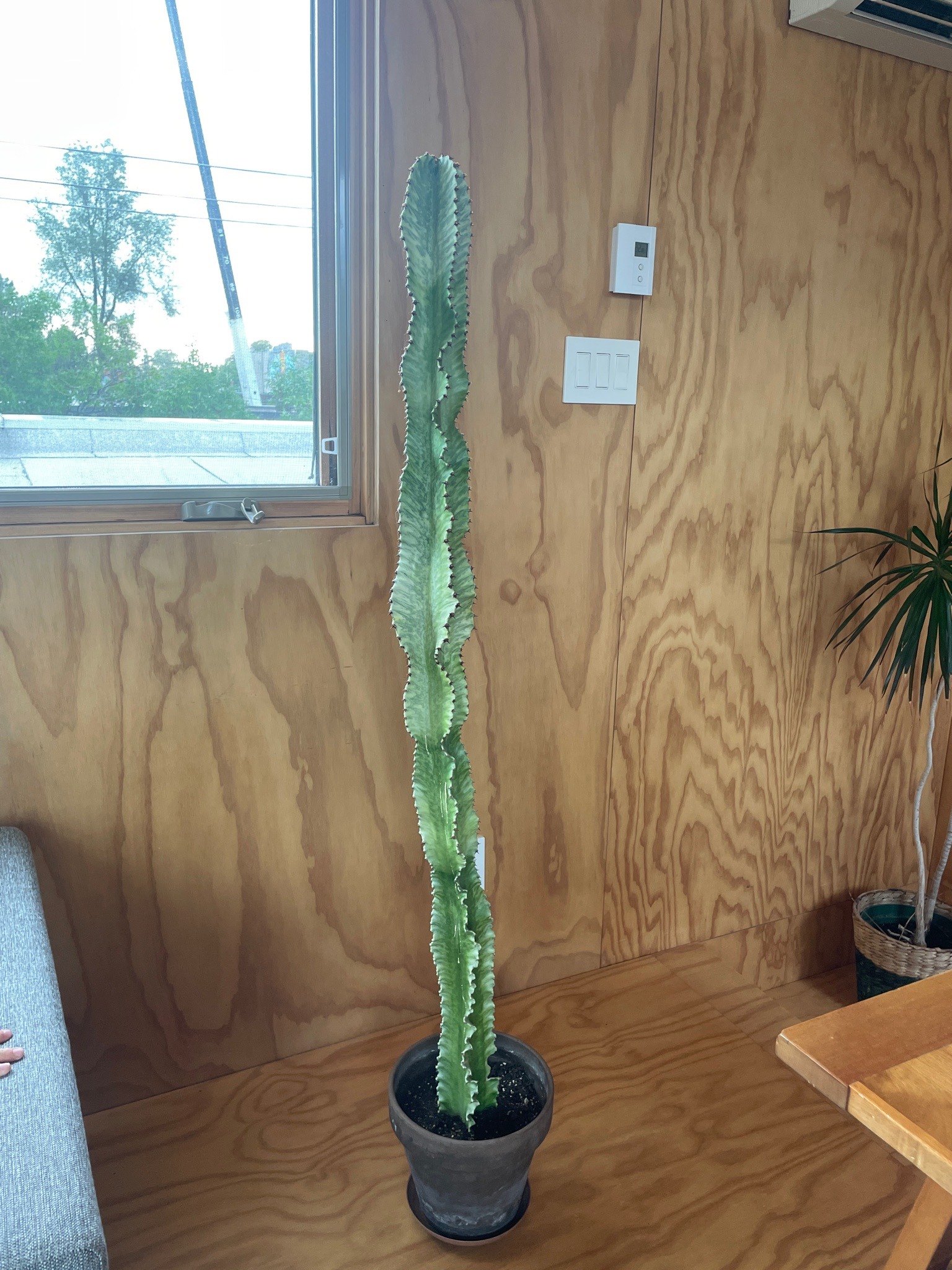
African Milk Tree (Variegated)
Euphorbia trigona 'Variegata'
A tall, columnar succulent with three-angled stems, featuring distinct mottled green and creamy white variegation with small thorns and tiny leaves along the ridges.
- Light
- Bright indirect light to full sun; requires at least 4 to 6 hours of bright light daily to maintain variegation.
- Water
- Low frequency; allow the soil to dry out entirely between waterings. Drought tolerant, but susceptible to root rot if overwatered.
- Growth
- Perennial succulent shrub with an upright, columnar growth habit; can reach 6 to 8 feet indoors and over 15 feet in its native environment.
Care instructions
Provide bright indirect light or full sun. Water only when the soil is completely dry. Use a well-draining cactus mix and fertilize sparingly during the growing season.
Growing details
Sunlight
Bright indirect light to full sun; requires at least 4 to 6 hours of bright light daily to maintain variegation.
Watering
Low frequency; allow the soil to dry out entirely between waterings. Drought tolerant, but susceptible to root rot if overwatered.
Soil
Well-draining sandy or gritty soil mix, such as a cactus and succulent potting mix; pH 6.1 to 7.8.
Hardiness zone
USDA zones 9b to 11; not frost tolerant, usually grown as a houseplant in cooler climates.
Growth habit
Perennial succulent shrub with an upright, columnar growth habit; can reach 6 to 8 feet indoors and over 15 feet in its native environment.
Bloom season
Rarely flowers when grown indoors; in habitat, typically produces small inconspicuous yellow-green cyathia.
Propagation
Easily propagated by stem cuttings; allow the cut end to callus over for several days before planting in dry soil.
Common pests & issues
Mealybugs, spider mites, and root rot from overwatering. Yellowing stems may indicate too much moisture or insufficient light.
Similar species
Euphorbia lactea (Dragon Bones), which has wider, more flattened ridges, and various Cereus cactus species which lack the milky sap characteristic of Euphorbias.