
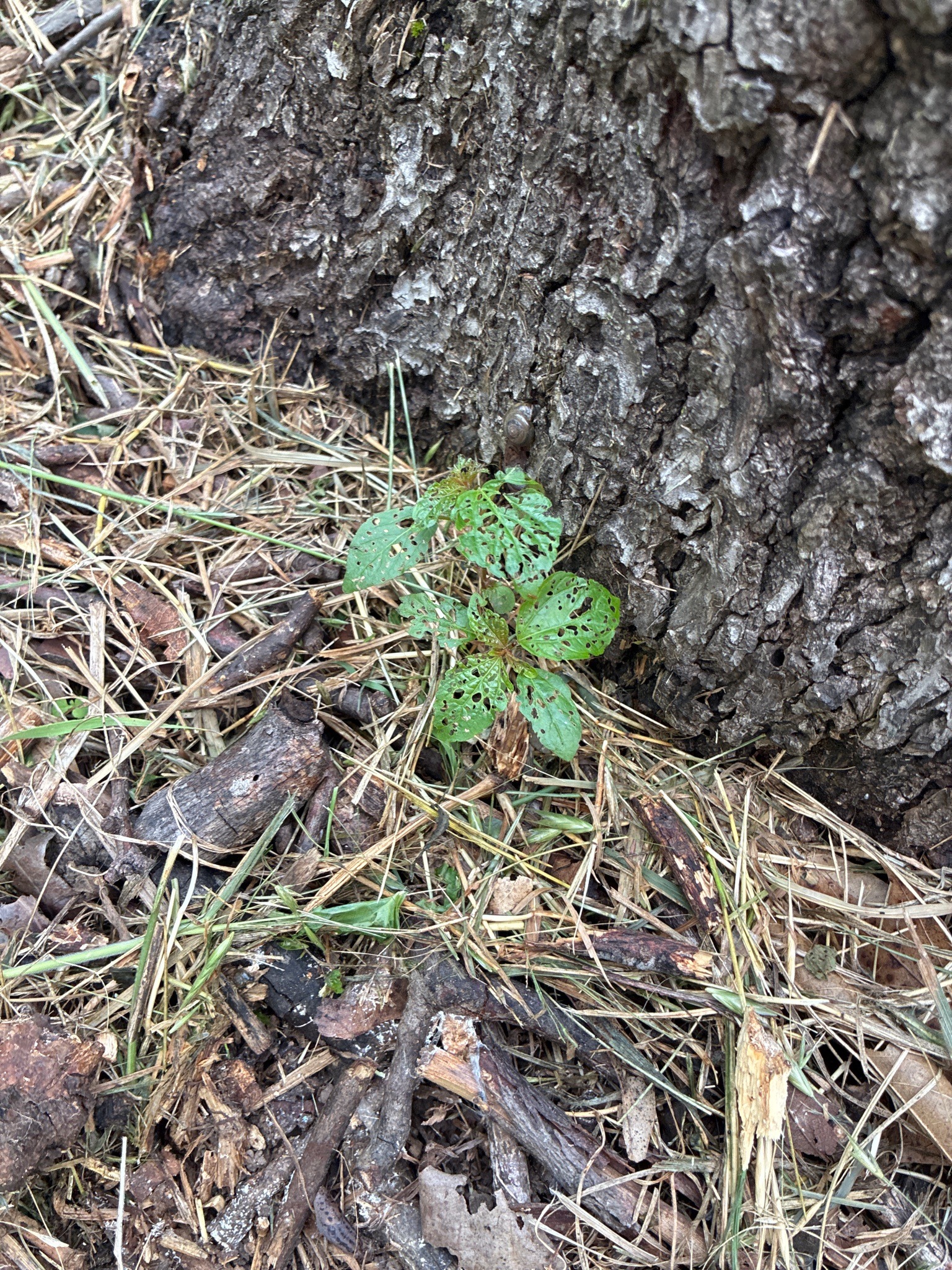
American Burnweed
Erechtites hieraciifolius
An annual weed with alternate, toothed leaves. This sapling shows significant insect damage (shot holes). As it grows, it produces a tall, unbranched stem ending in clusters of greenish flower heads that do not fully open.
- Light
- Full sun to partial shade (4-8 hours of light per day).
- Water
- Prefers consistently moist soil but can tolerate some drought once established. It thrives in humid conditions.
- Growth
- Annual herb with an erect growth habit, typically reaching 3 to 10 feet in height. Fast-growing and often colonizes disturbed ground.
Care instructions
Generally considered a weed, it requires little to no care. It thrives in disturbed soils, recently burned areas, and garden edges. It prefers moist soil and full to partial sun.
Growing details
Sunlight
Full sun to partial shade (4-8 hours of light per day).
Watering
Prefers consistently moist soil but can tolerate some drought once established. It thrives in humid conditions.
Soil
Well-draining, nutrient-rich soil is preferred, but it is highly adaptable to various soil types (clay, loam, sand) with a pH range of 5.0 to 7.5.
Hardiness zone
Common in USDA zones 4 through 11 as a summer annual.
Growth habit
Annual herb with an erect growth habit, typically reaching 3 to 10 feet in height. Fast-growing and often colonizes disturbed ground.
Bloom season
Summer to early Fall; produces small, cylindrical greenish-white disk flowers that develop into white, fluffy seed heads (pappus).
Propagation
Primarily by wind-dispersed seeds. Seeds germinate best when they are on the surface of disturbed or burned soil.
Common pests & issues
Prone to heavy leaf damage from insects (as seen in the photo) including beetles and caterpillars, and occasionally powdery milkdew.
Similar species
Can be confused with Pilewort (Erechtites spp.) or early stages of some Lettuces (Lactuca spp.). It is distinguished by its distinct unpleasant smell when crushed and the unique 'closed' appearance of its flowers.