
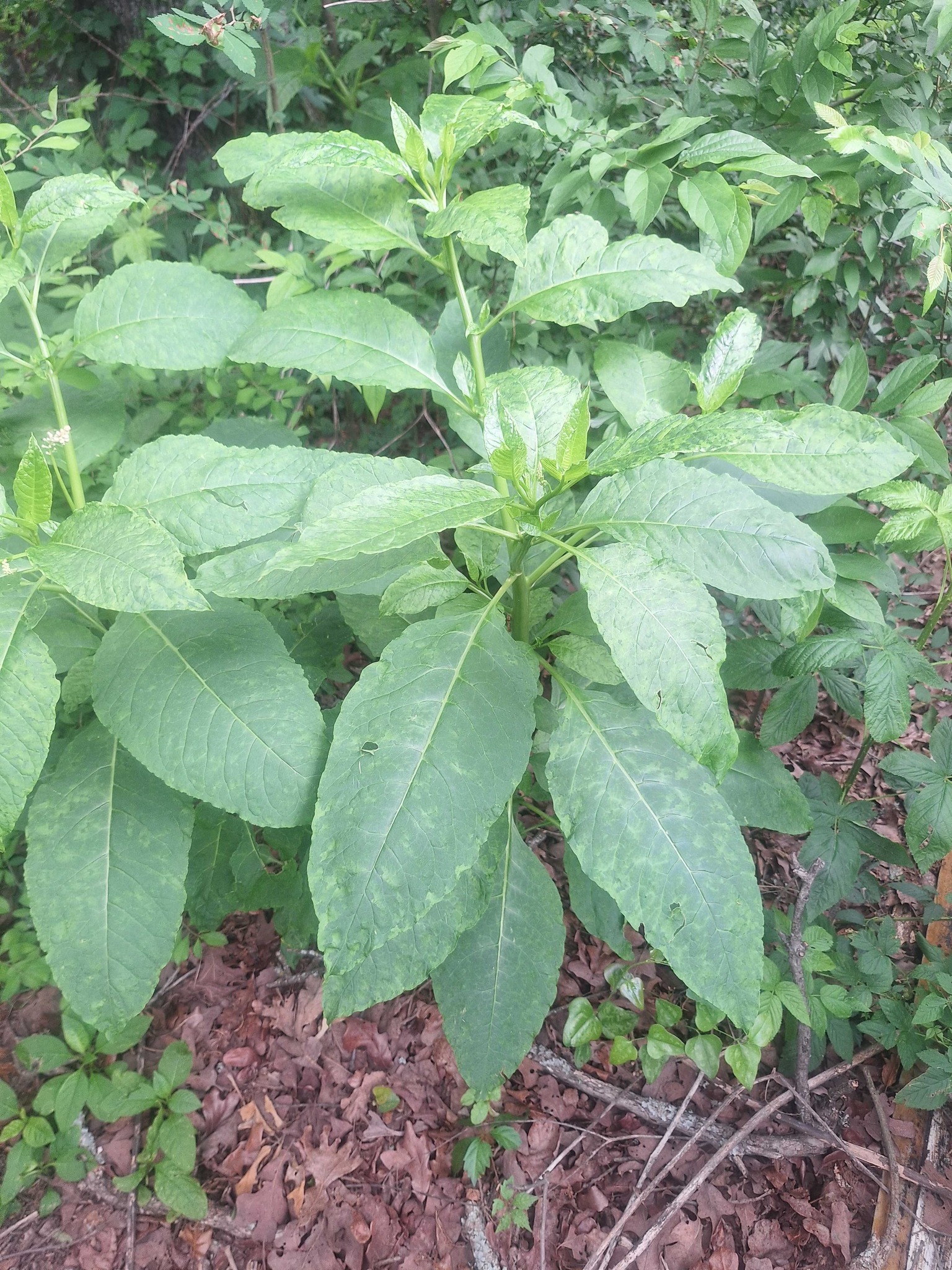
American Pokeweed
Phytolacca americana
A large, herbaceous perennial known for its magenta-red stems, large lanceolate leaves, and drooping clusters of dark purple berries. It can grow quite tall, taking on a shrub-like appearance.
- Light
- Full sun to partial shade (4-8 hours per day)
- Water
- Moderate watering needs; prefers moist soil but is remarkably drought-tolerant once mature. Signs of underwatering include wilting leaves.
- Growth
- Perennial herb; upright and branching growth. Can reach 6-10 feet in height with a similar spread. Very fast growth rate.
Care instructions
Generally treated as a weed, but if cultivated, it requires full sun to partial shade and moist, well-draining soil. It is very hardy and requires little to no maintenance once established.
Growing details
Sunlight
Full sun to partial shade (4-8 hours per day)
Watering
Moderate watering needs; prefers moist soil but is remarkably drought-tolerant once mature. Signs of underwatering include wilting leaves.
Soil
Moist, loamy, fertile soil; pH 5.5 to 7.0 (slightly acidic to neutral).
Hardiness zone
4 - 11
Growth habit
Perennial herb; upright and branching growth. Can reach 6-10 feet in height with a similar spread. Very fast growth rate.
Bloom season
Early summer to fall. Produces small white or greenish-pink flowers on long racemes, followed by purple-black berries.
Propagation
Primarily by seed, which are often spread by birds. Can also be grown from root cuttings.
Common pests & issues
Leaf spot and mosaic virus. Resistant to most pests due to its toxicity, though some moth larvae feed on it.
Similar species
Look-alike for Elderberry (Sambucus), but Pokeweed leaves are simple (not compound) and the stems are herbaceous and reddish, whereas Elderberry stems are woody.