
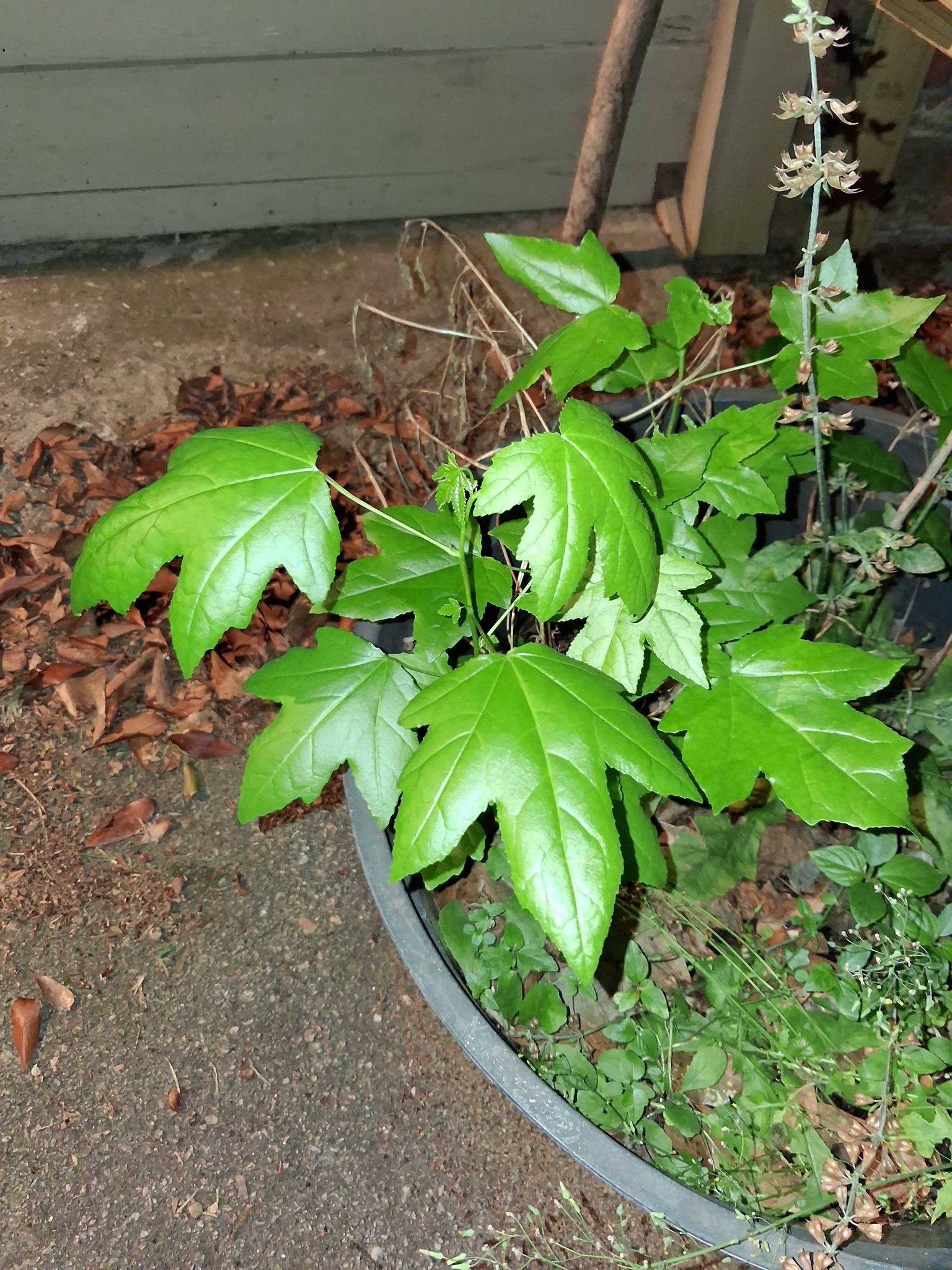
American Sweetgum
Liquidambar styraciflua
A large deciduous tree known for its star-shaped leaves with five to seven pointed lobes and its distinctive spiky, spherical fruit often called gum balls.
- Light
- Full sun (at least 6 hours of direct sunlight per day); doesn't tolerate deep shade well.
- Water
- Moderate to high. Needs regular watering during dry spells. Prefers moist, well-drained bottomlands but can adapt to drier sites once established.
- Growth
- Periduous tree with a pyramidal shape when young, becoming more rounded or oval with age. Can reach 60-100 feet in height.
Care instructions
Requires plenty of space for its large root system and canopy. Prefers full sun and moist, slightly acidic soil. Maintain consistent moisture when young; established trees are moderately drought-tolerant.
Growing details
Sunlight
Full sun (at least 6 hours of direct sunlight per day); doesn't tolerate deep shade well.
Watering
Moderate to high. Needs regular watering during dry spells. Prefers moist, well-drained bottomlands but can adapt to drier sites once established.
Soil
Rich, moist, slightly acidic soil (pH 6.0 to 7.0). Tolerates clay and silt well but struggles in highly alkaline soils.
Hardiness zone
5 through 9
Growth habit
Periduous tree with a pyramidal shape when young, becoming more rounded or oval with age. Can reach 60-100 feet in height.
Bloom season
Early spring; produces inconspicuous green flowers followed by spiny, woody seed balls in autumn.
Propagation
Most commonly grown from seeds, which require stratification. Can also be propagated via hardwood cuttings in winter.
Common pests & issues
Generally hardy but can suffer from scale insects, fall webworms, and iron chlorosis in high-pH alkaline soils.
Similar species
Maple trees (Acer species), but Maples have opposite leaves while Sweetgum has alternate leaves; Sweetgum also has unique corky ridges on its bark.