
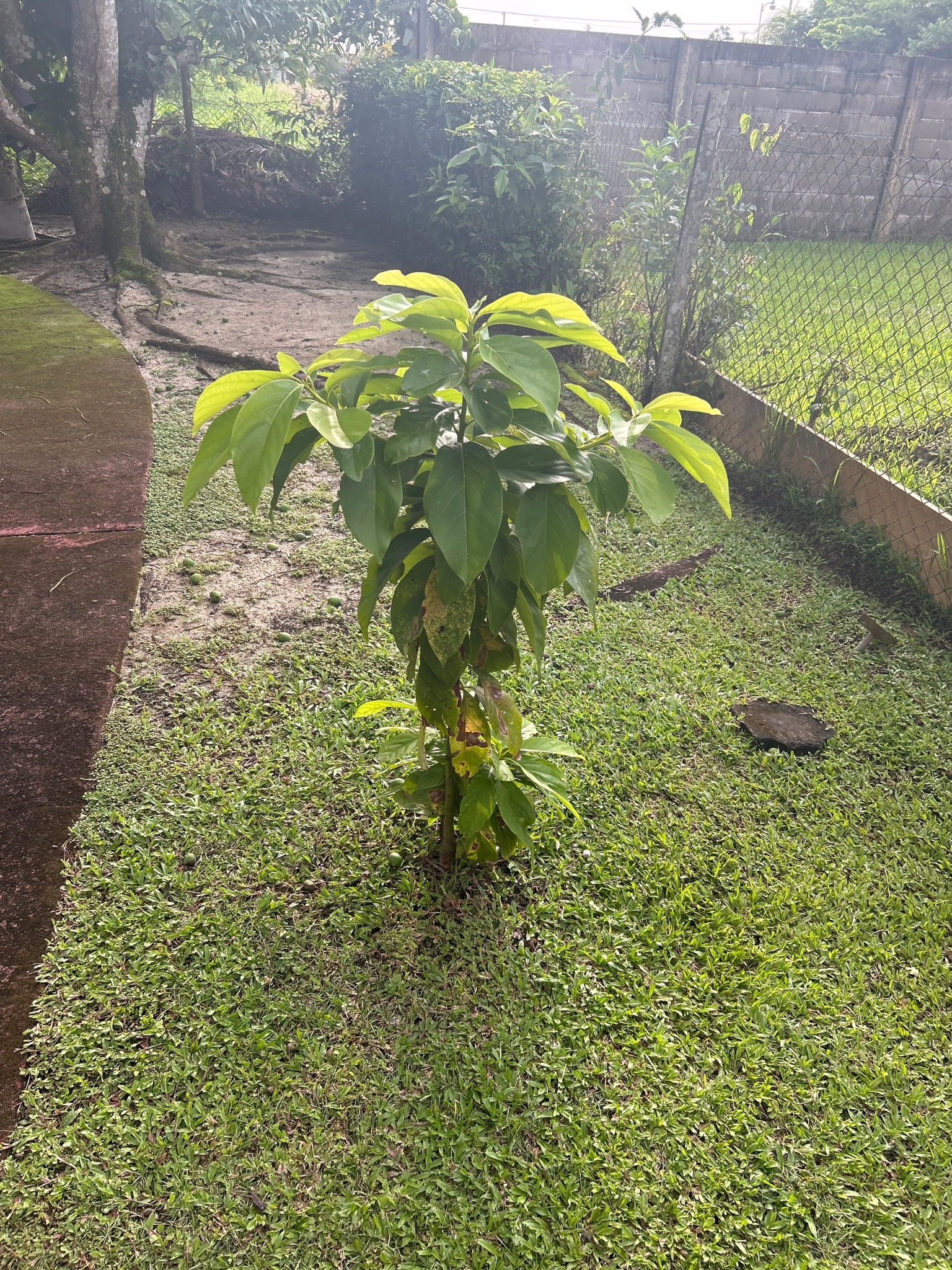
Avocado
Persea americana
A medium to large evergreen tree with large, elliptical dark green leaves and pear-shaped or spherical fleshy fruit containing a single large seed.
- Light
- Full sun, at least 6-8 hours of direct light per day. Younger saplings may need light protection from intense afternoon sun to prevent bark scald.
- Water
- Water deeply and regularly, allowing the soil to dry out slightly between waterings. Highly sensitive to over-watering and root rot; drooping leaves can indicate both over and under-watering.
- Growth
- Perennial evergreen tree. In the wild, it can reach 60-80 feet, but cultivated varieties are often pruned to 15-30 feet. Growth rate is moderate to fast.
Care instructions
Requires full sun and extremely well-draining soil. Young trees need consistent moisture but cannot tolerate wet feet. Feed with a balanced fertilizer or one high in nitrogen and potassium during the growing season.
Growing details
Sunlight
Full sun, at least 6-8 hours of direct light per day. Younger saplings may need light protection from intense afternoon sun to prevent bark scald.
Watering
Water deeply and regularly, allowing the soil to dry out slightly between waterings. Highly sensitive to over-watering and root rot; drooping leaves can indicate both over and under-watering.
Soil
Well-draining, loose soil is critical. Prefers loamy or sandy textures with a slightly acidic to neutral pH (6.0 to 7.0).
Hardiness zone
USDA zones 9-11; very sensitive to frost, with many varieties suffering damage at temperatures below 32°F (0°C).
Growth habit
Perennial evergreen tree. In the wild, it can reach 60-80 feet, but cultivated varieties are often pruned to 15-30 feet. Growth rate is moderate to fast.
Bloom season
Spring to early summer. Produces clusters of small, greenish-yellow flowers. It has a unique 'A' and 'B' flowering type system for cross-pollination.
Propagation
Most commonly propagated by grafting for fruit production. Can be grown from seed (the pit), though seed-grown trees may take 7-15 years to fruit and may not resemble the parent.
Common pests & issues
Root rot (Phytophthora) is the most common killer. Susceptible to avocado thrips, mites, and fungal diseases like anthracnose or leaf spot.
Similar species
Phoebe and Ocotea species can look similar but do not produce the characteristic large edible fruit. Mango trees have longer, narrower leaves.