
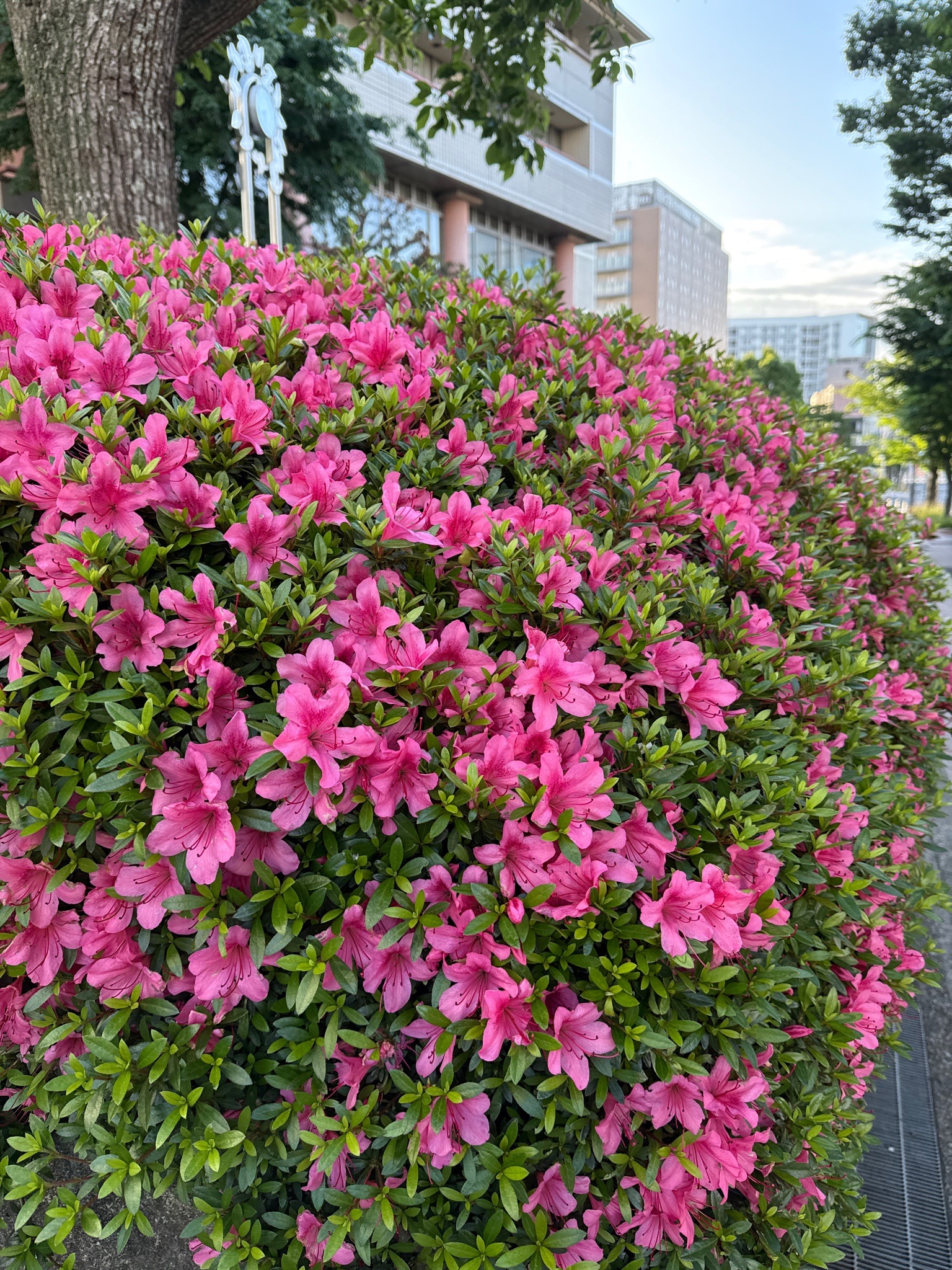
Azalea
Rhododendron simsii
Azaleas are flowering shrubs known for their dense clusters of vibrantly colored, funnel-shaped blooms and small, dark green, elliptical leaves. This specific variety appears to be an evergreen or semi-evergreen hybrid with bright pink blossoms.
- Light
- Partial shade to mottled sunlight (4-6 hours per day). Direct afternoon sun can scorch the leaves and fade the flowers.
- Water
- Consistent watering is key; maintain evenly moist soil. They are not drought-tolerant. Wilting or yellowing leaves can indicate underwatering or root rot from overwatering.
- Growth
- Perennial evergreen or deciduous shrub; typically grows 2 to 6 feet tall and wide depending on the cultivar. Slow to moderate growth rate.
Care instructions
Azaleas thrive in acidic, well-draining soil with plenty of organic matter. They prefer dappled sunlight or partial shade and consistent moisture without waterlogging. Mulching helps retain moisture and keep roots cool. Prune immediately after flowering.
Growing details
Sunlight
Partial shade to mottled sunlight (4-6 hours per day). Direct afternoon sun can scorch the leaves and fade the flowers.
Watering
Consistent watering is key; maintain evenly moist soil. They are not drought-tolerant. Wilting or yellowing leaves can indicate underwatering or root rot from overwatering.
Soil
Well-draining, acidic soil (pH 4.5 to 6.0). Rich in organic matter such as peat moss or compost.
Hardiness zone
Zones 6 through 10, depending on the specific hybrid and variety.
Growth habit
Perennial evergreen or deciduous shrub; typically grows 2 to 6 feet tall and wide depending on the cultivar. Slow to moderate growth rate.
Bloom season
Primary bloom occurs in spring (March to May), with some repeat-blooming varieties flowering again in late summer/fall.
Propagation
Most commonly propagated via semi-hardwood cuttings in summer or by layering. Can be grown from seed, but hybrids will not come true to the parent plant.
Common pests & issues
Susceptible to azalea lace bugs, spider mites, and root rot. Fungal issues like powdery mildew and petal blight are also common in humid conditions.
Similar species
Other Rhododendron species. Azaleas typically have five stamens per flower and smaller leaves, while other Rhododendrons usually have ten or more stamens.