Daisy Fleabane
Scientific Name: Erigeron annuus
Plant Family: Asteraceae
Native Region: North America; naturalized in Europe and Asia
Brief Description
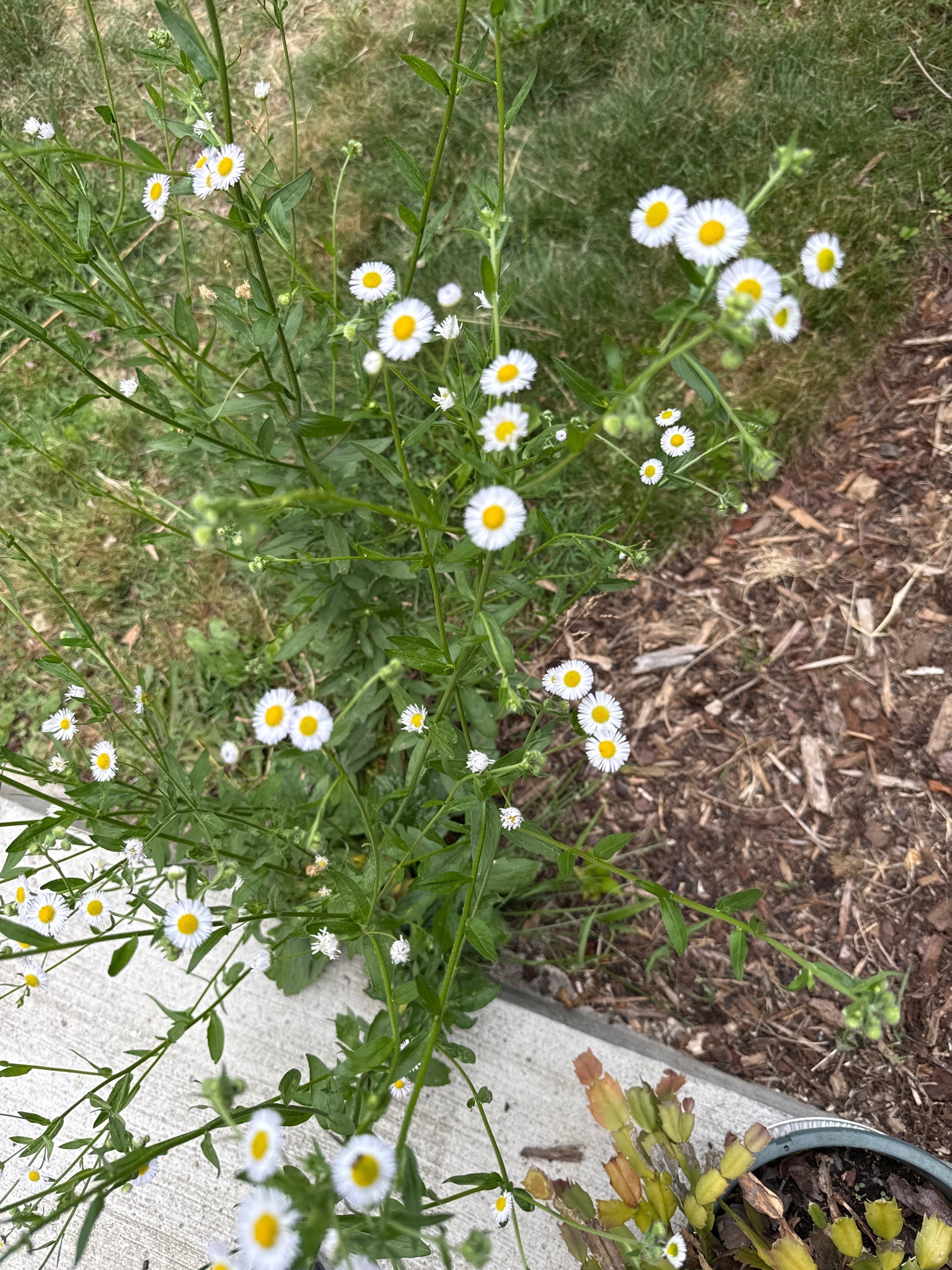
An herbaceous annual or biennial featuring many small, daisy-like flowers with white to pale pink ray florets, a yellow center, and hairy stems with alternate, lance-shaped leaves.
Care Instructions
Generally grown as a wildflower or considered a garden weed, it thrives with minimal care in sunny spots and adapts to various soil conditions. It does not require fertilization.
Medicinal Value
We do not currently provide medicinal value for plant identifications.
Sunlight
Full sun to partial shade (4-8 hours per day)
Watering
Moderate watering; it is somewhat drought-tolerant once established. Water when the top inch of soil is dry.
Soil
Well-drained loamy, sandy, or clay soils; pH neutral (6.0 to 7.0) but highly adaptable.
Hardiness Zone
4 to 9
Growth Habit
Annual or biennial herb; grows upright to 2-4 feet tall and 1-2 feet wide with a medium growth rate.
Bloom Season
Late spring to early autumn; flowers are approximately 0.5-0.75 inches across with numerous thin white ray florets.
Toxicity
Non-toxic to humans, dogs, and cats, though excessive ingestion of any plant material may cause mild stomach upset in pets.
Propagation
Propagates easily by seed. Seeds can be sown in spring or fall and will often self-seed readily in the garden.
Common Pests & Issues
Generally pest-free, though aphids may occasionally appear. It is susceptible to powdery mildew and leaf spot in very humid conditions.
Similar Species
Philadelphia Fleabane (Erigeron philadelphicus) has clasping leaves, whereas Erigeron annuus has non-clasping leaves. It also resembles Oxeye Daisy, but fleabane has much narrower and more numerous petals.
Interesting Facts
The name 'fleabane' comes from the old belief that dried bunches of the plant could repel fleas and other insects.
Created At: 2026-06-18T19:41:06.874062