
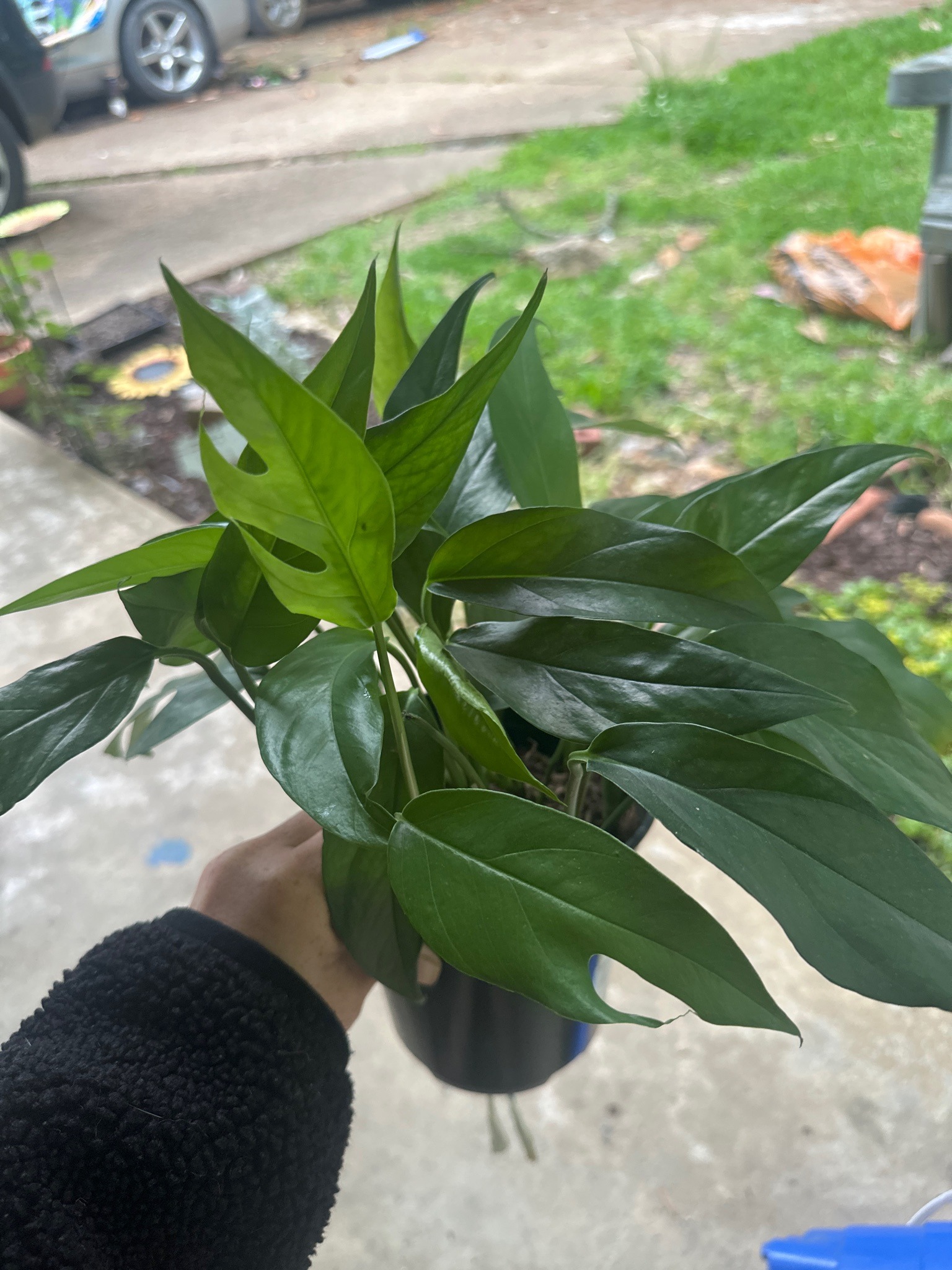
Baltic Blue Pothos
Epipremnum pinnatum 'Baltic Blue'
A climbing tropical vine with lance-shaped, dark green-blue foliage that develops dramatic fenestrations (slits) at an earlier age than the standard species.
- Light
- Bright indirect light is ideal (6-8 hours). Can tolerate medium light, but growth will slow and leaves may stay smaller.
- Water
- Moderate. Water every 1-2 weeks depending on environment. Drought tolerant but will wilt when thirsty; sensitive to overwatering which causes root rot.
- Growth
- Perennial climbing or trailing vine. Can grow 10-20 feet indoors if provided a moss pole for support. Fast growth rate.
Care instructions
Thrives in medium to bright indirect light. Water when the top inch of soil feels dry. Use well-draining potting mix and feed monthly during the growing season with a balanced liquid fertilizer.
Growing details
Sunlight
Bright indirect light is ideal (6-8 hours). Can tolerate medium light, but growth will slow and leaves may stay smaller.
Watering
Moderate. Water every 1-2 weeks depending on environment. Drought tolerant but will wilt when thirsty; sensitive to overwatering which causes root rot.
Soil
Well-draining, chunky mix. A blend of potting soil, orchid bark, and perlite is ideal. pH 6.1 to 6.5.
Hardiness zone
USDA zones 9b-11; typically grown as a houseplant in cooler climates.
Growth habit
Perennial climbing or trailing vine. Can grow 10-20 feet indoors if provided a moss pole for support. Fast growth rate.
Bloom season
Rarely flowers indoors; in nature, produces a spathe and spadix characteristic of aroids.
Propagation
Easily propagated via stem cuttings with at least one node. Cuttings can be rooted in water, sphagnum moss, or soil.
Common pests & issues
Susceptible to mealybugs, spider mites, and scale. Yellow leaves usually indicate overwatering, while brown crispy tips suggest low humidity.
Similar species
Cebu Blue Pothos (has more silver-blue, thinner leaves and lacks early fenestrations) and Monstera adansonii (has rounder leaves and circular holes rather than slits).