New Guinea Impatiens
Scientific Name: Impatiens hawkeri
Plant Family: Balsaminaceae
Native Region: Papua New Guinea and the Solomon Islands; naturalized in various tropical regions globally.
Brief Description
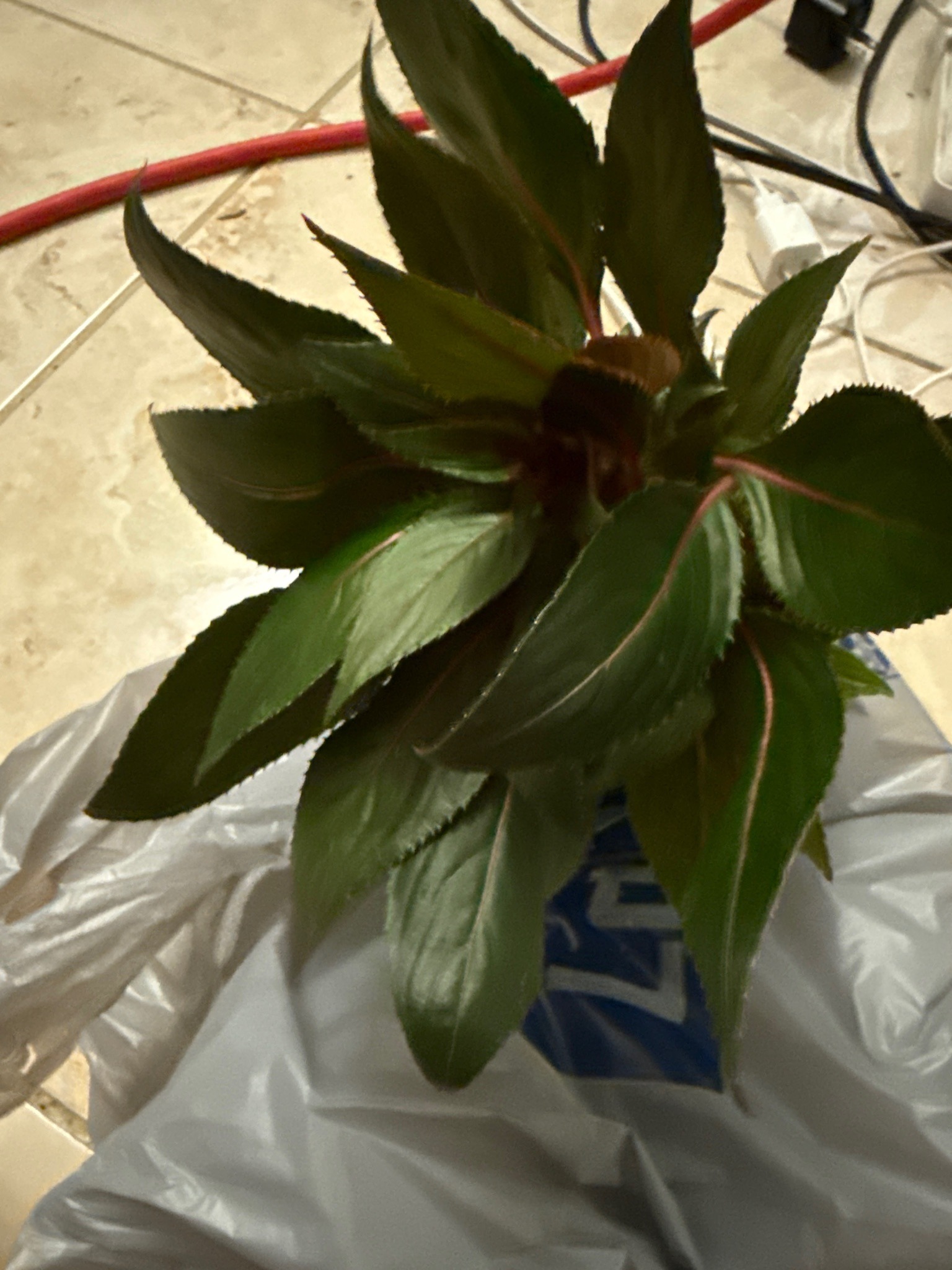
A vibrant herbaceous perennial often grown as an annual, known for its thick, succulent stems and large, lance-shaped leaves with serrated edges and prominent midribs.
Care Instructions
Provide moderate filtered light, consistent moisture without waterlogging, and fertile, well-draining soil. Apply a balanced liquid fertilizer every 2-4 weeks during the growing season.
Medicinal Value
We do not currently provide medicinal value for plant identifications.
Sunlight
Partial shade to bright indirect light; can tolerate more sun than common impatiens if kept well-watered, ideally 4-6 hours of morning sun.
Watering
Requires regular watering to keep the soil consistently moist but never soggy. Will wilt quickly if the soil dries out completely.
Soil
Rich, porous, well-draining soil with plenty of organic matter; pH range of 6.0 to 6.5.
Hardiness Zone
USDA zones 10-12; usually grown as an annual in cooler climates.
Growth Habit
Mounding, upright herbaceous perennial; typically grows 1-2 feet tall and wide at a moderate to fast rate.
Bloom Season
Blooms continuously from late spring through fall; flowers are large, five-petaled, and come in shades of pink, red, white, orange, and purple.
Toxicity
Generally considered non-toxic to humans, dogs, and cats; however, ingestion may cause mild digestive upset.
Propagation
Easily propagated by stem cuttings in water or moist potting mix during the spring or summer.
Common Pests & Issues
Susceptible to spider mites, thrips, and aphids; prone to root rot if overwatered and powdery mildew in high humidity with low airflow.
Similar Species
Impatiens walleriana (Common Impatiens), which has thinner, smaller leaves and is more shade-dependent; and SunPatiens, which are a hybrid bred for better heat and sun tolerance.
Interesting Facts
New Guinea Impatiens were introduced to the US in the 1970s and became popular because they are highly resistant to Downy Mildew, which affects other impatiens species.
Created At: 2026-05-09T18:13:06.384614