
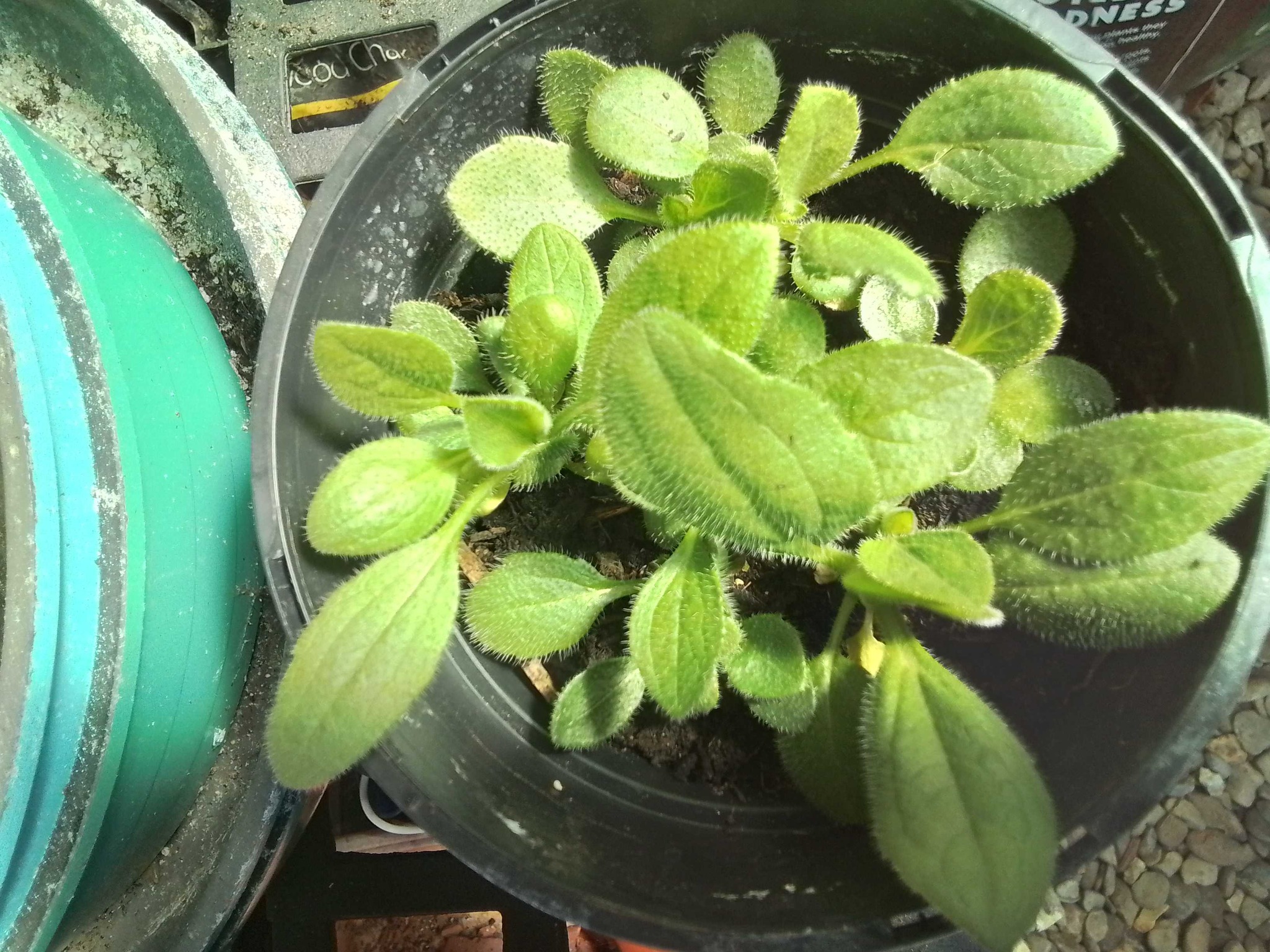
Black-eyed Susan
Rudbeckia hirta
A hardy herbaceous plant characterized by fuzzy, oval-to-lanceolate green leaves that grow in a basal rosette initially. The leaves are covered in stiff, coarse hairs.
- Light
- Full sun (6+ hours per day) for best flowering, though it can tolerate partial shade.
- Water
- Moderate. Keep soil consistently moist for young seedlings; established plants are moderately drought-tolerant. Avoid overhead watering to prevent mildew.
- Growth
- Short-lived perennial or biennial often grown as an annual. Reaches 1-3 feet in height with a similar spread.
Care instructions
Provide at least 6 hours of sun and well-draining soil. Water when the top inch of soil feels dry. For seedlings, maintain consistent moisture but avoid waterlogging.
Growing details
Sunlight
Full sun (6+ hours per day) for best flowering, though it can tolerate partial shade.
Watering
Moderate. Keep soil consistently moist for young seedlings; established plants are moderately drought-tolerant. Avoid overhead watering to prevent mildew.
Soil
Well-drained soil; clay, loamy, or sandy. Prefers a pH between 6.0 and 7.0.
Hardiness zone
3-9
Growth habit
Short-lived perennial or biennial often grown as an annual. Reaches 1-3 feet in height with a similar spread.
Bloom season
Mid-summer to early autumn. Produces yellow-to-orange daisy-like flowers with a dark chocolate central cone.
Propagation
Easily grown from seed sown in spring or fall; can also be propagated by division of established clumps.
Common pests & issues
Susceptible to powdery mildew if airflow is poor. Pests include aphids and spider mites, and slugs may target young seedlings.
Similar species
Echinacea (Coneflower) which has smoother, slightly differently shaped leaves, and Calendula, which has different leaf texture.