
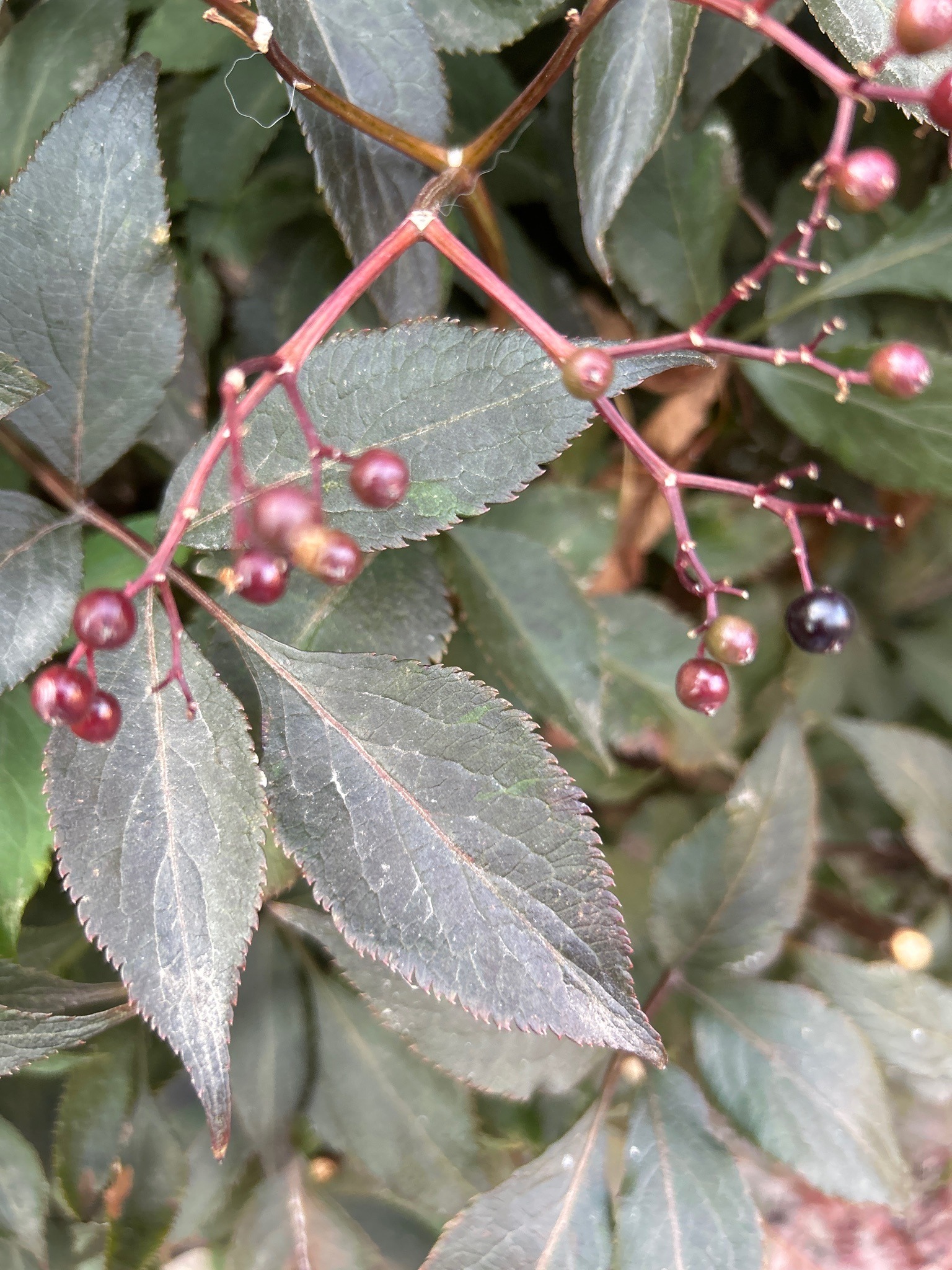
Black Lace Elderberry
Sambucus nigra 'Eva'
A deciduous shrub featuring deeply cut, dark purple to nearly black foliage that resembles Japanese maple leaves, accompanied by flat-topped clusters of pink flowers and dark fruit.
- Light
- Full sun to partial shade, requiring at least 6 hours of direct sunlight daily for optimal leaf coloration.
- Water
- Moderate to high water requirements; prefers evenly moist soil and benefits from regular irrigation during prolonged dry periods.
- Growth
- Deciduous perennial shrub with an upright, multi-stemmed form, reaching mature heights and spreads of 6 to 8 feet with a moderate growth rate.
Care instructions
Grow in full sun to partial shade with consistently moist, well-draining soil. Water deeply during dry spells and apply a balanced slow-release fertilizer in early spring.
Growing details
Sunlight
Full sun to partial shade, requiring at least 6 hours of direct sunlight daily for optimal leaf coloration.
Watering
Moderate to high water requirements; prefers evenly moist soil and benefits from regular irrigation during prolonged dry periods.
Soil
Thrives in rich, loamy, well-draining soil with a neutral to slightly acidic pH between 5.5 and 6.5.
Hardiness zone
USDA zones 4 through 7
Growth habit
Deciduous perennial shrub with an upright, multi-stemmed form, reaching mature heights and spreads of 6 to 8 feet with a moderate growth rate.
Bloom season
Early to mid-summer, producing flat-topped clusters of soft pink flowers that contrast sharply with the dark foliage.
Propagation
Propagated primarily through softwood cuttings taken in late spring or hardwood cuttings taken in winter.
Common pests & issues
Generally resilient, but can occasionally be affected by aphids, spider mites, or leaf spot in overly damp conditions.
Similar species
Sambucus nigra 'Black Beauty', which has slightly broader, less finely dissected leaves and more intense pink flower clusters.