
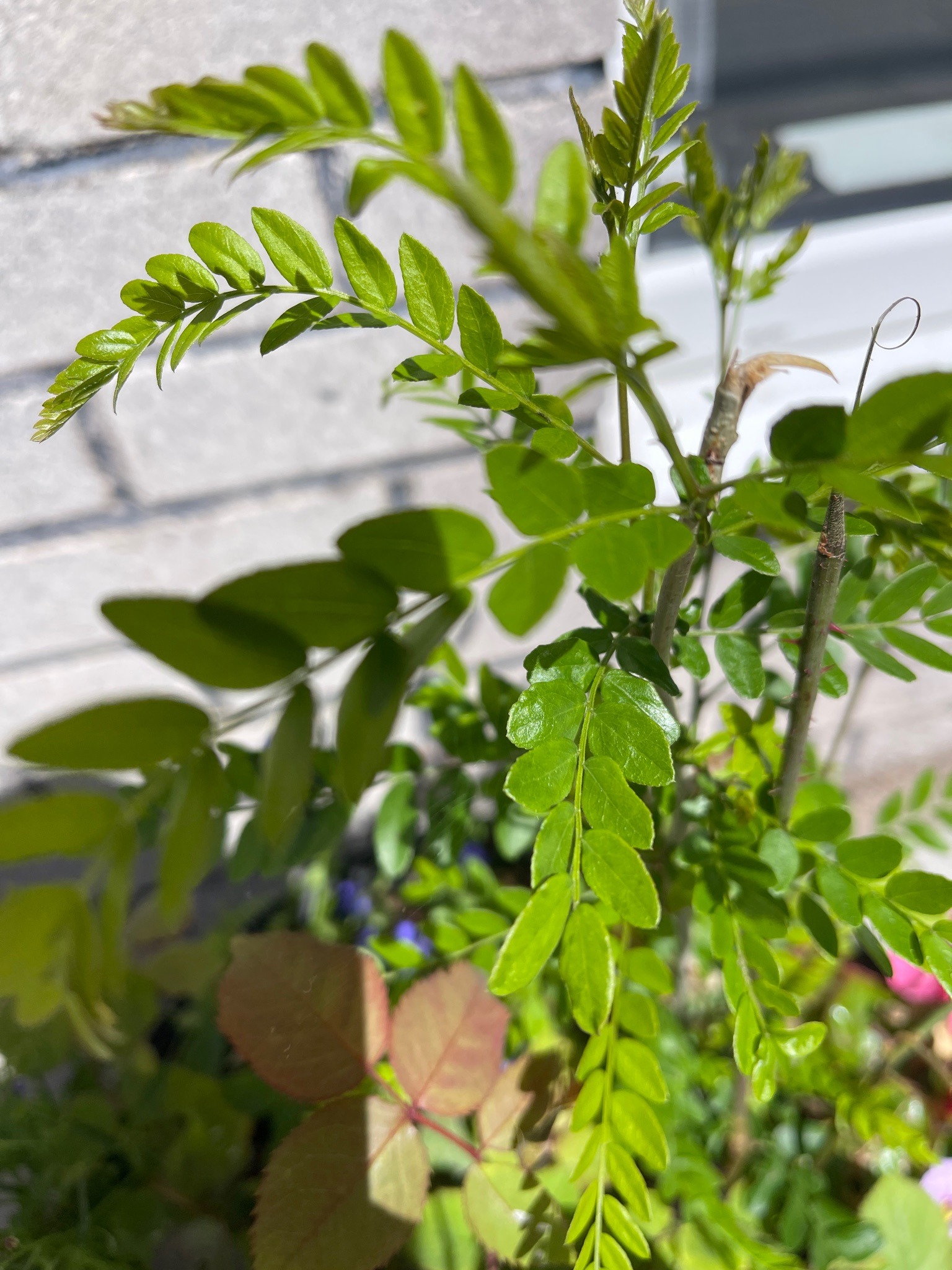
Black Locust
Robinia pseudoacacia
A deciduous tree known for its compound leaves with oval leaflets, thorny branches, and pendulous clusters of fragrant white flowers.
- Light
- Full sun, requiring at least 6 to 8 hours of direct light per day for optimal growth.
- Water
- Moderate watering when young; highly drought-resistant once mature. Prefers to dry out between waterings and dislikes saturated soil.
- Growth
- Perennial tree with an upright, spreading habit; grows quickly to a height of 30-85 feet with a spread of 20-35 feet.
Care instructions
Provide full sun and well-draining soil. Once established, it is highly drought tolerant and adaptable to poor soil conditions. Minimal fertilization is needed due to its nitrogen-fixing capabilities.
Growing details
Sunlight
Full sun, requiring at least 6 to 8 hours of direct light per day for optimal growth.
Watering
Moderate watering when young; highly drought-resistant once mature. Prefers to dry out between waterings and dislikes saturated soil.
Soil
Well-drained loam, sand, or clay with a pH range of 4.5 to 7.5. Extremely tolerant of nutrient-poor soils.
Hardiness zone
USDA zones 4 through 8
Growth habit
Perennial tree with an upright, spreading habit; grows quickly to a height of 30-85 feet with a spread of 20-35 feet.
Bloom season
Late spring to early summer; features drooping clusters of pea-like white flowers that are highly fragrant.
Propagation
Easily propagated by root cuttings, hardwood cuttings, or seeds which require scarification before planting.
Common pests & issues
Susceptible to locust borers and locust leaf miners. Can be aggressive in certain landscapes due to vigorous root suckering.
Similar species
Honey Locust (Gleditsia triacanthos), which typically has smaller leaflets and larger, branched thorns, and Bristly Locust (Robinia hispida), which is a smaller shrub with rose-purple flowers.