
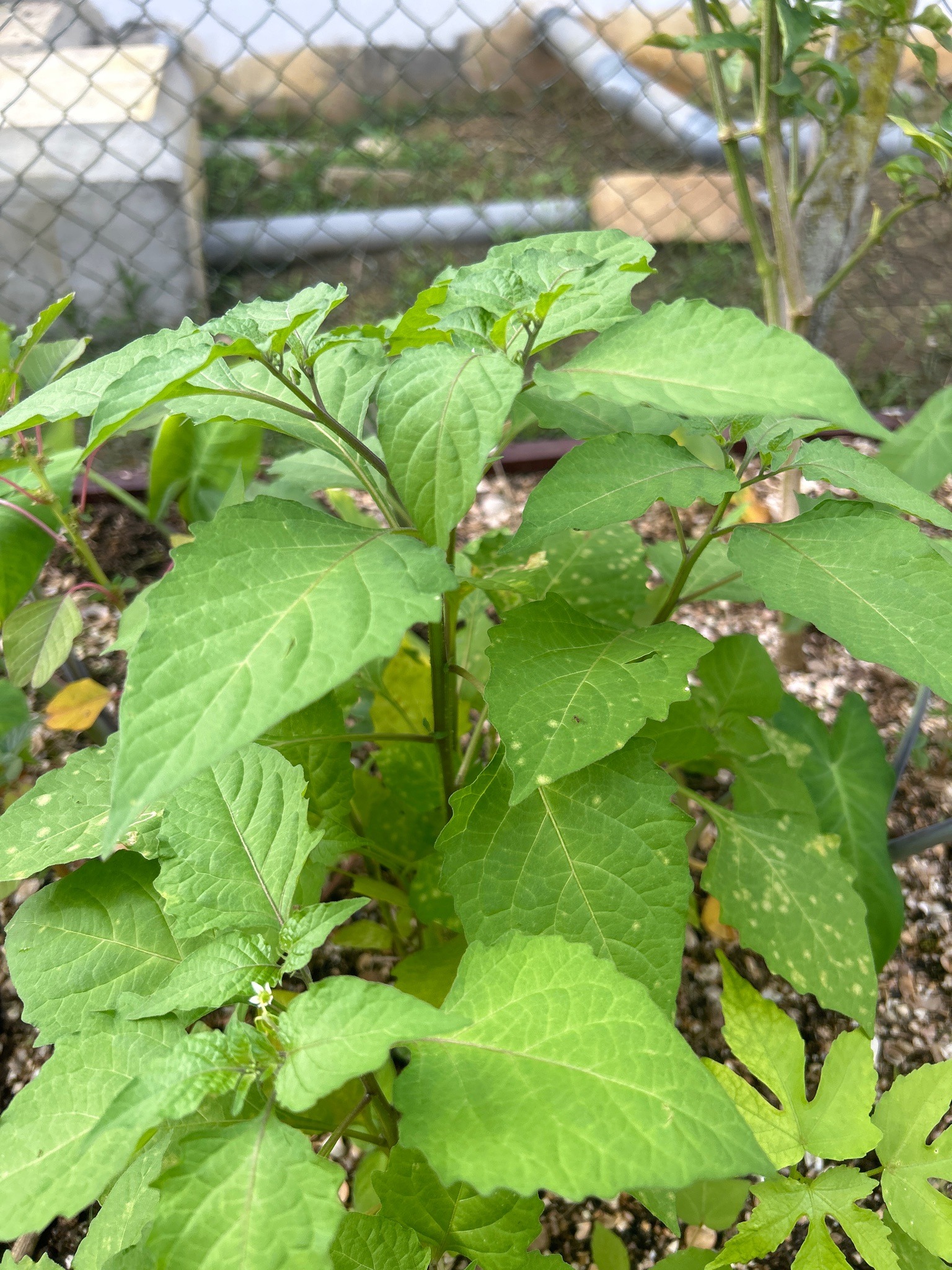
Black Nightshade
Solanum nigrum
A common annual or short-lived perennial herb with ovate leaves, small white star-shaped flowers with yellow centers, and small round berries that turn from green to black when ripe.
- Light
- Full sun to partial shade; 4-8 hours per day.
- Water
- Moderate watering; prefers consistently moist but well-drained soil. It is moderately drought-tolerant once established.
- Growth
- Annual or short-lived perennial; herbaceous upright or sprawling growth, typically reaching 30-100 cm in height.
Care instructions
It is often considered a weed and requires very little care. It thrives in disturbed soils with full sun to partial shade and moderate moisture.
Growing details
Sunlight
Full sun to partial shade; 4-8 hours per day.
Watering
Moderate watering; prefers consistently moist but well-drained soil. It is moderately drought-tolerant once established.
Soil
Adaptable to various soil types, but prefers fertile, nitrogen-rich loamy soils with a pH of 5.5 to 7.5.
Hardiness zone
USDA zones 4-11 (grown as an annual in colder zones).
Growth habit
Annual or short-lived perennial; herbaceous upright or sprawling growth, typically reaching 30-100 cm in height.
Bloom season
Summer to early Autumn; produces small white flowers with five petals and a protruding yellow stamen column.
Propagation
Propagates easily by seed. Seeds are often dispersed by birds who eat the ripe berries.
Common pests & issues
Susceptible to typical Solanaceae pests like aphids, flea beetles, and tomato hornworms. Can host viruses like potato leafroll virus.
Similar species
Often confused with Atropa belladonna (Deadly Nightshade), which has larger, bell-shaped purple flowers and much more lethal toxicity, or Solanum ptycanthum (Eastern Black Nightshade).