
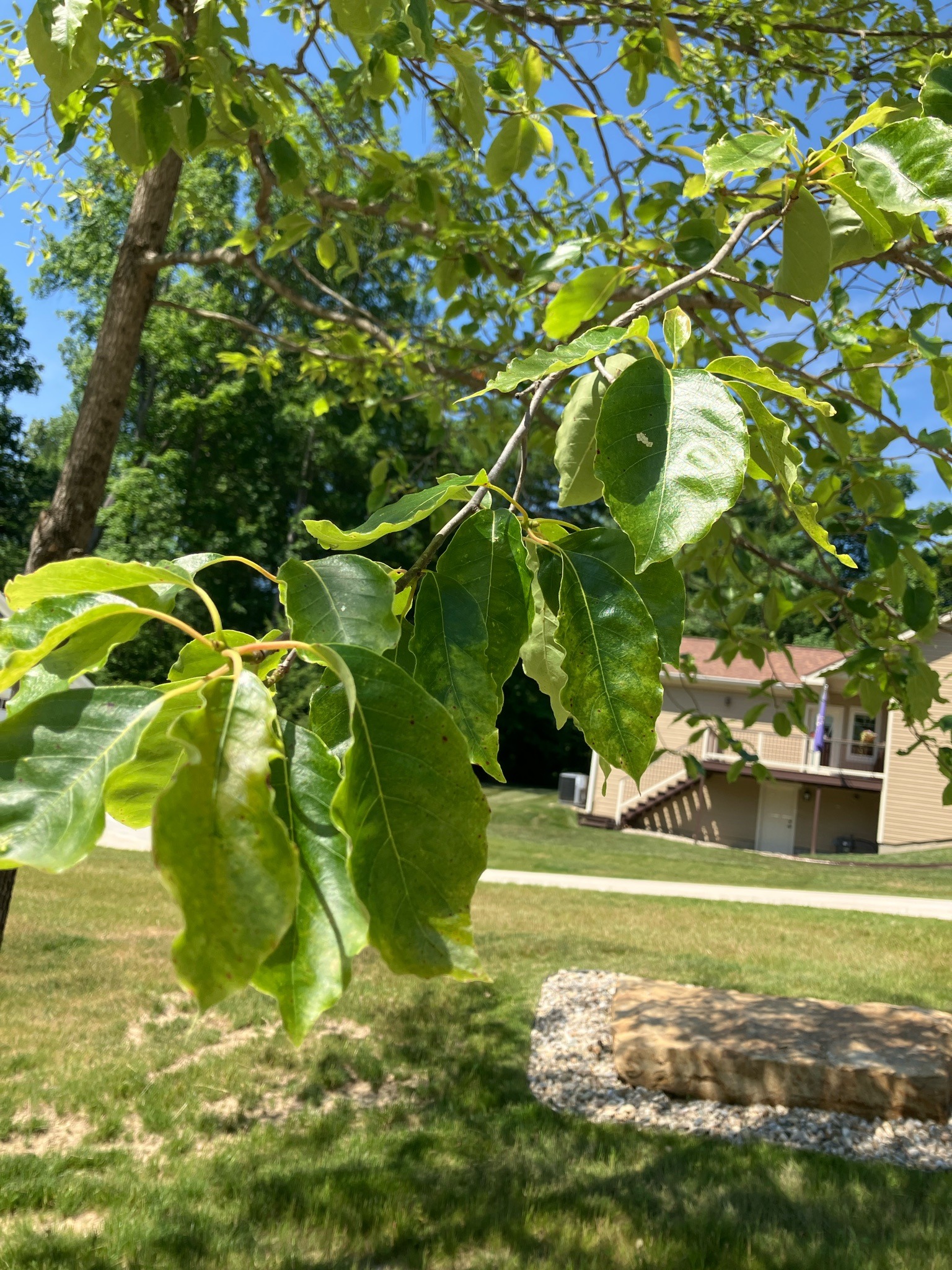
Black Tupelo (Black Gum)
Nyssa sylvatica
A medium-sized deciduous tree known for its spectacular scarlet fall foliage and dark, deeply furrowed bark that resembles alligator hide. Leaves are alternate, simple, and glossy green.
- Light
- Full sun to partial shade; at least 4 to 6 hours of direct sunlight daily for best fall color.
- Water
- Medium to wet. It tolerates standing water and poorly drained soils but needs consistent moisture during dry spells, especially when young.
- Growth
- Perennial deciduous tree; slow-growing, reaching 30-50 feet tall and 20-30 feet wide with a rounded or pyramidal crown.
Care instructions
Thrives in full sun to partial shade and prefers moist, acidic, well-draining soils. Once established, it is moderately drought-tolerant but performs best with regular moisture. Avoid moving once planted due to a deep taproot.
Growing details
Sunlight
Full sun to partial shade; at least 4 to 6 hours of direct sunlight daily for best fall color.
Watering
Medium to wet. It tolerates standing water and poorly drained soils but needs consistent moisture during dry spells, especially when young.
Soil
Prefers acidic, loamy, moist, and well-drained soils; pH 4.5 to 6.0.
Hardiness zone
4 to 9
Growth habit
Perennial deciduous tree; slow-growing, reaching 30-50 feet tall and 20-30 feet wide with a rounded or pyramidal crown.
Bloom season
Spring (May-June). Flowers are small, greenish-white, and inconspicuous but highly attractive to bees.
Propagation
Primarily by seed (requires cold stratification) or by softwood cuttings taken in early summer.
Common pests & issues
Relatively pest-free, but may occasionally be affected by leaf spot, rust, or scale insects. Not tolerant of alkaline soils, which can cause chlorosis (yellowing leaves).
Similar species
Persimmon (Diospyros virginiana) has similar bark but different fruit; Sourwood (Oxydendrum arboreum) has more elongated leaves and different flower clusters.