
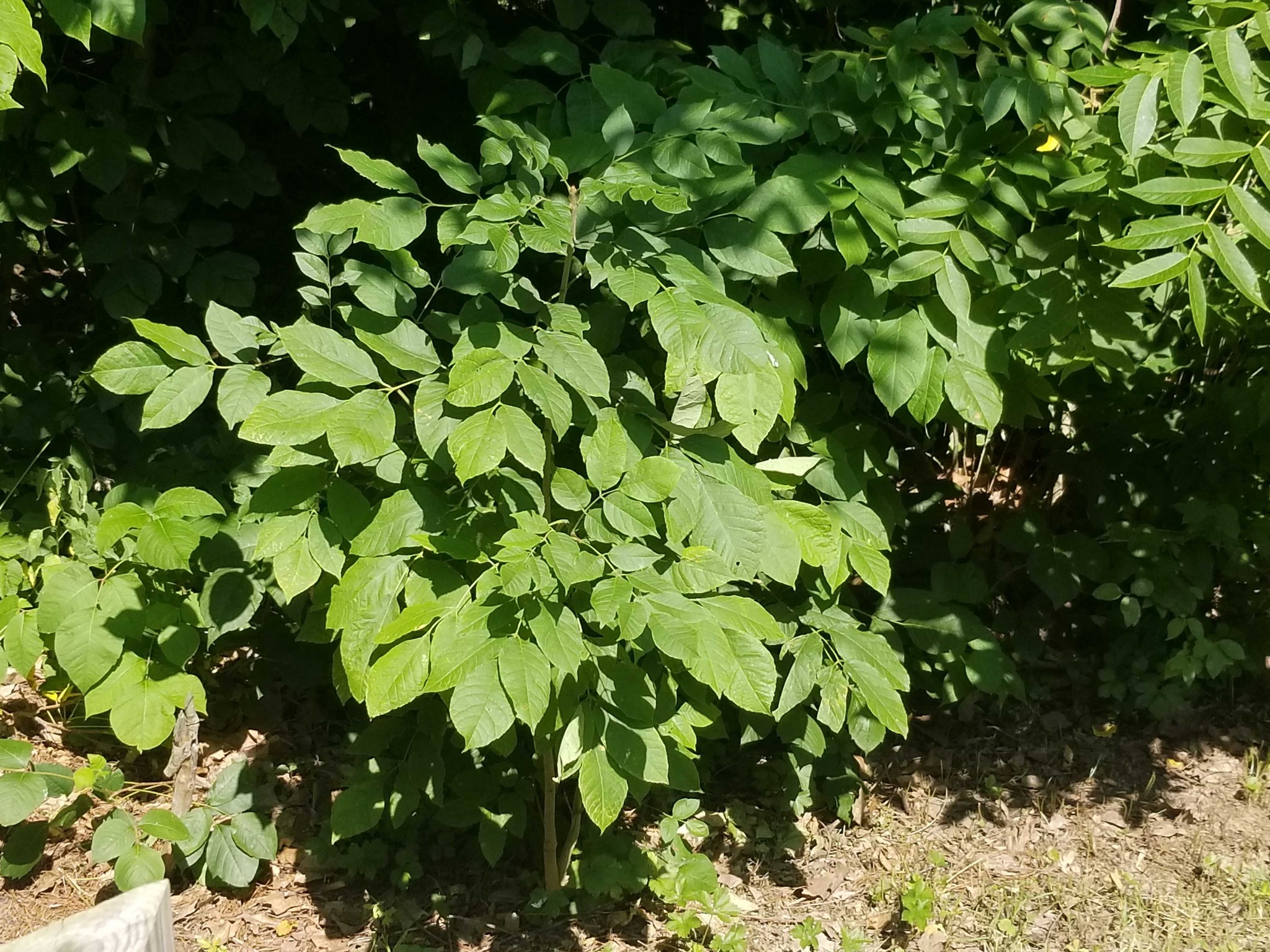
Black Walnut
Juglans nigra
A large deciduous tree known for its dark, furrowed bark and compound leaves. The leaves consist of 15-23 pinnately arranged leaflets with a terminal leaflet often missing or smaller.
- Light
- Full sun, requiring at least 6 to 8 hours of direct light daily for optimal growth and health.
- Water
- Requires regular moisture, especially when young. Established trees have moderate drought tolerance but prefer consistently moist soil. Yellowing leaves can indicate drought stress.
- Growth
- Perennial deciduous tree. Can reach a mature height of 70 to 100 feet with a similar spread. It has an upright, rounded crown.
Care instructions
Requires full sun and deep, rich, moist, well-draining soil. It is a slow-growing tree but highly resilient once established. Minimal pruning is required except to develop a strong central leader or remove lower branches for clearance.
Growing details
Sunlight
Full sun, requiring at least 6 to 8 hours of direct light daily for optimal growth and health.
Watering
Requires regular moisture, especially when young. Established trees have moderate drought tolerance but prefer consistently moist soil. Yellowing leaves can indicate drought stress.
Soil
Rich, deep, loamy soils with good drainage. Prefers a neutral to slightly acidic pH between 6.0 and 7.5.
Hardiness zone
USDA Zones 4 through 9. Very cold hardy and heat tolerant within its range.
Growth habit
Perennial deciduous tree. Can reach a mature height of 70 to 100 feet with a similar spread. It has an upright, rounded crown.
Bloom season
Spring (April to June). Produces inconspicuous yellow-green catkins (male flowers) and small spikes of female flowers on the same tree.
Propagation
Primarily through seeds (nuts) buried in autumn for natural cold stratification. Can also be propagated via grafting for specific cultivars.
Common pests & issues
Affected by Thousand Cankers Disease (vectored by the walnut twig beetle), anthracnose, and walnut caterpillars. It produces a chemical called juglone which inhibits the growth of certain susceptible plants under its canopy.
Similar species
Butternut (Juglans cinerea), which has fewer leaflets and fuzzy buds; Ailanthus (Tree of Heaven), which has glandular teeth at the base of the leaflets; and various Hickory (Carya) species.