
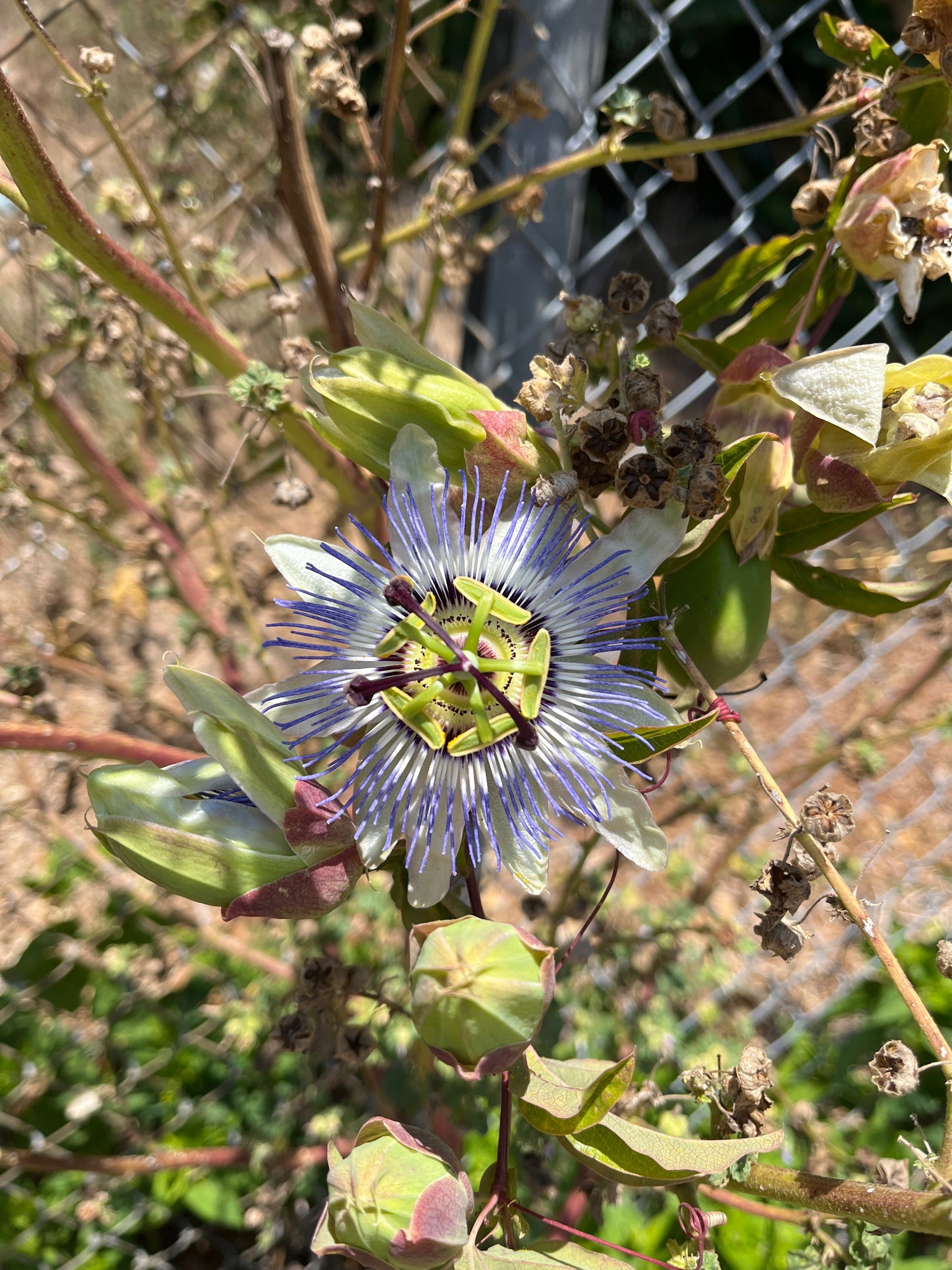
Blue Passionflower
Passiflora caerulea
A vigorous evergreen or semi-evergreen climbing vine known for its complex, exotic flowers with white/blue petals and a multi-colored fringe-like corona.
- Light
- Full sun to partial shade; at least 6 hours of direct sunlight for best flowering.
- Water
- Frequent watering during summer to keep soil moist but not waterlogged. Drought tolerant once established but blooms better with regular water.
- Growth
- Perennial climbing vine; can reach 15-30 feet in height with a spread of 3-6 feet. Fast-growing and uses tendrils to climb.
Care instructions
Provide a sturdy support for climbing. Plant in a sunny spot with well-draining soil. Water regularly during the growing season and reduce in winter. Mulch the base in colder climates.
Growing details
Sunlight
Full sun to partial shade; at least 6 hours of direct sunlight for best flowering.
Watering
Frequent watering during summer to keep soil moist but not waterlogged. Drought tolerant once established but blooms better with regular water.
Soil
Moist, well-draining sandy or loamy soil; neutral to slightly acidic pH (6.1 to 7.5).
Hardiness zone
USDA Zones 6-11 (can die back to roots in zone 6 and regrow in spring).
Growth habit
Perennial climbing vine; can reach 15-30 feet in height with a spread of 3-6 feet. Fast-growing and uses tendrils to climb.
Bloom season
Summer to early autumn; flowers are 3-4 inches wide, blue, white, and purple, followed by egg-shaped orange fruit.
Propagation
Easily propagated by semi-hardwood cuttings in summer, layering, or seeds sown in spring after soaking.
Common pests & issues
Aphids, spider mites, and whiteflies. Susceptible to root rot if soil is poorly drained and passion fruit wilt (fungal).
Similar species
Passiflora incarnata (Maypop) - resembles P. caerulea but is more cold-hardy and has lavender/purple frilly filaments.