
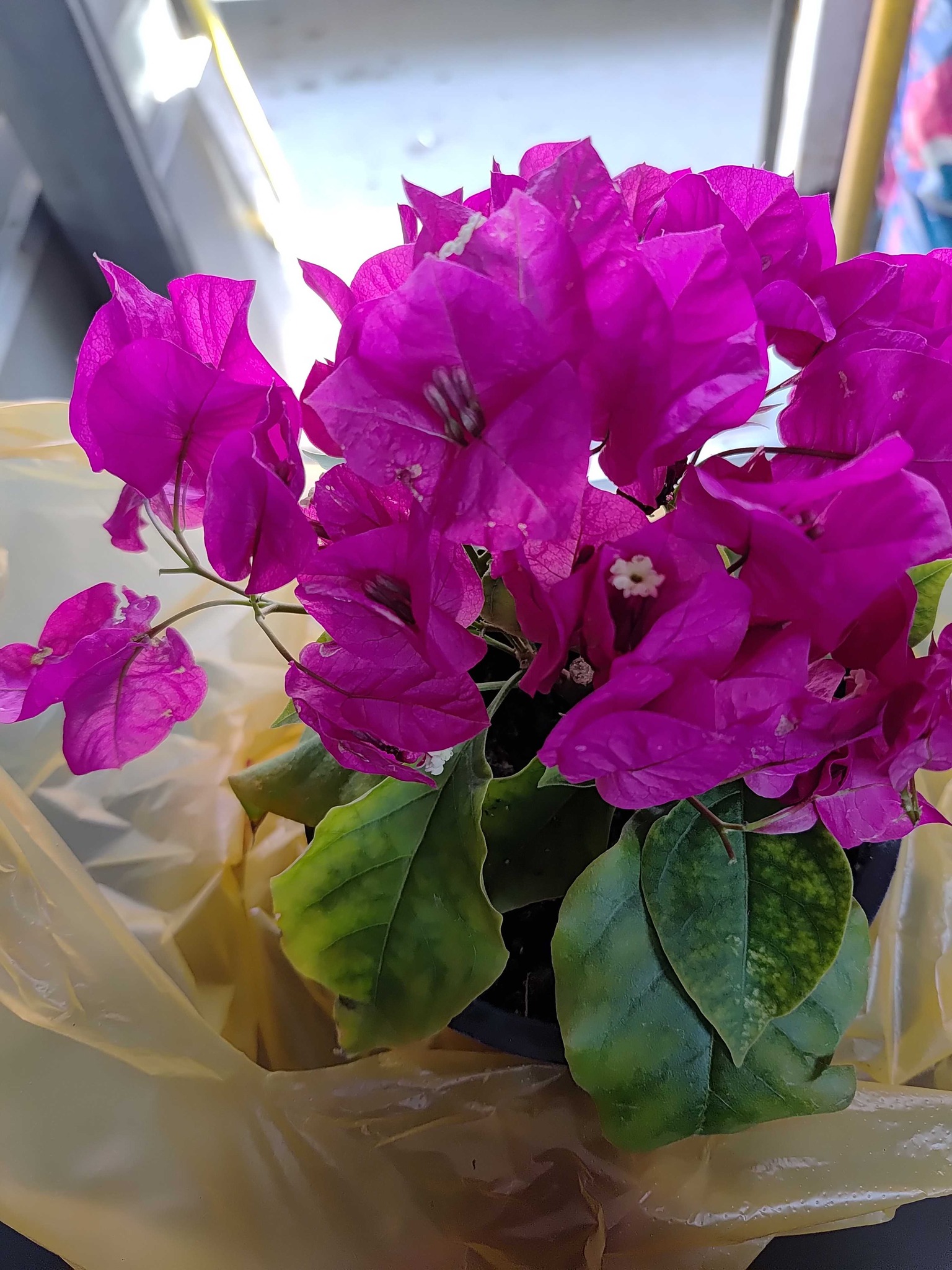
Bougainvillea
Bougainvillea glabra
A thorny, woody climbing vine or shrub characterized by its papery, vibrant bracts that surround small, inconspicuous white tubular flowers. It has ovate green leaves and can be trained as a vine, shrub, or bonsai.
- Light
- Full sun; requires 6 or more hours of direct sunlight per day to produce vibrant bracts.
- Water
- Moderate; water thoroughly but allow the plant to dry out significantly between waterings. It is drought-tolerant once established. Yellowing leaves often indicate over-watering.
- Growth
- Perennial evergreen woody vine or shrub. Can grow 15-40 feet long as a vine, or remain small in containers. It is a fast grower in warm climates.
Care instructions
Requires full sun for at least 6-8 hours a day to bloom well. Water deeply when the top inch of soil is dry, but avoid waterlogging. Use a well-draining, slightly acidic soil. Fertilize during the growing season with a high-potassium fertilizer.
Growing details
Sunlight
Full sun; requires 6 or more hours of direct sunlight per day to produce vibrant bracts.
Watering
Moderate; water thoroughly but allow the plant to dry out significantly between waterings. It is drought-tolerant once established. Yellowing leaves often indicate over-watering.
Soil
Well-drained, loamy or sandy soil with a pH of 5.5 to 6.5. Root rot occurs easily in heavy, wet soil.
Hardiness zone
USDA Zones 9-11; it is sensitive to frost and will drop leaves if temperatures fall below 40°F (4°C).
Growth habit
Perennial evergreen woody vine or shrub. Can grow 15-40 feet long as a vine, or remain small in containers. It is a fast grower in warm climates.
Bloom season
Blooms year-round in tropical climates; in cooler areas, it blooms primarily in spring and summer. The 'flowers' are actually colorful papery bracts in shades of magenta, purple, red, pink, or orange.
Propagation
Most commonly propagated via semi-hardwood cuttings taken in summer. Can also be propagated by layering or seeds, though seeds are rare in cultivation.
Common pests & issues
Susceptible to aphids, mealybugs, and spider mites. Over-watering leads to root rot and fungal leaf spot. Lack of flowering is usually due to insufficient light or too much nitrogen fertilizer.
Similar species
Mandevilla (lacks thorns and has large trumpet flowers) and Paperflower (often used as an alternative common name for the same genus).