
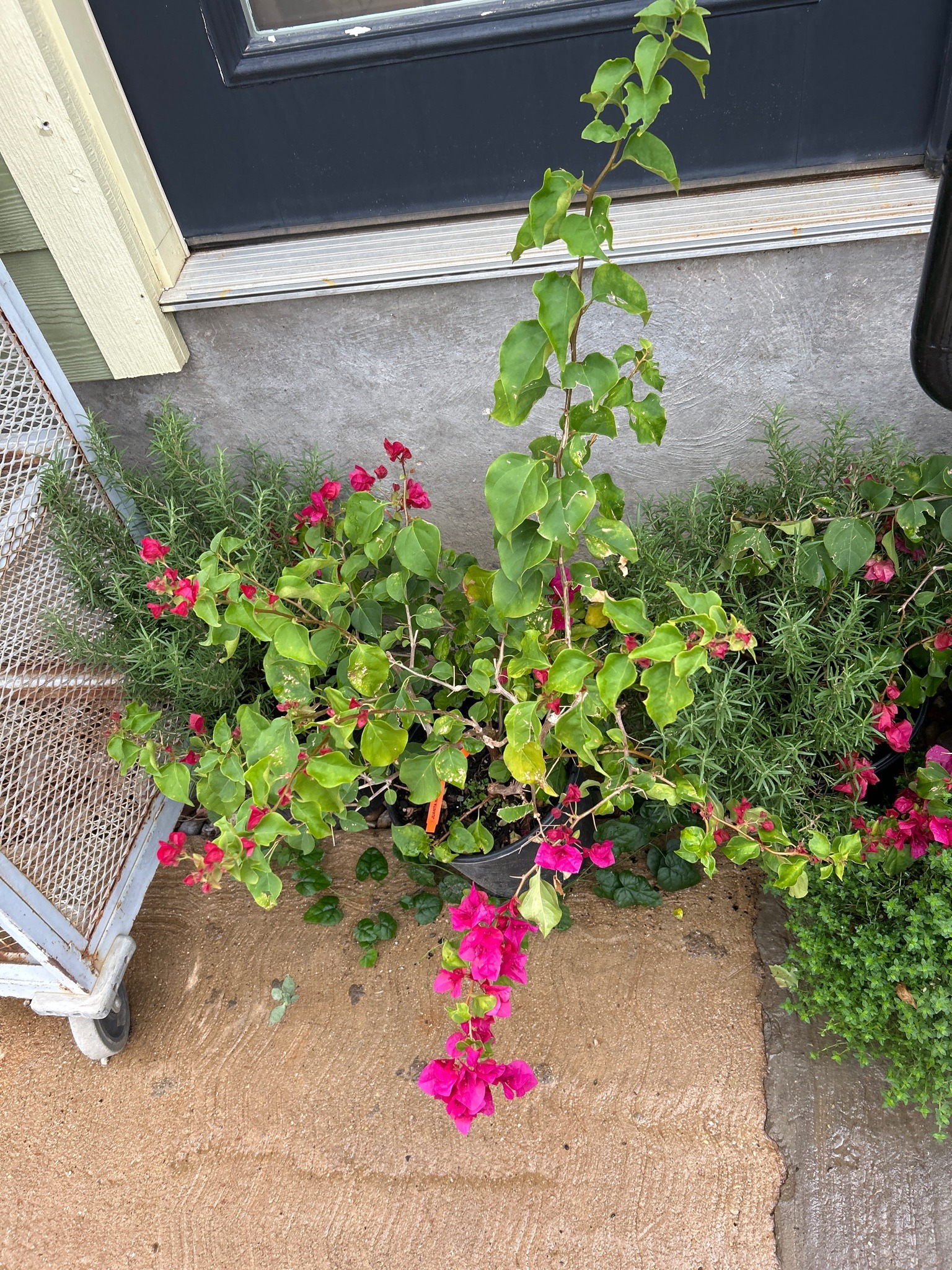
Bougainvillea
Bougainvillea glabra
A thorny, woody vine or shrub known for its vibrant, papery bracts that surround small white flowers. The leaves are heart-shaped or oval and alternate along the stems.
- Light
- Full sun, at least 6 to 8 hours of direct light per day for optimal blooming.
- Water
- Deep but infrequent watering. Allow the top 2 inches of soil to dry out. Over-watering can lead to root rot and fewer blooms.
- Growth
- Perennial evergreen vine or shrub. Can climb 15-40 feet or be kept as a container plant. Fast-growing in warm conditions.
Care instructions
Requires full sun and well-draining soil. It is drought-tolerant once established and performs best when allowed to dry out between waterings. Fertilize regularly during the growing season with a high-potassium fertilizer to encourage blooming.
Growing details
Sunlight
Full sun, at least 6 to 8 hours of direct light per day for optimal blooming.
Watering
Deep but infrequent watering. Allow the top 2 inches of soil to dry out. Over-watering can lead to root rot and fewer blooms.
Soil
Well-drained, slightly acidic soil (pH 5.5 to 6.5). It is sensitive to peat-heavy soils that retain too much moisture.
Hardiness zone
9-11; very frost-sensitive and should be brought indoors or protected in colder climates.
Growth habit
Perennial evergreen vine or shrub. Can climb 15-40 feet or be kept as a container plant. Fast-growing in warm conditions.
Bloom season
Spring through fall in cooler climates; year-round in tropical areas. Blooms consist of tiny white tubes surrounded by colorful pink, red, or purple bracts.
Propagation
Typically propagated through semi-hardwood cuttings or tip cuttings in early summer using rooting hormone.
Common pests & issues
Aphids, mealybugs, and spider mites. Leaf spot can occur in humid environments. Lack of blooming is usually due to over-watering or insufficient light.
Similar species
Mandevilla (lacks thorns, different flower shape) and Tecoma capensis (different leaf structure).