
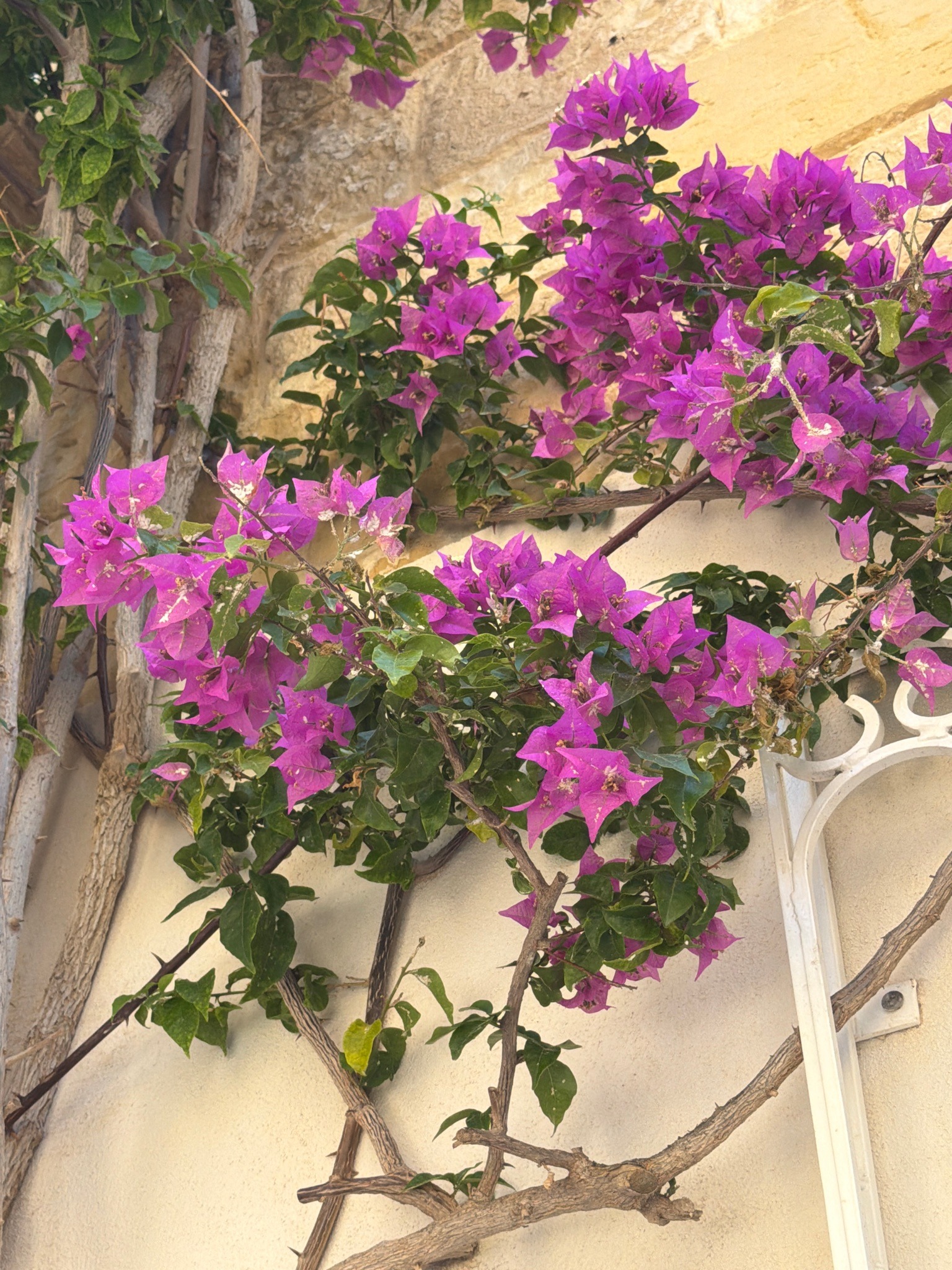
Bougainvillea
Bougainvillea glabra
A thorny, woody climbing vine or shrub known for its vibrant, papery bracts that surround small, inconspicuous white flowers. It has dark green, ovate leaves and stiff, sharp thorns along its stems.
- Light
- Full sun; requires 6-8 hours of direct sunlight per day to produce prolific bract color.
- Water
- Low to moderate; drought-tolerant once established. Over-watering can lead to root rot and lack of blooms. Water when the top 2 inches of soil are dry.
- Growth
- Perennial evergreen woody vine or scrambling shrub; can reach heights of 20-30 feet with support or be kept as a small container plant. Fast-growing in warm climates.
Care instructions
Provide at least 6 hours of full sun for best flowering. Water deeply but allow the soil to dry out significantly between waterings. Use well-draining soil and apply a balanced fertilizer high in micronutrients during the growing season. Prune after flowering to maintain shape.
Growing details
Sunlight
Full sun; requires 6-8 hours of direct sunlight per day to produce prolific bract color.
Watering
Low to moderate; drought-tolerant once established. Over-watering can lead to root rot and lack of blooms. Water when the top 2 inches of soil are dry.
Soil
Well-drained, acidic to neutral soil (pH 5.5 to 6.5). Prefers loamy or sandy mixes that do not retain excess moisture.
Hardiness zone
USDA zones 9 through 11; sensitive to frost and sustained freezing temperatures.
Growth habit
Perennial evergreen woody vine or scrambling shrub; can reach heights of 20-30 feet with support or be kept as a small container plant. Fast-growing in warm climates.
Bloom season
Year-round in tropical climates; peak displays in spring and autumn. The showy parts are purple, pink, or red papery bracts enclosing tiny white tubular flowers.
Propagation
Typically propagated through semi-hardwood or softwood cuttings taken in summer. Can also be grown from seed, though ornamental varieties are often hybrids.
Common pests & issues
Susceptible to aphids, mealybugs, and spider mites. Over-watering causes leaf drop and fungal root rot. Leaf spot can occur in high humidity with poor air circulation.
Similar species
Bougainvillea spectabilis, which is more robust and has more pubescent (hairy) leaves and stems compared to the smoother B. glabra.