
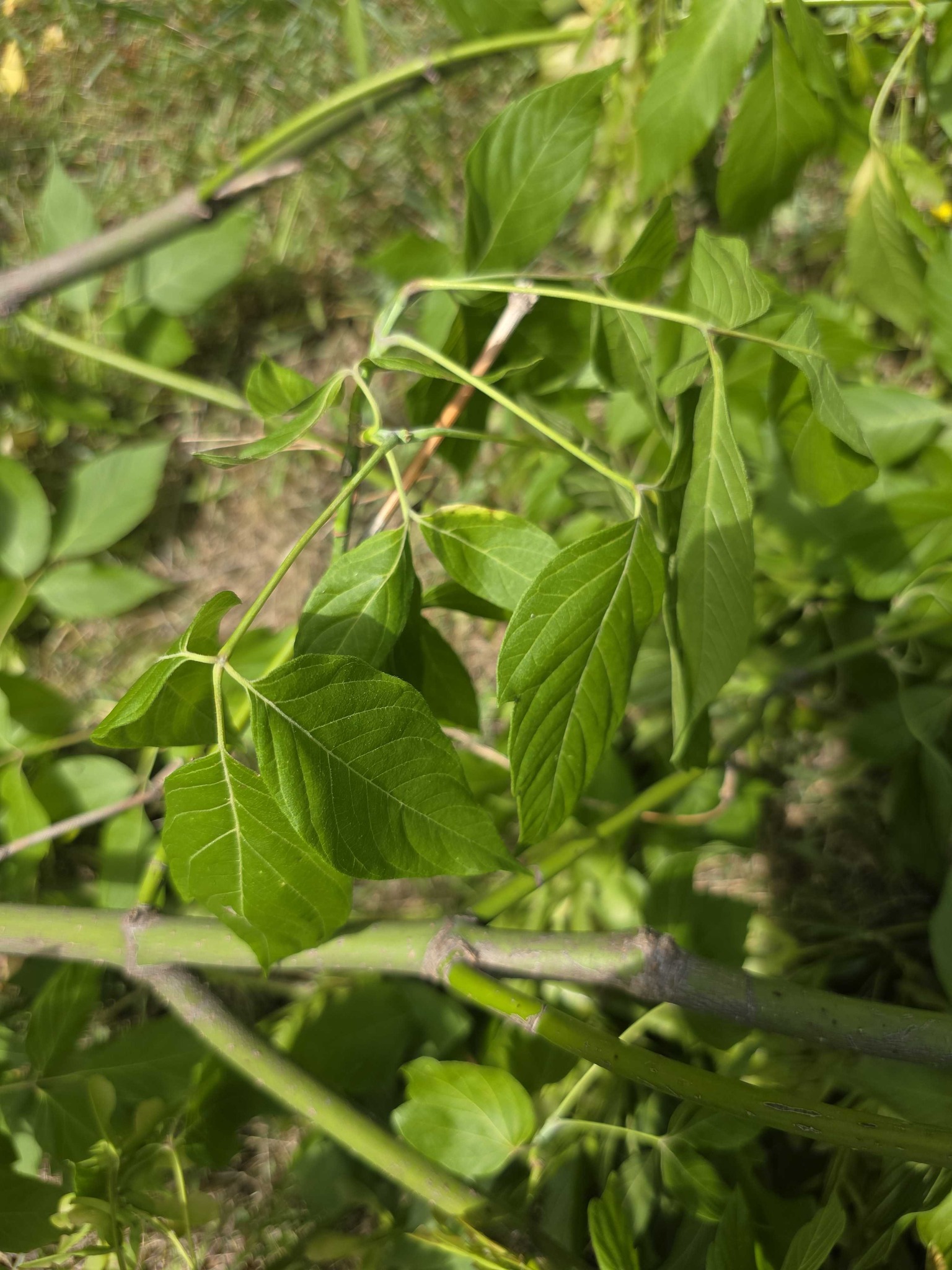
Box Elder
Acer negundo
A fast-growing, deciduous tree known for being the only North American maple with compound leaves. It features green stems and leaflets that often come in groups of three to seven, resembling poison ivy when young.
- Light
- Full sun to partial shade; ideally 6+ hours of direct light daily.
- Water
- Moderate to high. Prefers moist soil and is common in riparian zones. It is somewhat drought-tolerant once established but prefers consistent moisture.
- Growth
- Deciduous perennial tree; grows rapidly to 30-50 feet tall with a wide, irregular crown.
Care instructions
This is a hardy, opportunistic tree that thrives with little care. Provide full sun to partial shade and ensure it has consistent moisture, though it can tolerate periodic flooding and poor soil conditions.
Growing details
Sunlight
Full sun to partial shade; ideally 6+ hours of direct light daily.
Watering
Moderate to high. Prefers moist soil and is common in riparian zones. It is somewhat drought-tolerant once established but prefers consistent moisture.
Soil
Adaptable to various soils (clay, loam, sand) with a pH of 5.0 to 8.0. Prefers moist, well-drained soils.
Hardiness zone
2-9
Growth habit
Deciduous perennial tree; grows rapidly to 30-50 feet tall with a wide, irregular crown.
Bloom season
Spring (March to April); produces small, greenish-yellow flowers in drooping clusters before leaves appear. It is dioecious (separate male and female trees).
Propagation
Easily propagated by seeds in fall, or by softwood cuttings taken in late spring/early summer.
Common pests & issues
Boxelder bugs (Boisea trivittata) are very frequent; they don't harm the tree but can become a nuisance in homes. Susceptible to anthracnose and wood rot due to brittle wood.
Similar species
Poison Ivy (Toxicodendron radicans) - Box Elder has opposite branching while Poison Ivy has alternate branching. Ash trees (Fraxinus) - Ash leaves typically have more leaflets and are not as lobed.