
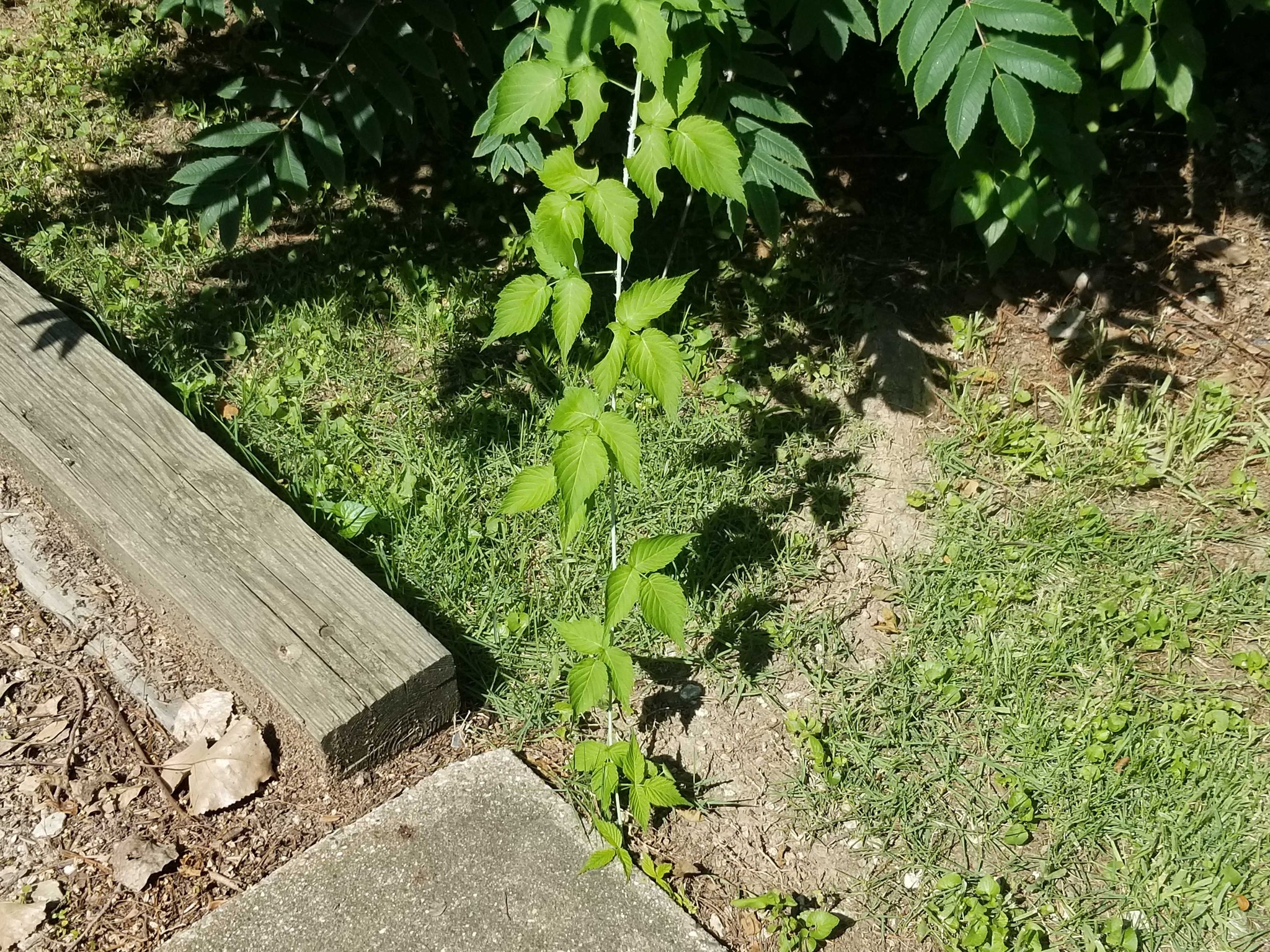
Boxelder Maple
Acer negundo
A medium-sized deciduous tree characterized by compound leaves with 3 to 7 leaflets, often resembling poison ivy when young. It features green stems and develops a broad, irregular crown with age.
- Light
- Full sun to partial shade (4-6+ hours of direct light per day)
- Water
- Moderate; thrives in moist conditions but is relatively drought-tolerant once established. Water deeply during prolonged dry periods.
- Growth
- Perennial deciduous tree; fast-growing with an irregular, spreading form. Can reach heights of 30-50 feet with a similar spread.
Care instructions
Provide full sun to partial shade in moist, well-draining soil. It is highly adaptable and can tolerate a wide variety of soil types and moisture levels once established. Pruning should be done in late fall or winter to manage its rapid, often brittle growth.
Growing details
Sunlight
Full sun to partial shade (4-6+ hours of direct light per day)
Watering
Moderate; thrives in moist conditions but is relatively drought-tolerant once established. Water deeply during prolonged dry periods.
Soil
Adaptable to various soils (clay, loam, sand) with a pH range from 5.0 to 8.0; prefers moist, well-drained locations.
Hardiness zone
USDA zones 2-9
Growth habit
Perennial deciduous tree; fast-growing with an irregular, spreading form. Can reach heights of 30-50 feet with a similar spread.
Bloom season
Early spring; small, greenish-yellow flowers appear before or with leaves, followed by paired winged seeds (samaras).
Propagation
Propagated primarily by seed in the fall or by softwood cuttings taken in late spring to early summer.
Common pests & issues
Boxelder bugs are a common nuisance. Susceptible to verticillium wilt, anthracnose, and wood rot due to its soft, brittle wood.
Similar species
Poison Ivy (Toxicodendron radicans) has 3 leaflets but lacks the opposite leaf arrangement of Boxelder; Elderberry (Sambucus spp.) has more numerous leaflets and different stem characteristics.