
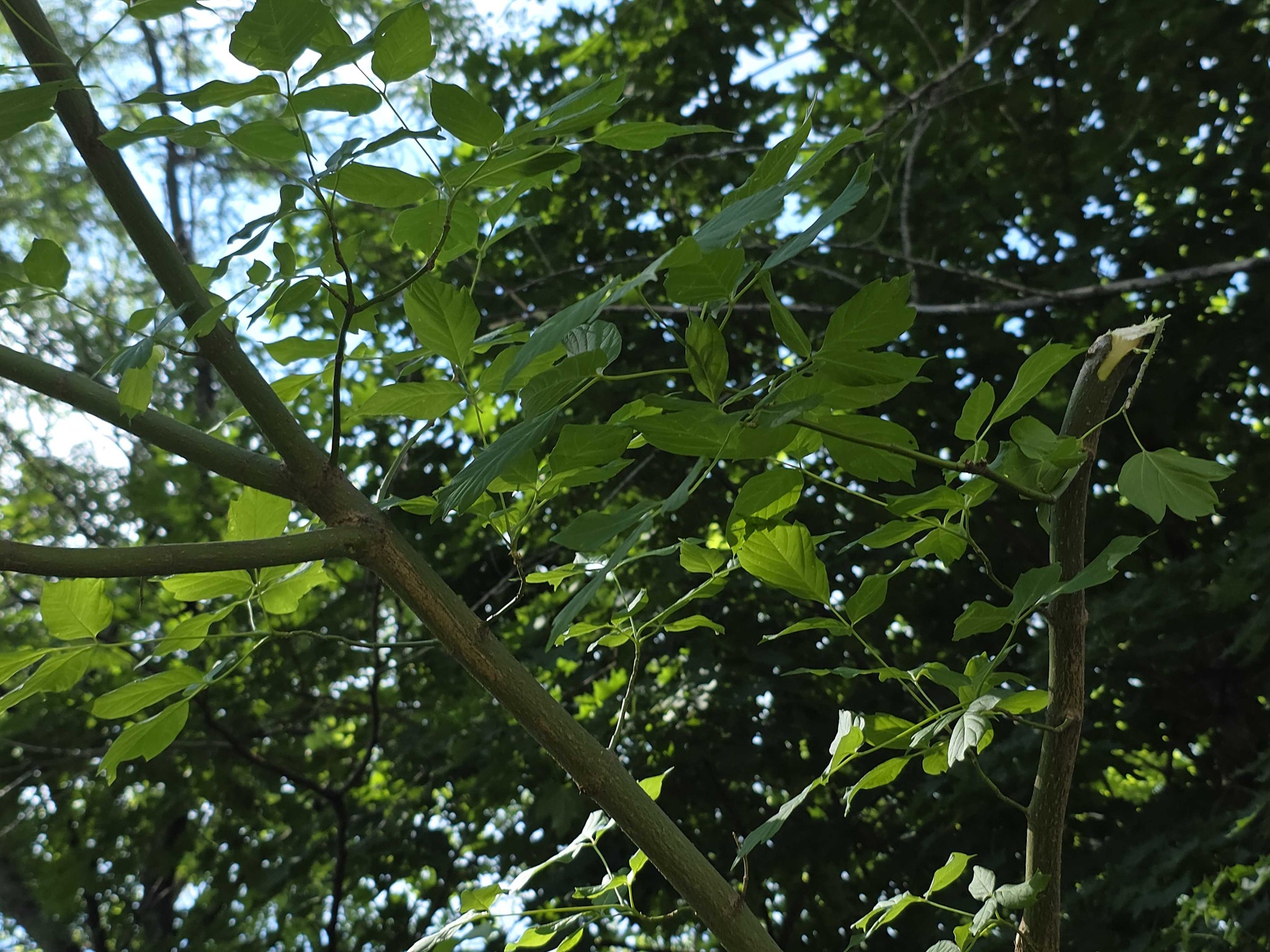
Boxelder
Acer negundo
A fast-growing, deciduous tree known for being the only North American maple with compound leaves. It features light green leaflets and characteristic winged seeds (samaras).
- Light
- Full sun to partial shade (typically 4 to 6+ hours of sunlight per day).
- Water
- Moderate; prefers moist soil but is relatively drought-tolerant once established. Thrives near water sources.
- Growth
- Perennial tree; fast growth rate; typically reaches 30-50 feet tall and wide with a broad, rounded crown.
Care instructions
Low maintenance. Plant in full sun to partial shade in moist, well-draining soil. Does not require frequent fertilization and can tolerate various urban conditions.
Growing details
Sunlight
Full sun to partial shade (typically 4 to 6+ hours of sunlight per day).
Watering
Moderate; prefers moist soil but is relatively drought-tolerant once established. Thrives near water sources.
Soil
Adaptable to various soils (clay, loam, sand) but prefers moist, well-drained, slightly acidic to neutral pH (6.0-7.0).
Hardiness zone
USDA zones 2 to 9.
Growth habit
Perennial tree; fast growth rate; typically reaches 30-50 feet tall and wide with a broad, rounded crown.
Bloom season
Spring (March to April); flowers are small, yellow-green, and lack petals, appearing before or with the leaves.
Propagation
Primarily by seed (samaras) in autumn, or through softwood cuttings and hardwood cuttings.
Common pests & issues
Boxelder bugs (Boisea trivittata) are very common pests. Susceptible to leaf spot, canker, and powdery mildew.
Similar species
Poison Ivy (Toxicodendron radicans) often confused due to three leaflets, but Boxelder is a tree with opposite branching, while Poison Ivy is a vine or shrub with alternate branching. Also resembles Ash trees (Fraxinus species).