
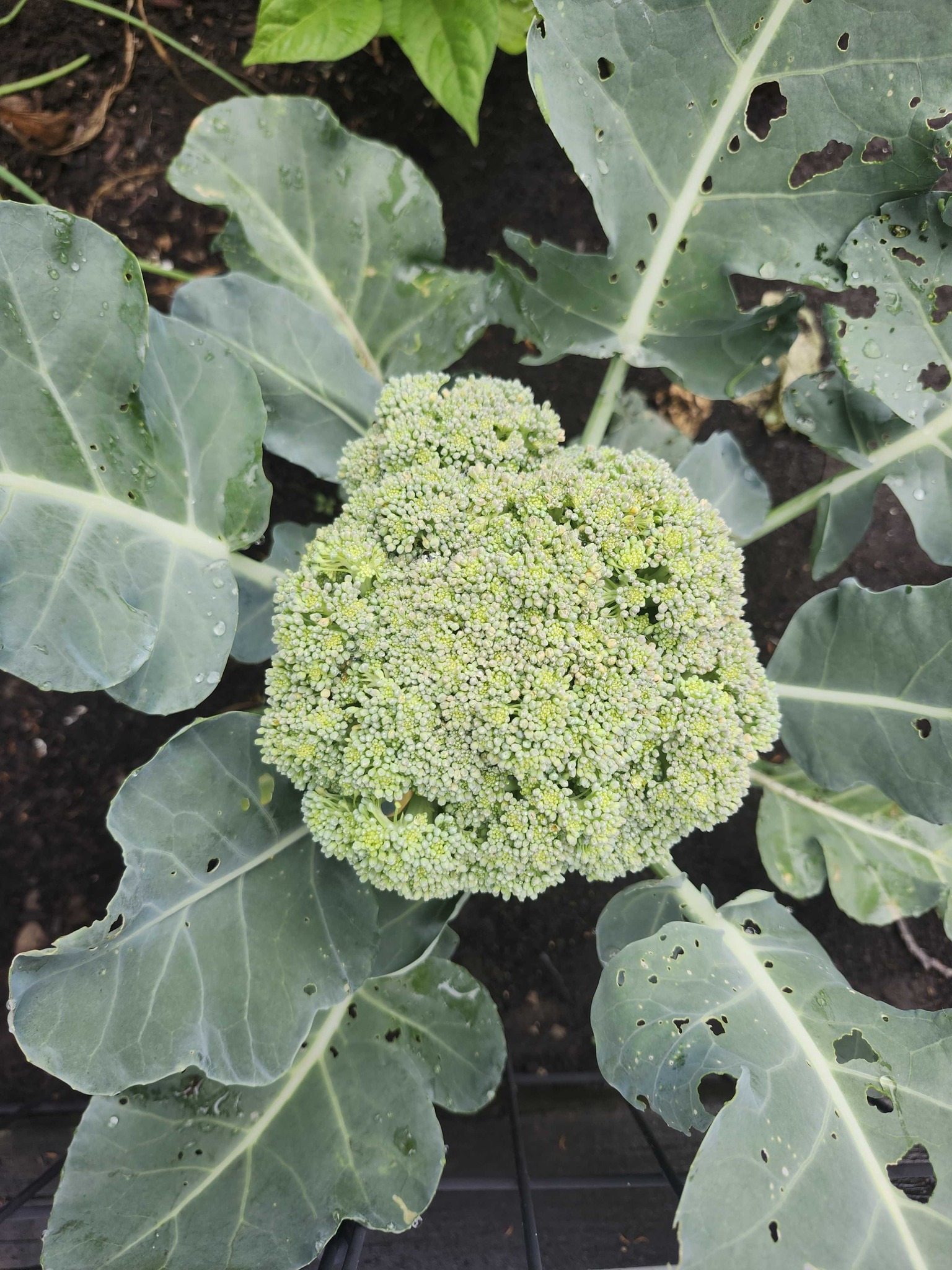
Broccoli
Brassica oleracea var. italica
A cool-season annual or biennial herb characterized by its thick green stalks and a large, dense head of undeveloped terminal flower buds.
- Light
- Full sun, requiring at least 6 to 8 hours of direct sunlight per day.
- Water
- Requires regular watering to maintain consistently moist soil, approximately 1 to 1.5 inches per week. Avoid wetting the heads when watering.
- Growth
- Annual; grows in an upright, bushy form reaching 1 to 2.5 feet in height and width.
Care instructions
Requires full sun and consistent soil moisture. Plant in fertile, well-draining soil and apply a nitrogen-rich fertilizer during the early growth stages. Best grown in cool temperatures.
Growing details
Sunlight
Full sun, requiring at least 6 to 8 hours of direct sunlight per day.
Watering
Requires regular watering to maintain consistently moist soil, approximately 1 to 1.5 inches per week. Avoid wetting the heads when watering.
Soil
Rich, loamy soil with excellent drainage and a pH between 6.0 and 7.0.
Hardiness zone
Hardy as a cool-season annual; best grown in USDA zones 2-11 during appropriate seasons.
Growth habit
Annual; grows in an upright, bushy form reaching 1 to 2.5 feet in height and width.
Bloom season
Produced in cool temperatures; features a central green head composed of tiny flower buds that can eventually open into four-petaled yellow flowers if not harvested.
Propagation
Typically grown from seeds started indoors 6-8 weeks before the last frost or directly sown in the garden in early spring or late summer.
Common pests & issues
Susceptible to cabbage worms, aphids, and flea beetles. Diseases include clubroot, downy mildew, and black rot.
Similar species
Cauliflower (Brassica oleracea var. botrytis) which has white heads and different leaf structure, and Romanesco broccoli which features fractal-patterned pointed heads.