
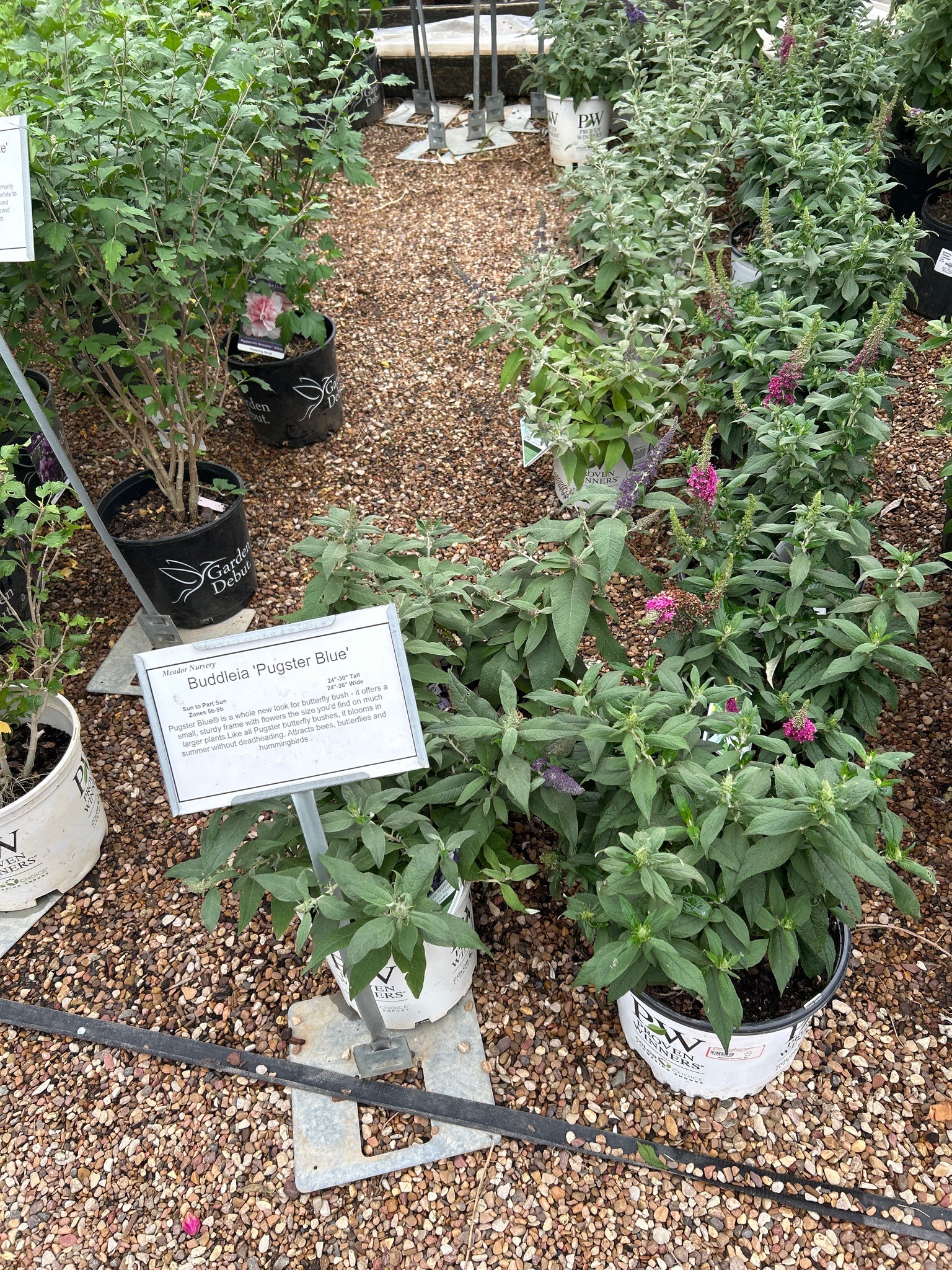
Butterfly Bush 'Pugster Blue'
Buddleja davidii 'Pugster Blue'
A dwarf, deciduous shrub characterized by thick, sturdy stems and large, fragrant, cone-shaped purple-blue flower clusters. It has lance-shaped green leaves and a compact, mounded habit.
- Light
- Full sun (6+ hours per day) is best for optimal flowering and sturdy stems.
- Water
- Moderate watering needs. Needs consistent moisture during the first year, but is drought-tolerant once established. Signs of underwatering include wilting leaves.
- Growth
- Dwarf deciduous perennial shrub with a compact, mounded growth habit. Reaches a mature height and spread of about 2 feet by 2 feet.
Care instructions
Thrives in full sun and well-drained soil. Water regularly until established, then it is quite drought-tolerant. Prune back in late winter or early spring to encourage new growth and maintain shape. Fertilize once in early spring.
Growing details
Sunlight
Full sun (6+ hours per day) is best for optimal flowering and sturdy stems.
Watering
Moderate watering needs. Needs consistent moisture during the first year, but is drought-tolerant once established. Signs of underwatering include wilting leaves.
Soil
Prefers well-drained, fertile soil with a neutral pH (6.0 to 7.0). Avoid heavy clay or soggy conditions.
Hardiness zone
USDA Zones 5-9
Growth habit
Dwarf deciduous perennial shrub with a compact, mounded growth habit. Reaches a mature height and spread of about 2 feet by 2 feet.
Bloom season
Flowers from early summer through first frost. Produces large, dense, cone-shaped spikes of true-blue to violet flowers with tiny orange eyes.
Propagation
Propagated through softwood cuttings in summer or semi-hardwood cuttings in fall. Patents often protect specific cultivars like 'Pugster'.
Common pests & issues
Prone to spider mites in hot, dry conditions and root rot in poorly drained soil. Downy mildew may occur in humid climates.
Similar species
Distinguished from other Buddleja davidii cultivars by its extremely compact size and unusually thick, sturdy stems for a dwarf variety.