
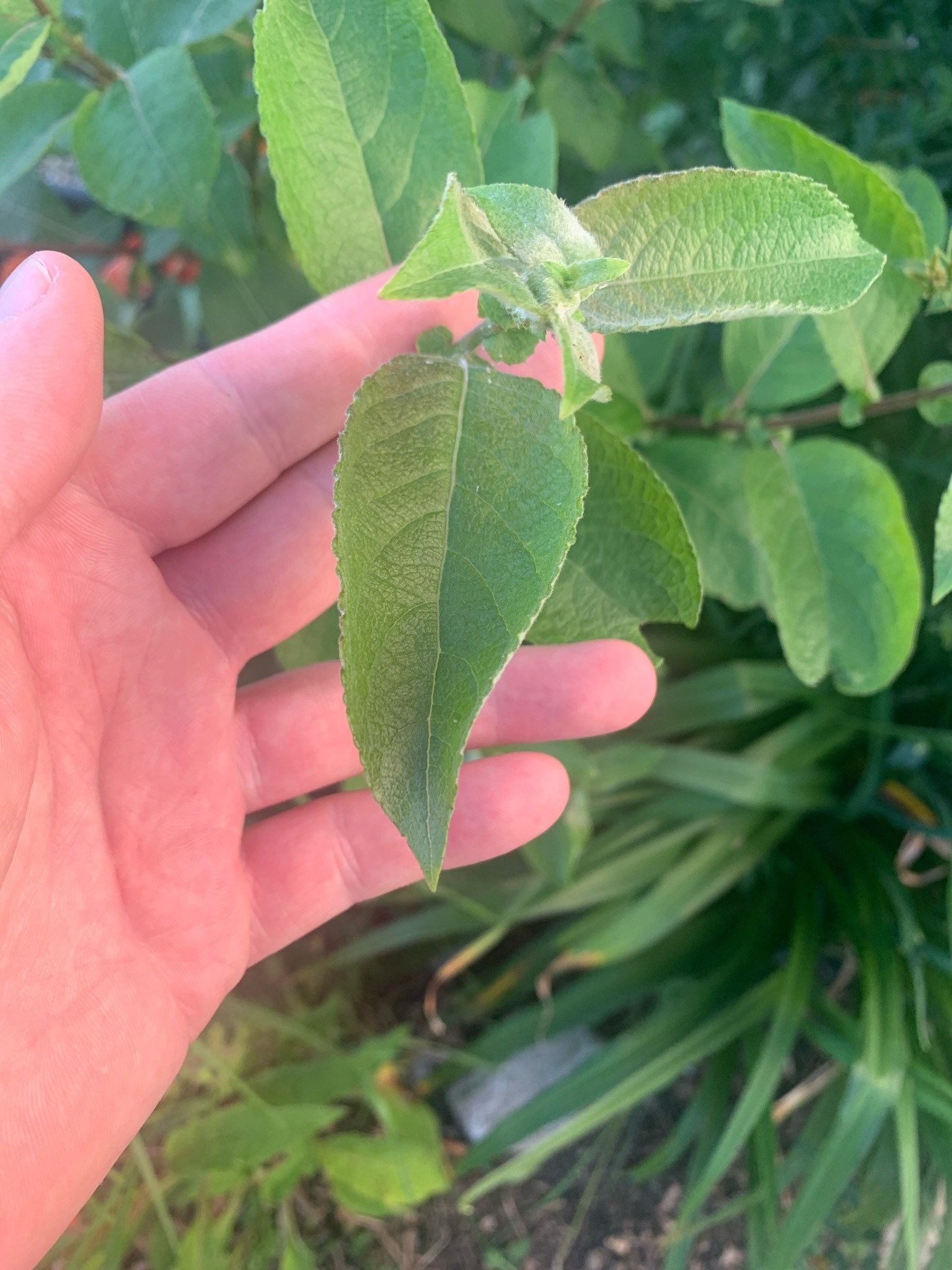
Butterfly Bush
Buddleja davidii
A vigorous deciduous shrub known for its arching branches, lance-shaped leaves with felt-like gray-green undersides, and long, cone-shaped clusters of fragrant flowers.
- Light
- Full sun, requiring at least 6 to 8 hours of direct light per day for optimal flowering.
- Water
- Moderate watering when first planted; once established, it is relatively drought-tolerant. Water weekly during very dry spells.
- Growth
- Deciduous perennial shrub. Fast-growing, reaching 6-12 feet in height and 4-15 feet in spread depending on the cultivar.
Care instructions
Low maintenance once established. Plant in full sun and well-drained soil. Prune hard in late winter or early spring to encourage vigorous new growth and more blooms. Avoid over-fertilizing as it can lead to more leaf growth than floral growth.
Growing details
Sunlight
Full sun, requiring at least 6 to 8 hours of direct light per day for optimal flowering.
Watering
Moderate watering when first planted; once established, it is relatively drought-tolerant. Water weekly during very dry spells.
Soil
Well-drained soil is essential to prevent root rot. Prefers a neutral to slightly alkaline pH (6.0-7.5).
Hardiness zone
5 through 9; can die back to the ground in colder climates and regrow in spring.
Growth habit
Deciduous perennial shrub. Fast-growing, reaching 6-12 feet in height and 4-15 feet in spread depending on the cultivar.
Bloom season
Mid-summer through autumn. Features dense panicles of purple, pink, white, or blue tiny tubular flowers with a honey-like scent.
Propagation
Easily propagated through softwood cuttings in summer or semi-ripe cuttings in autumn.
Common pests & issues
Relatively pest-resistant but can be susceptible to spider mites in hot, dry weather. Root rot occurs in poorly drained soils.
Similar species
Lilac (Syringa), which blooms earlier in spring and has smoother leaves; and Vitex agnus-castus, which has palmately compound leaves.