Common Sunflower
Scientific Name: Helianthus annuus
Plant Family: Asteraceae
Native Region: North America
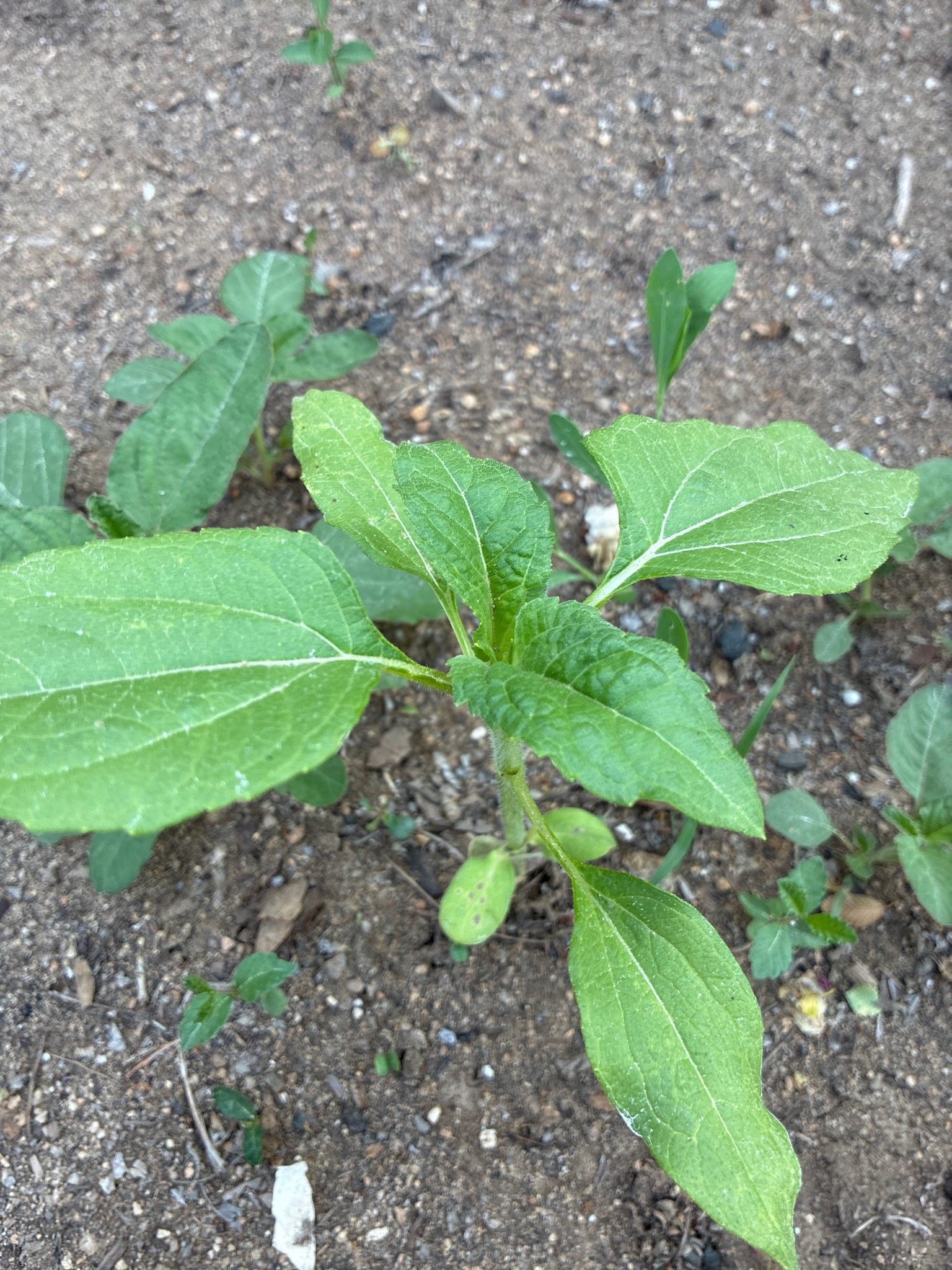
Brief Description
A tall, fast-growing annual plant with thick, hairy stems and large, coarse, heart-shaped green leaves. This seedling shows the characteristic rough texture and broad opposite-to-alternate leaf pattern.
Care Instructions
Requires full sun and deep, well-draining soil. Water regularly while establishing, but adult plants are somewhat drought-tolerant. Feed with high-nitrogen fertilizer in early stages, then high-phosphorus as it nears bloom.
Medicinal Value
We do not currently provide medicinal value for plant identifications.
Sunlight
Full sun (6-8+ hours per day). These plants exhibit heliotropism, turning their heads to follow the sun.
Watering
Water daily for young seedlings; established plants need about 1 inch of water per week. Over-watering can lead to root rot.
Soil
Well-drained, loose soil with a slightly acidic to neutral pH (6.0-7.5). They have long taproots and need space to grow deep.
Hardiness Zone
Zones 2-11 (grown as an annual)
Growth Habit
Annual herb; fast-growing, upright habit reaching 3-10 feet tall depending on variety.
Bloom Season
Mid-summer to early fall. Large composite flowers with yellow ray florets and dark brown or yellow disc florets.
Toxicity
Generally non-toxic to humans, dogs, cats, and horses. However, the rough hairs on the stems can cause minor skin irritation in sensitive individuals.
Propagation
Easily propagated by seed sown directly into the soil after the last frost.
Common Pests & Issues
Susceptible to squirrels and birds eating seeds, powdery mildew, rust, and aphids. Supports tall plants with stakes if they are in windy areas.
Similar Species
Jerusalem Artichoke (Helianthus tuberosus) which is perennial and has edible tubers, and various Rudbeckia species (Black-eyed Susans) which are generally smaller.
Interesting Facts
Sunflowers were domesticated by Native Americans even before corn. They are also known for their ability to extract toxins, such as lead and arsenic, from contaminated soil.
User Notes
G
Created At: 2026-05-26T01:20:01.603412