Prostrate Pigweed (or Mat Amaranth)
Scientific Name: Amaranthus albus
Plant Family: Amaranthaceae
Native Region: Native to central and eastern North America; now naturalized worldwide in temperate and tropical regions.
Brief Description
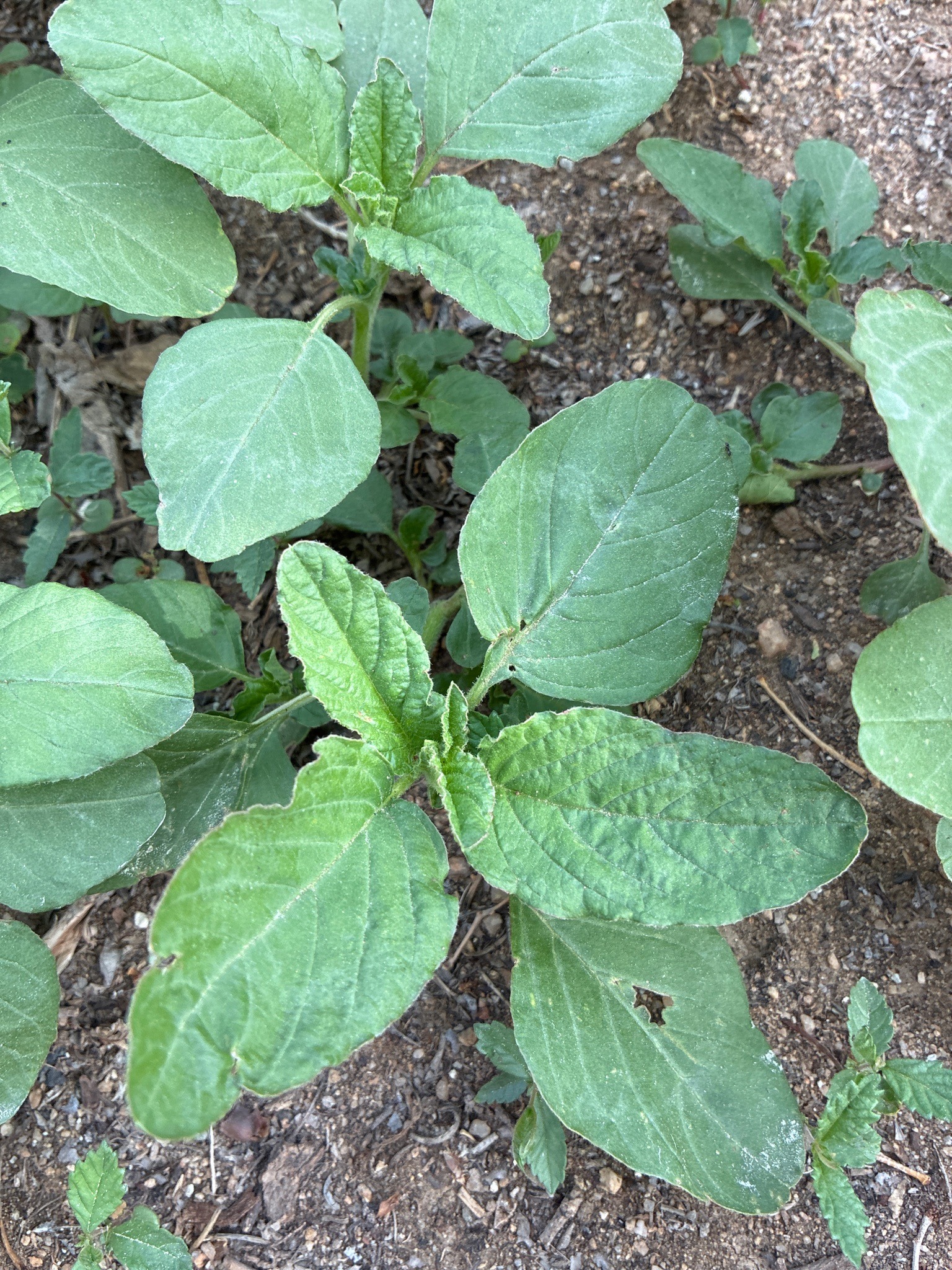
A low-growing, sprawling annual herb with light green, oval to egg-shaped leaves that often have wavy margins and a small notch at the tip. The stems are typically pale green to whitish.
Care Instructions
This is often considered a weed and requires little care. It thrives in disturbed soils with full sun and occasional watering. It does not require fertilizer in most garden conditions.
Medicinal Value
We do not currently provide medicinal value for plant identifications.
Sunlight
Full sun (6-8+ hours per day); it is highly light-responsive and grows poorly in heavy shade.
Watering
Moderate to low. It is drought-tolerant once established but grows more vigorously with regular moisture. Overwatering can lead to root rot.
Soil
Prefers well-drained, sandy, or loamy soils with a neutral pH, though it can tolerate poor, compacted, and disturbed soils.
Hardiness Zone
Annual; grows in USDA zones 3-11 during the frost-free season.
Growth Habit
Summer annual. It has a prostrate, branching growth habit forming mats on the ground. Can reach 6-20 inches in height and spread up to 2-3 feet.
Bloom Season
Mid-summer to early autumn. Flowers are small, greenish, and inconspicuous, growing in dense clusters in leaf axils.
Toxicity
Generally non-toxic, but plants grown in nitrogen-rich soils can accumulate nitrates, which can be harmful if consumed in large quantities by livestock. Contains oxalates, which should be avoided by those with kidney stones.
Propagation
Propagates solely by seed. Each plant can produce thousands of seeds that remain viable in the soil for years.
Common Pests & Issues
Commonly affected by flea beetles, cucumber beetles, and aphids. It can also host viruses that affect vegetable crops like tomatoes and peppers.
Similar Species
Amaranthus blitoides (Prostrate Amaranth) and Amaranthus retroflexus (Redroot Pigweed). It is distinguished from the latter by its low, spreading habit versus the upright growth of Redroot.
Interesting Facts
Also known as 'tumbleweed' because the plant can break off at the base when dry and roll with the wind to disperse its seeds across large distances.
Created At: 2026-05-26T01:13:23.650347