Sacred Datura / Thorn Apple
Scientific Name: Datura wrightii
Plant Family: Solanaceae (Nightshade family)
Native Region: Southwestern United States and Northern Mexico
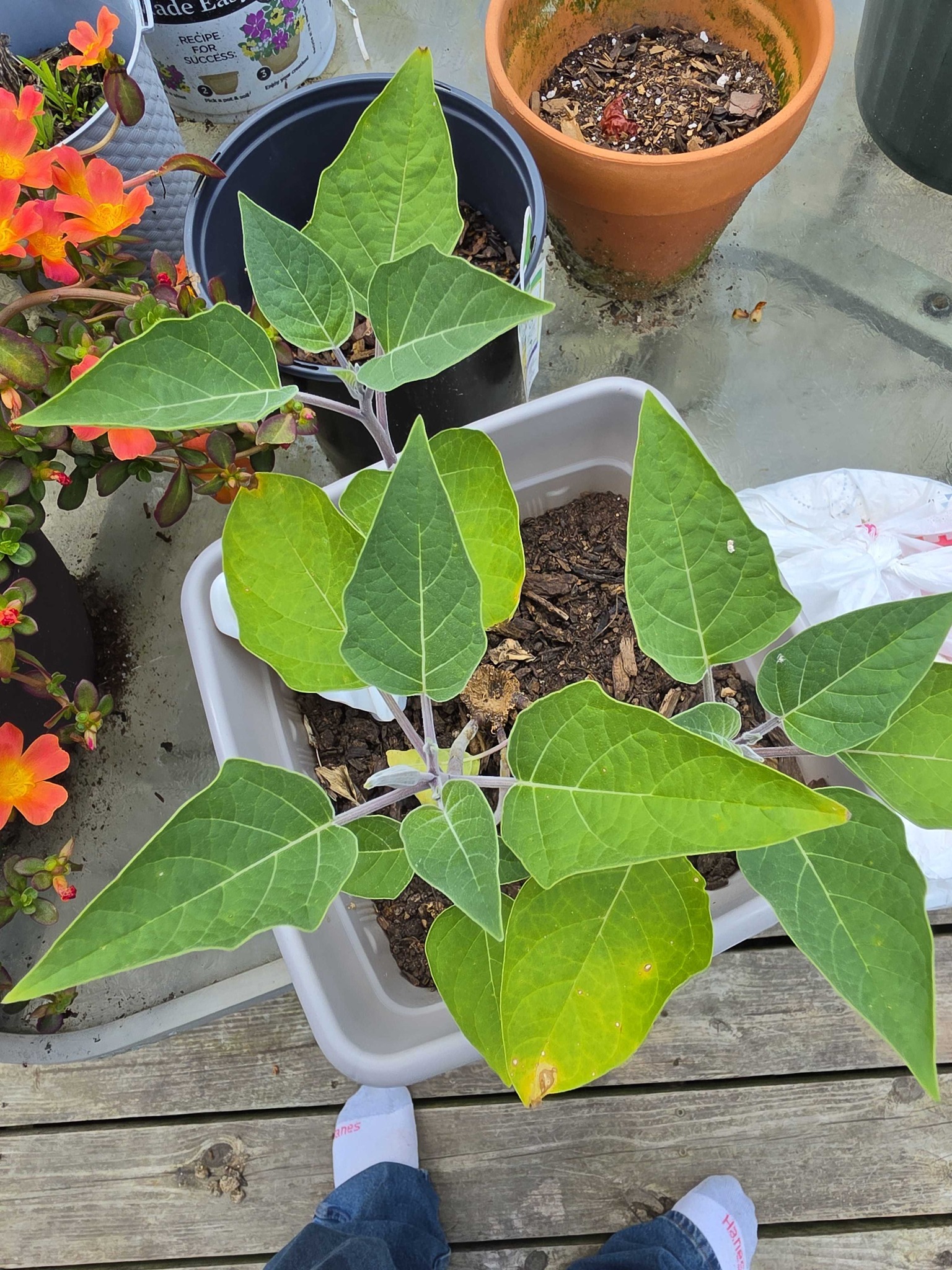
Brief Description
A robust perennial herb known for its large, ovate, grayish-green leaves that have a velvet-like texture due to fine hairs. The plant has thick, purplish stems and will eventually produce large, trumpet-shaped white flowers.
Care Instructions
Provide full sun and well-draining soil. It is very drought-tolerant once established and requires minimal fertilizer. Avoid overwatering to prevent root rot.
Medicinal Value
We do not currently provide medicinal value for plant identifications.
Sunlight
Full sun; at least 6 to 8 hours of direct sunlight per day.
Watering
Low to moderate. Allow the soil to dry out between waterings. Highly drought-tolerant but grows more vigorously with occasional deep watering.
Soil
Well-drained sandy or loamy soil; pH neutral to slightly alkaline.
Hardiness Zone
8 through 11
Growth Habit
Perennial; sprawling herb growing 3 to 5 feet wide and 2 to 3 feet tall.
Bloom Season
Late spring through early autumn; large, fragrant white or pale lavender trumpet-shaped flowers that open at night.
Toxicity
Highly toxic to humans, dogs, cats, and livestock. All parts of the plant contain tropane alkaloids (scopolamine, hyoscyamine, and atropine) which cause delirium, tachycardia, and death.
Propagation
Easily propagated by seed in the spring or by root division.
Common Pests & Issues
Generally pest-resistant, but can be targeted by tomato hornworms or aphids. Overwatering leads to root rot.
Similar Species
Datura stramonium (Jimsonweed), which has more jagged, toothed leaf margins compared to the relatively smooth margins of D. wrightii.
Interesting Facts
The flowers are primarily pollinated by sphinx moths (hawkmoths) which are attracted to the plant's strong nighttime fragrance.
Created At: 2026-05-28T19:20:45.619482