
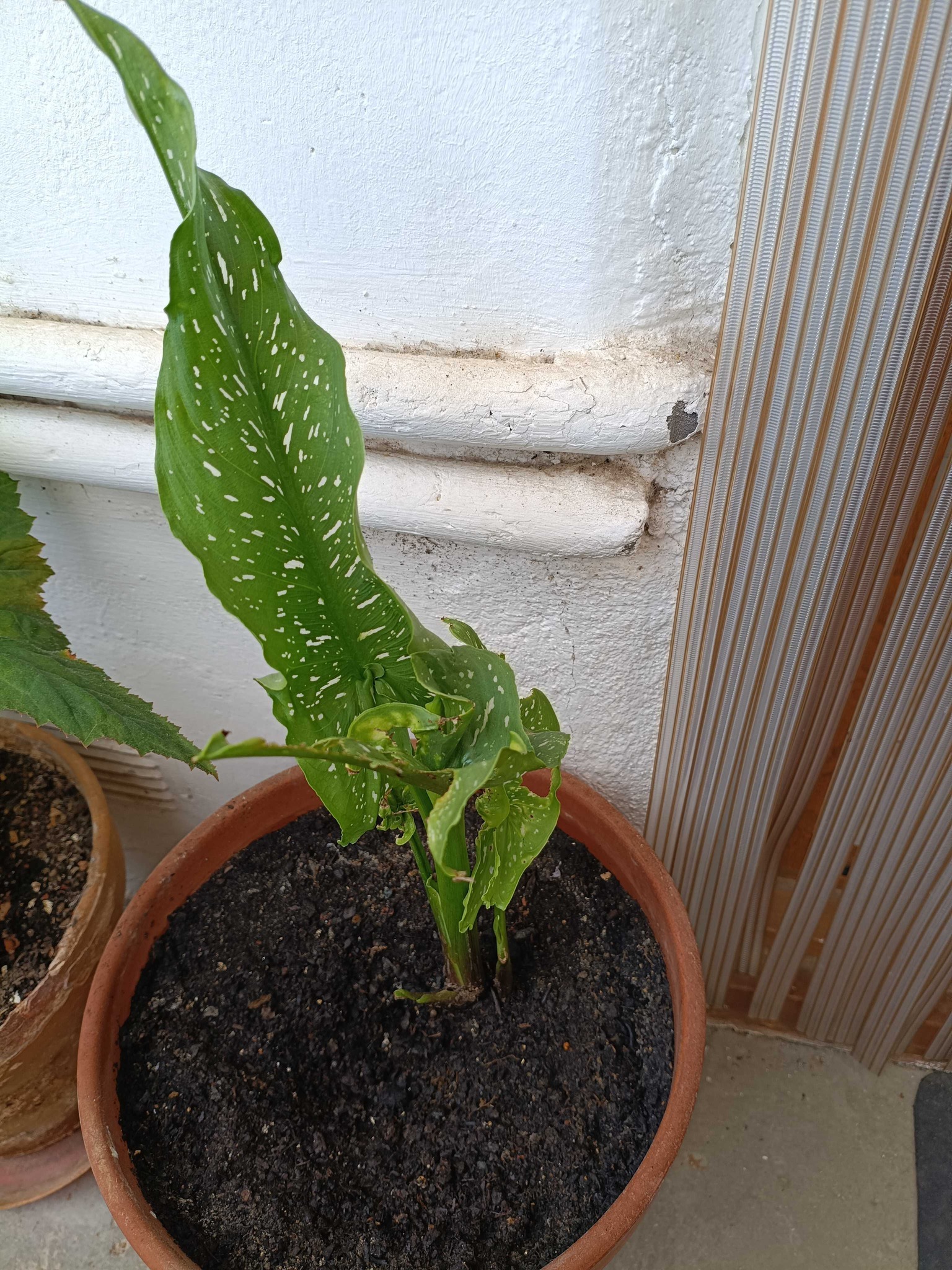
Calla Lily
Zantedeschia aethiopica
An herbaceous perennial with large, arrow-shaped green leaves that are often speckled with white transparent spots. It produces characteristic white spathe flowers with a yellow spadix.
- Light
- Bright indirect light is best; it can tolerate full sun in cooler climates but needs partial shade in hot regions (approx. 4-6 hours of light).
- Water
- Requires regular watering to keep the soil moist. It is semi-aquatic in nature. Yellowing leaves can indicate over-watering or poor drainage.
- Growth
- Perennial rhizomatous herb; typically grows 1-3 feet tall and 1-2 feet wide at a moderate rate.
Care instructions
Provide bright, indirect light and keep the soil consistently moist but not waterlogged. Use well-draining soil and fertilize monthly during the growing season with a balanced liquid fertilizer.
Growing details
Sunlight
Bright indirect light is best; it can tolerate full sun in cooler climates but needs partial shade in hot regions (approx. 4-6 hours of light).
Watering
Requires regular watering to keep the soil moist. It is semi-aquatic in nature. Yellowing leaves can indicate over-watering or poor drainage.
Soil
Rich, moist, well-draining soil high in organic matter with a slightly acidic to neutral pH (5.6 to 6.5).
Hardiness zone
8-10 (USDA)
Growth habit
Perennial rhizomatous herb; typically grows 1-3 feet tall and 1-2 feet wide at a moderate rate.
Bloom season
Late spring to mid-summer; produces a large white funnel-shaped spathe with a central yellow spike.
Propagation
Most commonly propagated by dividing the rhizomes during the dormant season (winter or early spring) or by seed.
Common pests & issues
Susceptible to bacterial soft rot if soil is too wet, aphids, and spider mites. Potted plants may suffer from leaf burn if exposed to direct, harsh afternoon sun.
Similar species
Zantedeschia albomaculata (Spotted Calla Lily) which also has white spots but usually smaller blooms, and various hybrid 'Zantedeschia' cultivars that come in many colors.