
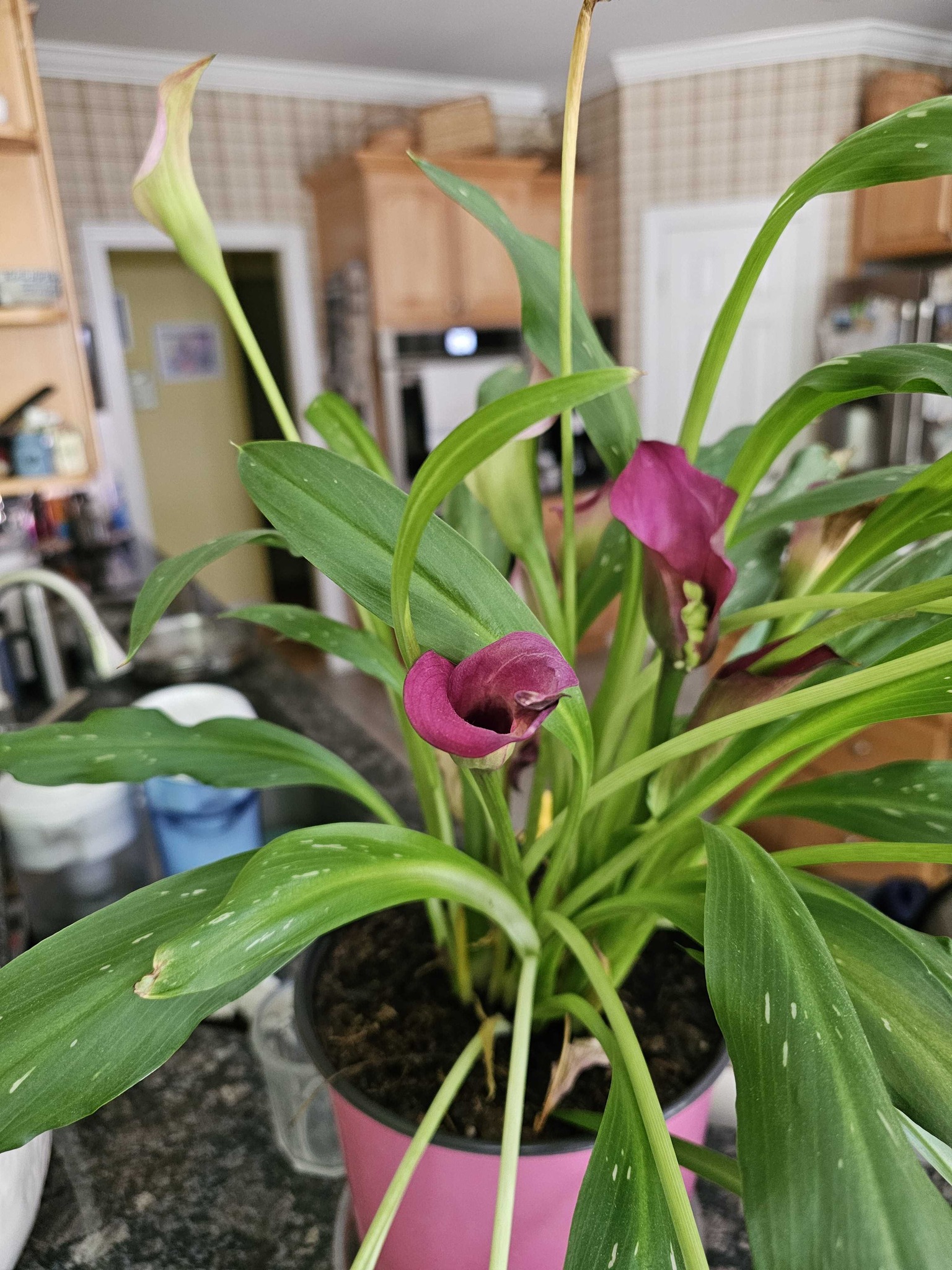
Calla Lily
Zantedeschia aethiopica
An elegant herbaceous perennial known for its distinctive funnel-shaped spathe (modified leaf) surrounding a central spadix, with arrow-shaped green leaves that often feature white speckles.
- Light
- Full sun to partial shade; prefers at least 6 hours of bright light daily. Indoors, place near a bright window but avoid direct harsh afternoon sun.
- Water
- High; maintain evenly moist soil. Do not allow the pot to dry out completely during the flowering season. Cut back on watering once foliage begins to die back for dormancy.
- Growth
- Perennial herb growing from rhizomes. Forms clumps reaching 12-36 inches in height and 12-24 inches in spread.
Care instructions
Provide bright, indirect light and keep soil consistently moist but not soggy during the growing season. Use well-draining soil and fertilize monthly with a balanced liquid fertilizer. Reduce water after blooming to allow for a dormancy period.
Growing details
Sunlight
Full sun to partial shade; prefers at least 6 hours of bright light daily. Indoors, place near a bright window but avoid direct harsh afternoon sun.
Watering
High; maintain evenly moist soil. Do not allow the pot to dry out completely during the flowering season. Cut back on watering once foliage begins to die back for dormancy.
Soil
Rich, moist, well-draining soil. Prefers slightly acidic to neutral pH (5.6 - 6.5).
Hardiness zone
8-10 (can be grown as annuals or houseplants in colder regions)
Growth habit
Perennial herb growing from rhizomes. Forms clumps reaching 12-36 inches in height and 12-24 inches in spread.
Bloom season
Spring and early summer; produces trumpet-shaped flowers (spathes) in white, yellow, pink, or deep purple.
Propagation
Division of rhizomes during the dormant season or by seed, though seeds take longer to mature into flowering plants.
Common pests & issues
Prone to root rot if overwatered. Susceptible to aphids, spider mites, and bacterial soft rot. Yellowing leaves may indicate too much water or lack of light.
Similar species
Peace Lily (Spathiphyllum) - distinguished by softer leaves and different spadix structure; Canna Lily - distinguished by much larger foliage and true petal-like flowers.