
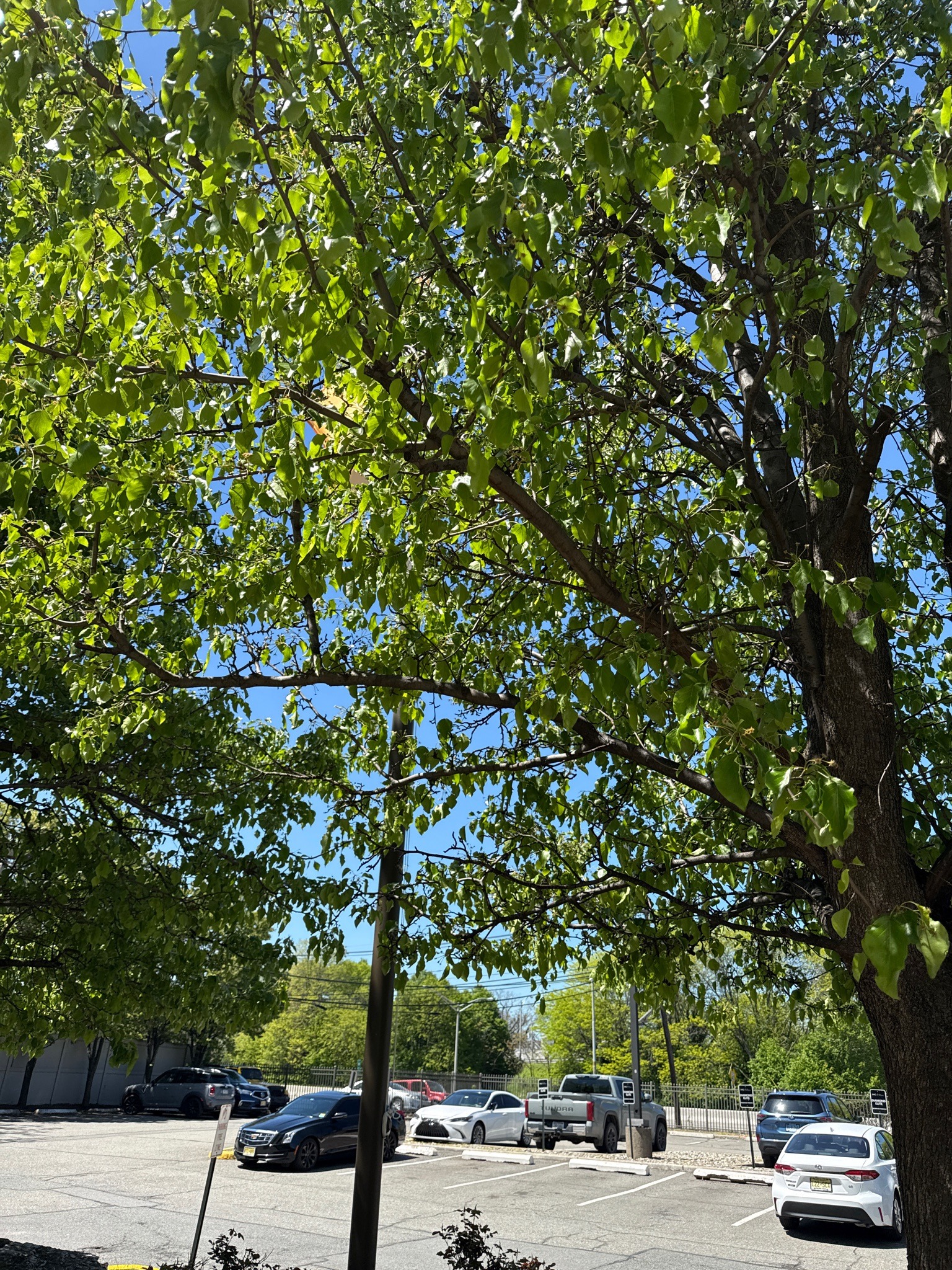
Callery Pear (Bradford Pear)
Pyrus calleryana
A medium-sized deciduous tree with a dense, conical or rounded crown. It features glossy, dark green, heart-shaped or ovate leaves with finely serrated edges that turn brilliant shades of red, purple, and orange in the fall.
- Light
- Full sun (at least 6 hours of direct sunlight per day).
- Water
- Moderate watering when young; highly drought-tolerant once established. Over-watering in heavy clay can lead to root issues, though it generally tolerates urban conditions well.
- Growth
- Deciduous tree with a fast growth rate. Typically reaches 30 to 50 feet in height with a spread of 20 to 35 feet.
Care instructions
Low maintenance and very adaptable. Plant in full sun for best flowering and fall color. It tolerates many soil types but prefers well-drained locations. Pruning is often necessary to manage its brittle branch structure, which is prone to splitting in storms.
Growing details
Sunlight
Full sun (at least 6 hours of direct sunlight per day).
Watering
Moderate watering when young; highly drought-tolerant once established. Over-watering in heavy clay can lead to root issues, though it generally tolerates urban conditions well.
Soil
Adaptable to various soils including clay, loam, and sand; prefers a slightly acidic to neutral pH (5.0–7.5).
Hardiness zone
5 through 9
Growth habit
Deciduous tree with a fast growth rate. Typically reaches 30 to 50 feet in height with a spread of 20 to 35 feet.
Bloom season
Early spring (March-April). Produces clusters of 5-petaled white flowers known for a distinct, often unpleasant 'fishy' odor.
Propagation
Chiefly by seed (dispersed by birds) or by grafting (for specific cultivars like 'Bradford'). Cuttings are also possible.
Common pests & issues
Known for structural weakness and brittle wood that breaks easily in wind or ice. Highly susceptible to Fire Blight. It is also an invasive species that outcompetes native vegetation.
Similar species
Other Pyrus species. It can be distinguished from native plums and cherries by its glossy, thicker leaves and specific pungent flower scent.