
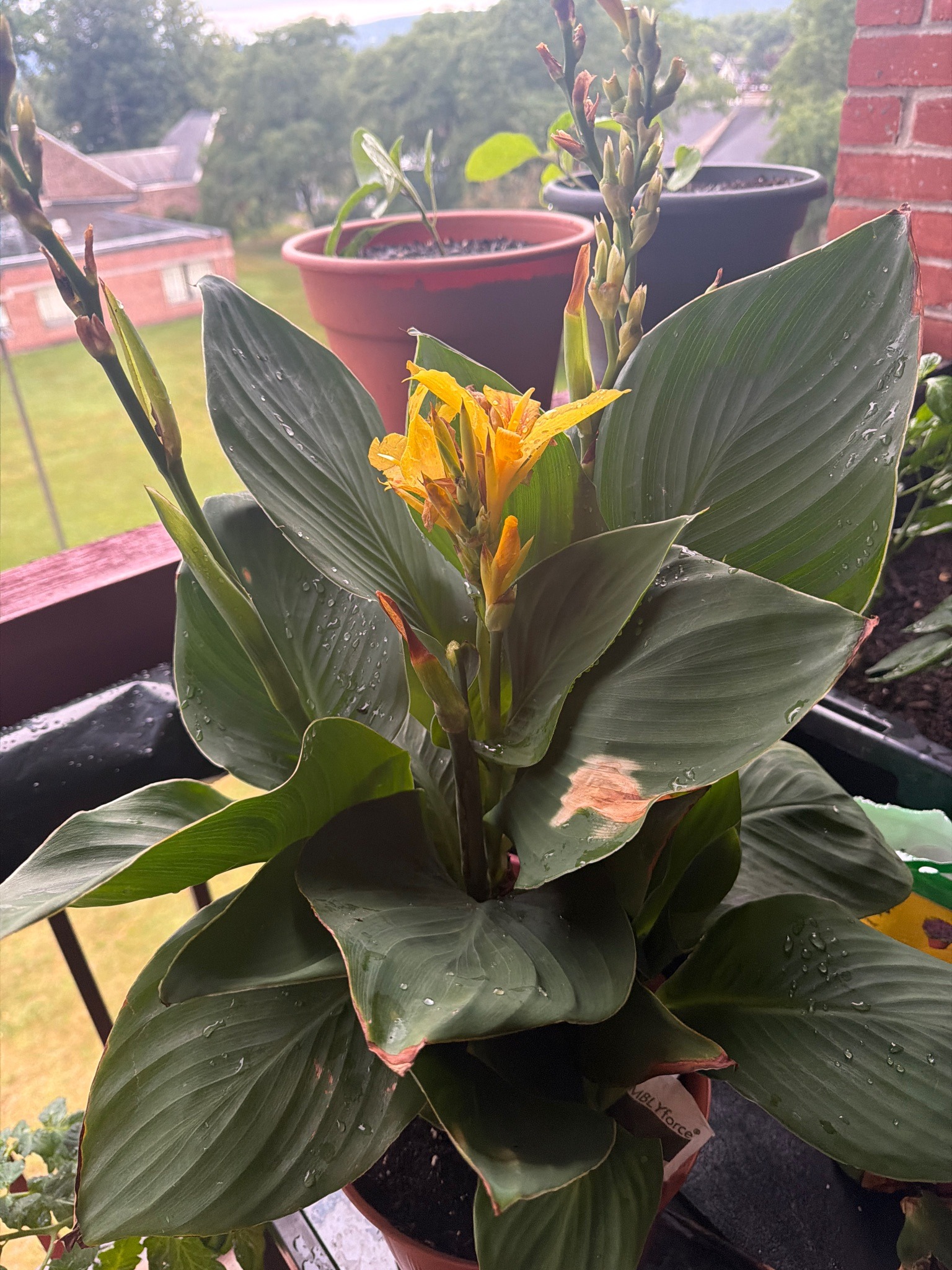
Canna Lily
Canna indica
A rhizomatous perennial featuring large, paddle-shaped, banana-like green leaves and upright stalks topped with vibrant, lily-like yellow and orange flowers.
- Light
- Full sun, at least 6 to 8 hours of direct light per day for optimal flowering
- Water
- High; requires consistently moist soil. Increase frequency during hot periods. Signs of underwatering include leaf rolling and dry edges.
- Growth
- Rhizomatous perennial with an upright, clumping habit. Can reach 2 to 6 feet in height and 2 to 3 feet in spread depending on the cultivar.
Care instructions
Provide full sun and consistently moist, rich soil. Feed regularly during the growing season with a balanced fertilizer and remove spent flower stalks to encourage reblooming. In cold climates, lift rhizomes in winter.
Growing details
Sunlight
Full sun, at least 6 to 8 hours of direct light per day for optimal flowering
Watering
High; requires consistently moist soil. Increase frequency during hot periods. Signs of underwatering include leaf rolling and dry edges.
Soil
Rich, fertile, organic-heavy soil with good moisture retention and a slightly acidic to neutral pH (6.0 to 7.0).
Hardiness zone
USDA zones 8-11; in lower zones, rhizomes must be stored indoors for winter.
Growth habit
Rhizomatous perennial with an upright, clumping habit. Can reach 2 to 6 feet in height and 2 to 3 feet in spread depending on the cultivar.
Bloom season
Late spring through autumn; flowers are asymmetric, orchid-like, and appear in shades of red, orange, yellow, or pink.
Propagation
Most easily propagated by division of the rhizomes in spring. Can also be grown from seed, which requires scarification to germinate.
Common pests & issues
Susceptible to Canna virus, rust, and leaf rollers (caterpillars that tie leaves together). Slugs and snails may attack young foliage.
Similar species
Strelitzia (Bird of Paradise) has similar foliage but distinctively shaped flowers. Hedychium (Ginger Lily) also has similar leaves but different inflorescence structures.