
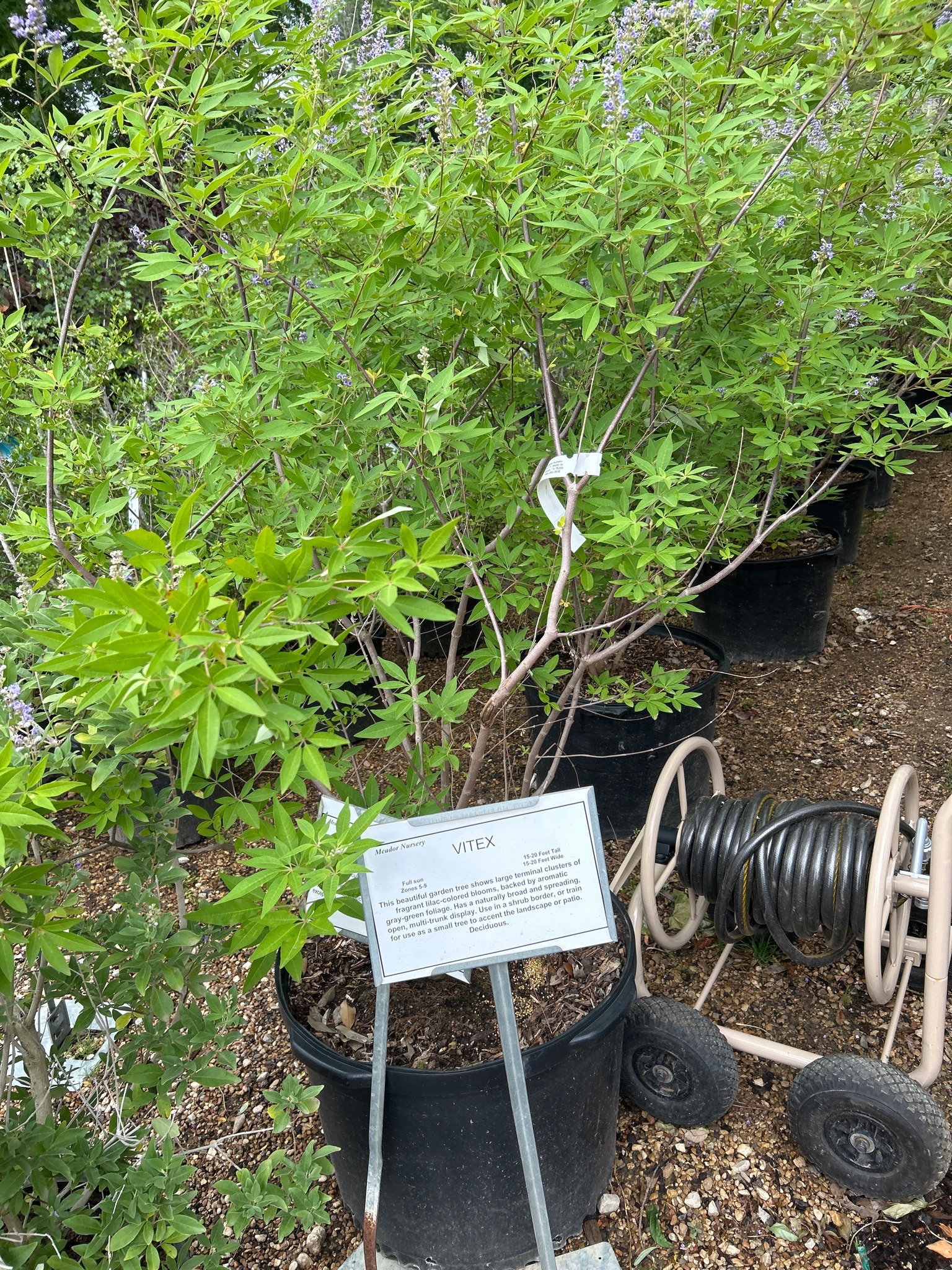
Chaste Tree (Vitex)
Vitex agnus-castus
A deciduous large shrub or small multi-trunked tree known for its aromatic, palmately compound leaves and upright spikes of lavender-blue flowers.
- Light
- Full sun (at least 6-8 hours per day)
- Water
- Low to medium. Water regularly until established; mature plants are highly drought-tolerant and prefer drying out between waterings.
- Growth
- Perennial shrub or small tree; typically reaches 10-20 feet tall and wide with a fast growth rate.
Care instructions
Plant in full sun and well-draining soil. Once established, it is very drought-tolerant. Prune back in winter to shape and encourage heavy blooming the following summer.
Growing details
Sunlight
Full sun (at least 6-8 hours per day)
Watering
Low to medium. Water regularly until established; mature plants are highly drought-tolerant and prefer drying out between waterings.
Soil
Adaptable to various soils but requires excellent drainage. Prefers slightly acidic to neutral pH (6.0-7.5).
Hardiness zone
USDA Zones 6-9
Growth habit
Perennial shrub or small tree; typically reaches 10-20 feet tall and wide with a fast growth rate.
Bloom season
Summer (Late spring through early fall); features 3-6 inch long spikes of fragrant violet, blue, or lavender flowers.
Propagation
Easy to propagate from softwood cuttings in early summer or by seed in the spring.
Common pests & issues
Relatively pest-free. Root rot can occur in poorly drained soils; leaf spot may appear in high humidity.
Similar species
Buddleja (Butterfly Bush) which has similar flower spikes but simple leaves, whereas Vitex has palmately compound (finger-like) leaves.