
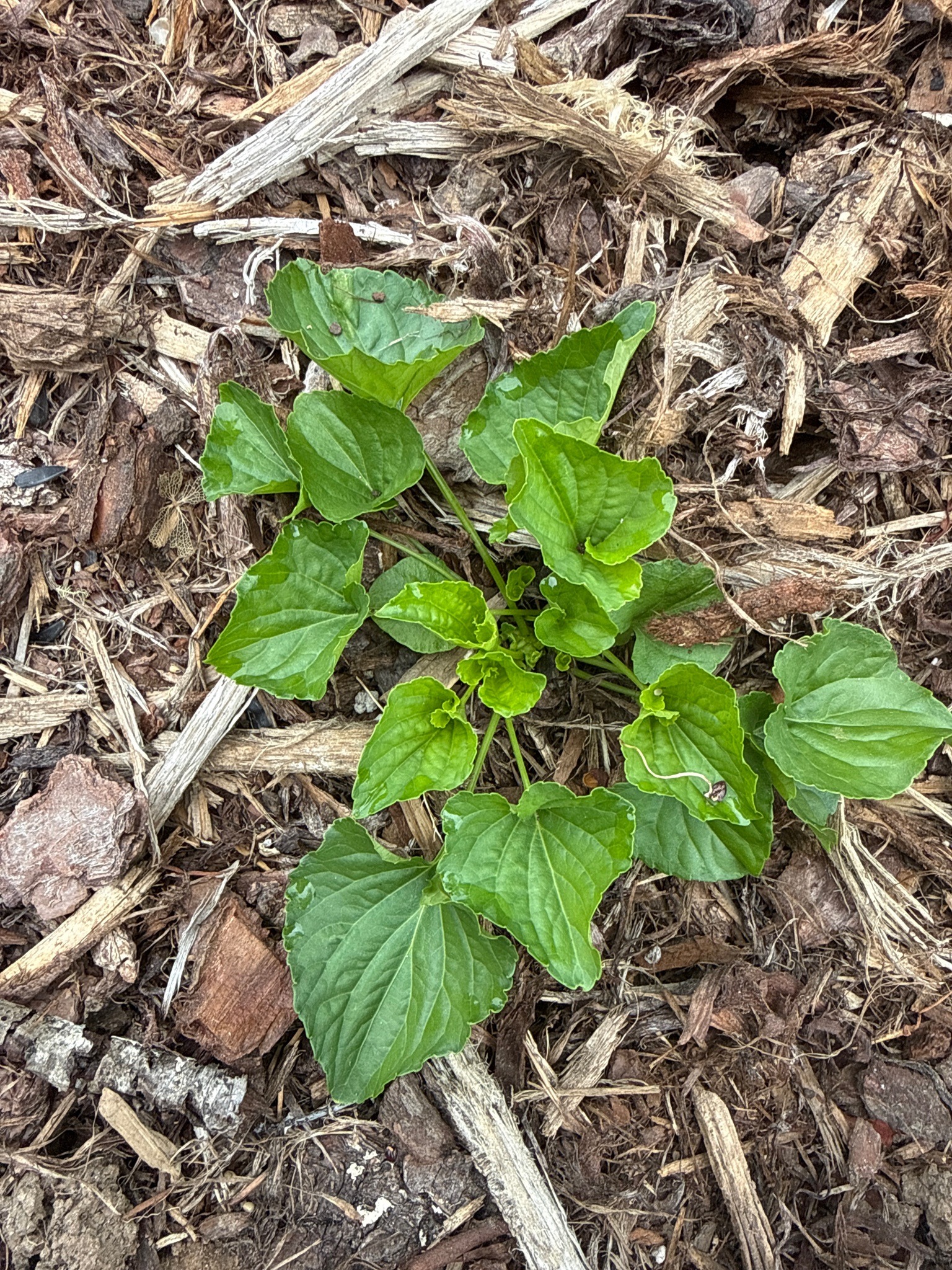
Common Blue Violet
Viola sororia
A low-growing herbaceous perennial featuring heart-shaped, scalloped leaves that grow in a basal rosette. It is known for its five-petaled purple or blue flowers.
- Light
- Full sun to partial shade; prefers filtered sunlight or 3-6 hours of daily sun.
- Water
- Consistent moisture is preferred. It is moderately drought-tolerant once established but leaves may wilt or go dormant in extreme heat without water.
- Growth
- Perennial; clump-forming basal rosette; grows 4-8 inches tall and spreads 6-12 inches wide; moderate to fast growth rate.
Care instructions
This is a hardy plant that thrives in moist, well-draining soil with partial shade. Minimal maintenance is required as it naturalizes easily. Fertilizer is generally unnecessary.
Growing details
Sunlight
Full sun to partial shade; prefers filtered sunlight or 3-6 hours of daily sun.
Watering
Consistent moisture is preferred. It is moderately drought-tolerant once established but leaves may wilt or go dormant in extreme heat without water.
Soil
Rich, moist, well-drained loamy soil; pH range 6.0 to 7.5.
Hardiness zone
USDA Zones 3-9
Growth habit
Perennial; clump-forming basal rosette; grows 4-8 inches tall and spreads 6-12 inches wide; moderate to fast growth rate.
Bloom season
Early to mid-spring; flowers are typically violet to deep blue with white throats, though white and speckled varieties exist.
Propagation
Propagates via seed (including self-seeding via cleistogamous flowers) and by division of the thick rhizomes in spring or fall.
Common pests & issues
Generally pest-resistant but can be affected by spider mites in dry conditions or leaf spot in overly wet environments. Often considered a 'weed' in manicured lawns.
Similar species
Viola cucullata (Marsh Blue Violet) which prefers wetter soils, and Viola odorata (Sweet Violet) which is fragrant and native to Europe.