
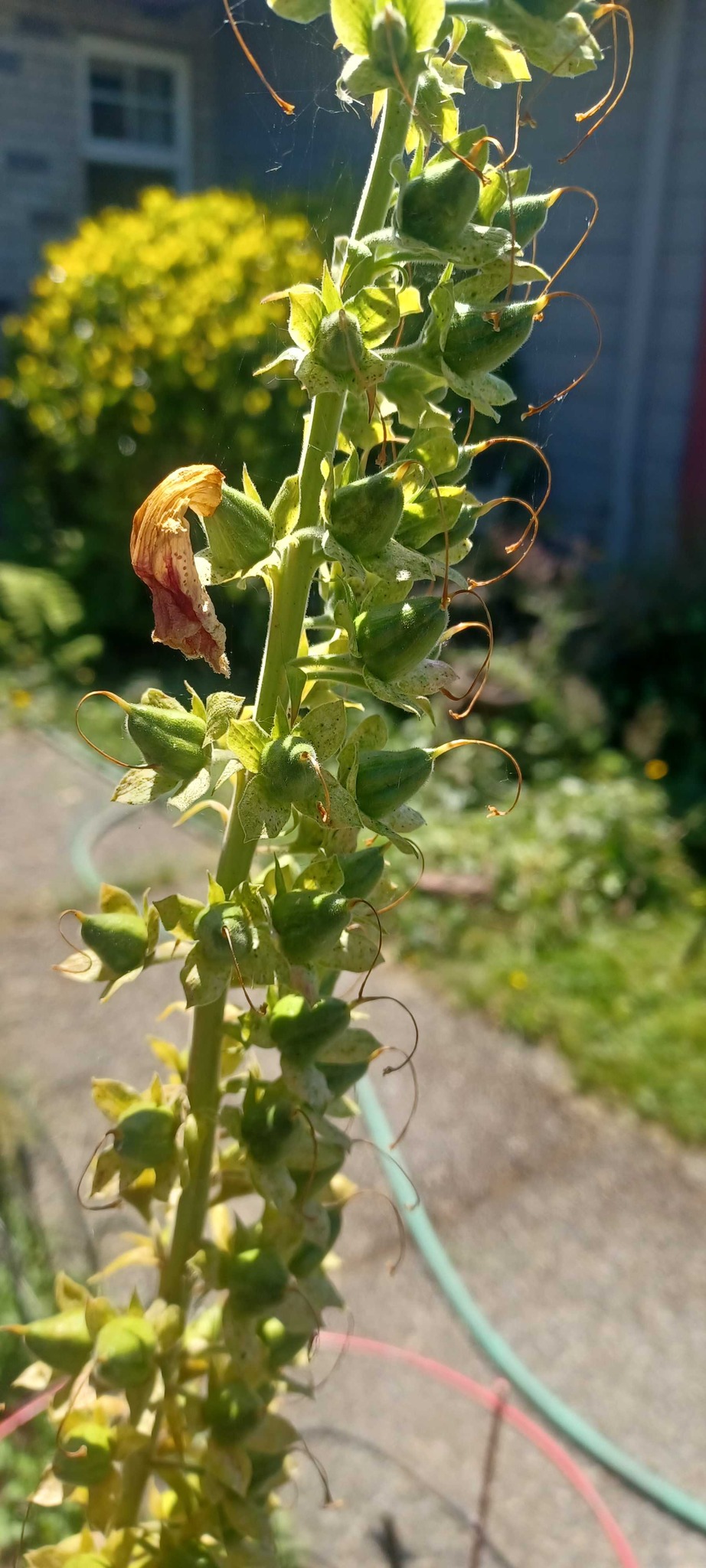
Common Foxglove
Digitalis purpurea
A tall biennial herb featuring a basal rosette of downy, grey-green leaves in its first year, followed by a tall, upright flowering spike with tubular, bell-shaped flowers in its second year. The image shows the developing seed capsules and spent flower spikes.
- Light
- Partial shade to full sun; ideally 4 to 6 hours of light, preferably morning sun in warmer climates.
- Water
- Requires consistent moisture, especially during the first year of growth. Water when the top inch of soil feels dry. It is not drought-tolerant and will wilt if underwatered.
- Growth
- Biennial herb. First year produces a basal rosette approximately 12 inches high. Second year produces a flower spike reaching 3 to 6 feet in height with a spread of 1 to 2 feet.
Care instructions
Thrives in moist, well-drained soil in partial shade. While it can tolerate full sun in cooler climates if kept moist, it generally prefers woodland-edge conditions. Provide regular water during dry spells and apply a balanced fertilizer in early spring.
Growing details
Sunlight
Partial shade to full sun; ideally 4 to 6 hours of light, preferably morning sun in warmer climates.
Watering
Requires consistent moisture, especially during the first year of growth. Water when the top inch of soil feels dry. It is not drought-tolerant and will wilt if underwatered.
Soil
Prefers loamy, humus-rich, acidic to neutral soil (pH 5.5—7.0) that is well-drained but retains moisture.
Hardiness zone
USDA zones 4 through 8.
Growth habit
Biennial herb. First year produces a basal rosette approximately 12 inches high. Second year produces a flower spike reaching 3 to 6 feet in height with a spread of 1 to 2 feet.
Bloom season
Late spring to early summer; flowers are typically purple, pink, or white, tubular with internal spotting, arranged on one side of a terminal raceme.
Propagation
Propagated via seeds sown in late spring or summer. They often self-seed readily in the garden. Division of rosettes can be done in early spring.
Common pests & issues
Susceptible to powdery mildew, leaf spot, and crown rot in poorly drained soils. Common pests include aphids and mealybugs.
Similar species
Penstemon species (Beardtongues) have similar tubular flowers but usually shorter spikes and different leaf arrangements. Campanula (Bellflowers) have similar bell shapes but lack the distinctive spots inside the corolla.