
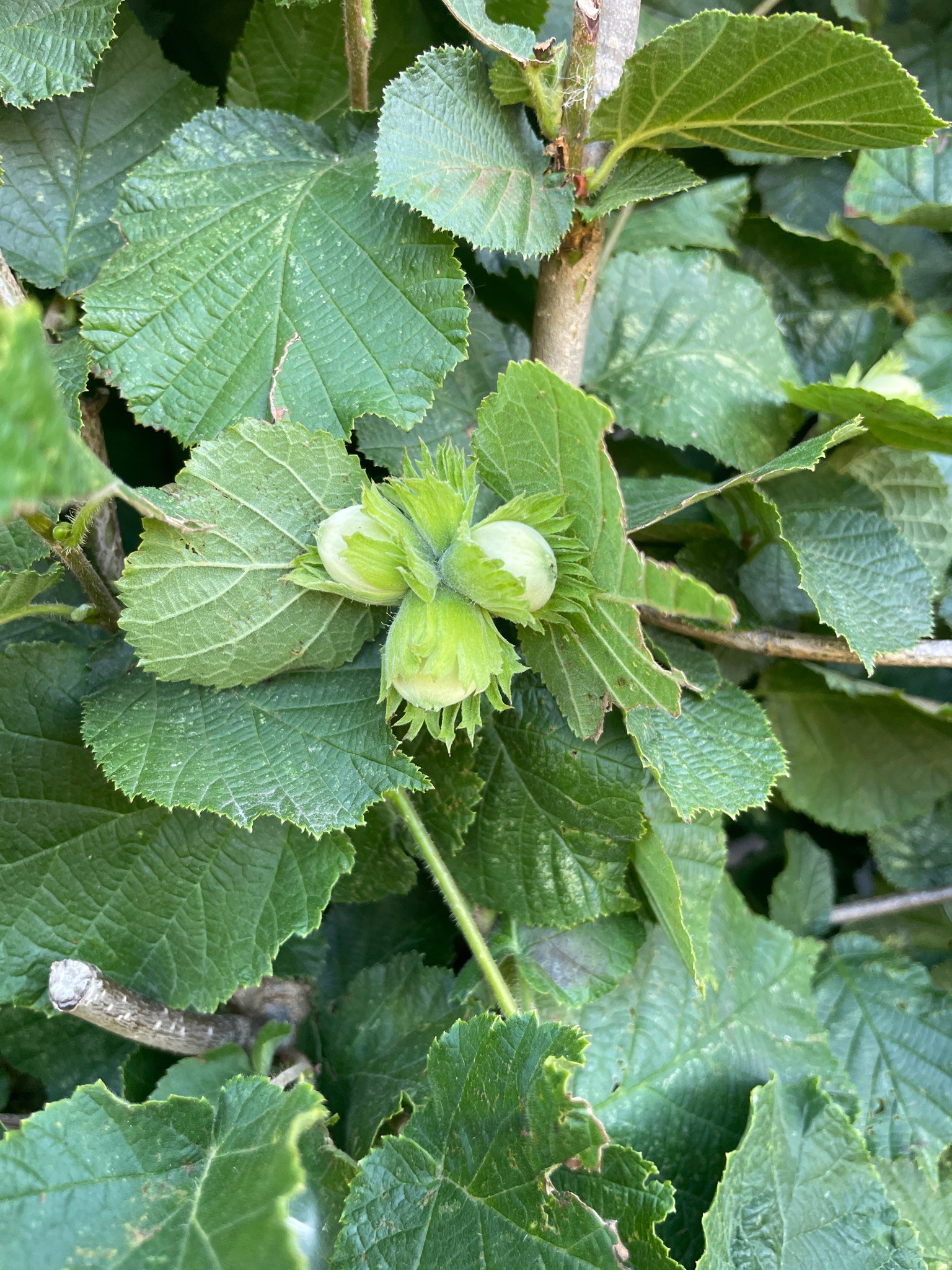
Common Hazel
Corylus avellana
A large deciduous shrub featuring rounded, double-toothed leaves with a soft, hairy texture. It produces cylindrical yellow catkins in late winter and clusters of hard-shelled nuts enclosed in leafy green husks in late summer.
- Light
- Full sun to partial shade; prefers at least 4-6 hours of sunlight for best nut production.
- Water
- Requires regular watering to keep soil consistently moist, especially during the first few years of establishment; moderately drought-tolerant once mature.
- Growth
- Multi-stemmed perennial shrub or small tree; typically grows 12 to 20 feet tall and 10 to 15 feet wide with a rounded, spreading form.
Care instructions
Thrives in moist, well-draining soil in sun or dappled shade. Prune in late winter to maintain shape or encourage new growth. Provide balanced fertilizer in early spring if growth is slow.
Growing details
Sunlight
Full sun to partial shade; prefers at least 4-6 hours of sunlight for best nut production.
Watering
Requires regular watering to keep soil consistently moist, especially during the first few years of establishment; moderately drought-tolerant once mature.
Soil
Prefers alkaline to neutral, well-drained loamy soils; pH range 6.0 to 7.5.
Hardiness zone
USDA zones 4-8
Growth habit
Multi-stemmed perennial shrub or small tree; typically grows 12 to 20 feet tall and 10 to 15 feet wide with a rounded, spreading form.
Bloom season
Late winter to early spring. Features pendulous male catkins and inconspicuous tiny red female flowers on the same plant.
Propagation
Propagated by seed (stratification required), layered stems, or by removing and replanting suckers from the base.
Common pests & issues
Susceptible to Eastern Filbert Blight, powdery mildew, and leaf spot. Pests can include aphids, nut weevils, and scale insects.
Similar species
Corylus americana (American Hazelnut) which has shorter husks that fully reveal the nut, and Corylus maxima (Filbert) which has longer tubular husks.