
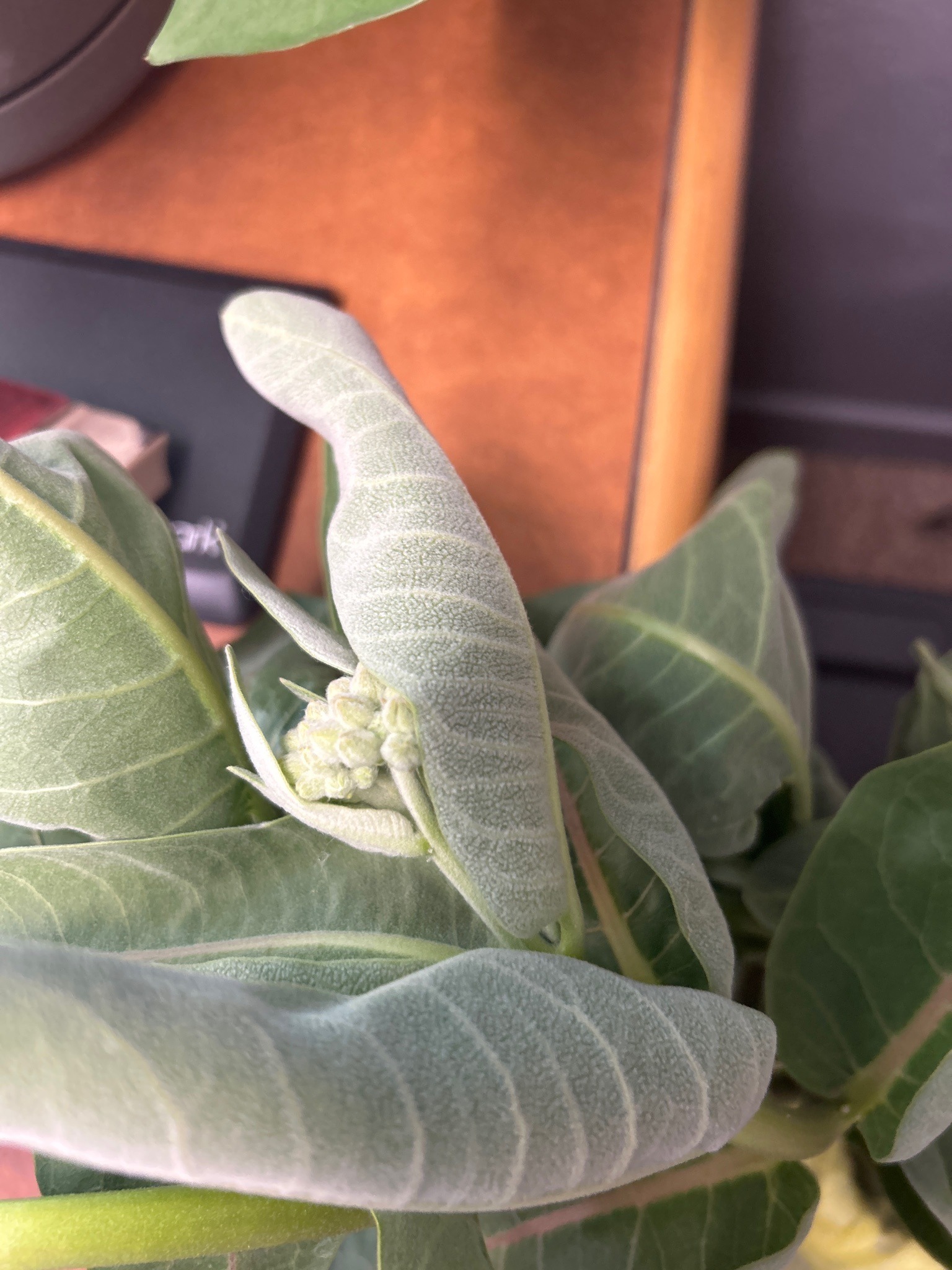
Common Milkweed
Asclepias syriaca
An herbaceous perennial known for its large, thick, velvety leaves and milky sap. It produces clusters of pink to purple spherical flower heads and distinctive seed pods.
- Light
- Full sun (at least 6-8 hours per day)
- Water
- Low to medium. Water weekly during dry spells. Once established, it is quite drought-tolerant. Over-watering can lead to root rot.
- Growth
- Upright perennial; reaches 3 to 5 feet in height with a spread of 1 to 2 feet via underground rhizomes.
Care instructions
Provide full sun and well-drained soil. This plant is very hardy and requires little maintenance once established. Water regularly during its first year, but it becomes drought-tolerant thereafter. Avoid heavy fertilizing as it can thrive in poor soils.
Growing details
Sunlight
Full sun (at least 6-8 hours per day)
Watering
Low to medium. Water weekly during dry spells. Once established, it is quite drought-tolerant. Over-watering can lead to root rot.
Soil
Well-drained loamy, sandy, or clay soils; pH 6.0 to 7.0.
Hardiness zone
3 to 9
Growth habit
Upright perennial; reaches 3 to 5 feet in height with a spread of 1 to 2 feet via underground rhizomes.
Bloom season
Late spring through summer (June to August); produces fragrant, star-shaped pink to lavender flowers in globose umbels.
Propagation
Most commonly by seed (requires cold stratification) or by dividing the rhizomatous root cuttings in early spring or fall.
Common pests & issues
Aphids (specifically the orange Oleander Aphid) are very common but rarely kill the plant. It can also suffer from Milkweed Yellows (phytoplasma) and root rot in soggy soil.
Similar species
Showy Milkweed (Asclepias speciosa), which has more star-shaped, elongated flower petals; and Swamp Milkweed (Asclepias incarnata), which has narrower, smooth leaves and prefers wetter conditions.