
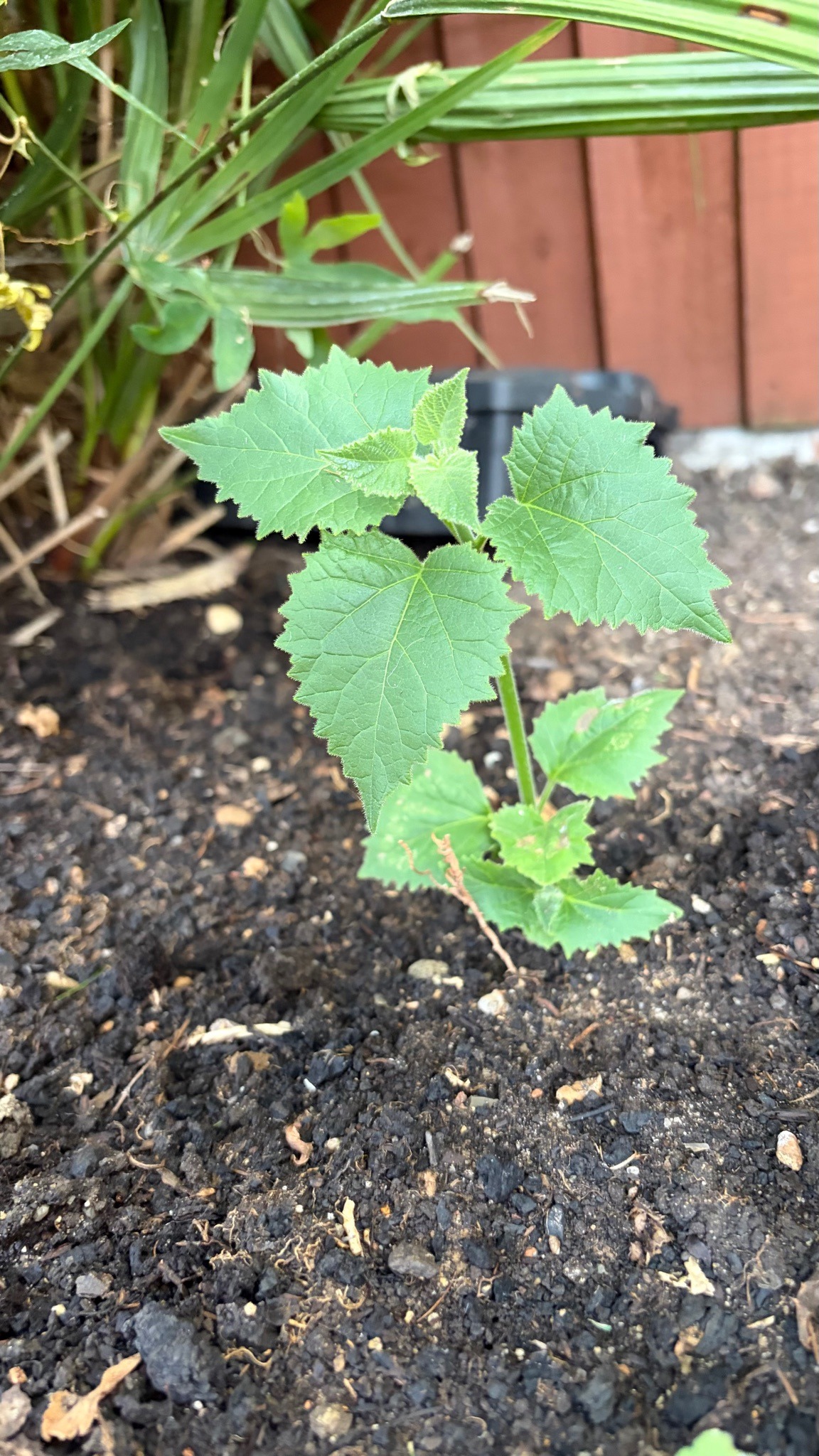
Common Nettle (Seedling)
Urtica dioica
A herbaceous perennial seedling featuring distinctive opposite, heart-shaped to ovate leaves with coarsely serrated margins and visible venation.
- Light
- Full sun to partial shade, approximately 4 to 6 hours of direct sunlight daily
- Water
- Requires moderate and consistent moisture. Prefers evenly moist soil and benefits from regular watering during prolonged dry periods.
- Growth
- Herbaceous perennial growing from a creeping rhizome system, reaching mature heights of 2 to 4 feet with an upright habit and rapid spread.
Care instructions
Provide full sun to partial shade with consistently moist, nutrient-rich soil. Water regularly during dry spells and apply a balanced organic fertilizer in spring.
Growing details
Sunlight
Full sun to partial shade, approximately 4 to 6 hours of direct sunlight daily
Watering
Requires moderate and consistent moisture. Prefers evenly moist soil and benefits from regular watering during prolonged dry periods.
Soil
Thrives in rich, loamy, well-draining soils with a neutral to slightly alkaline pH range between 6.0 and 7.0.
Hardiness zone
USDA zones 3 through 9
Growth habit
Herbaceous perennial growing from a creeping rhizome system, reaching mature heights of 2 to 4 feet with an upright habit and rapid spread.
Bloom season
Flowers from mid-summer to early autumn, producing small, inconspicuous greenish-white catkin-like clusters.
Propagation
Propagates easily through seeds, root division, or stem cuttings during the active growing season.
Common pests & issues
Generally robust and resilient, occasionally susceptible to aphids, spider mites, or leaf spot in overly damp conditions.
Similar species
Lamium album (white dead-nettle), which can be distinguished by square stems and different flower structures.