
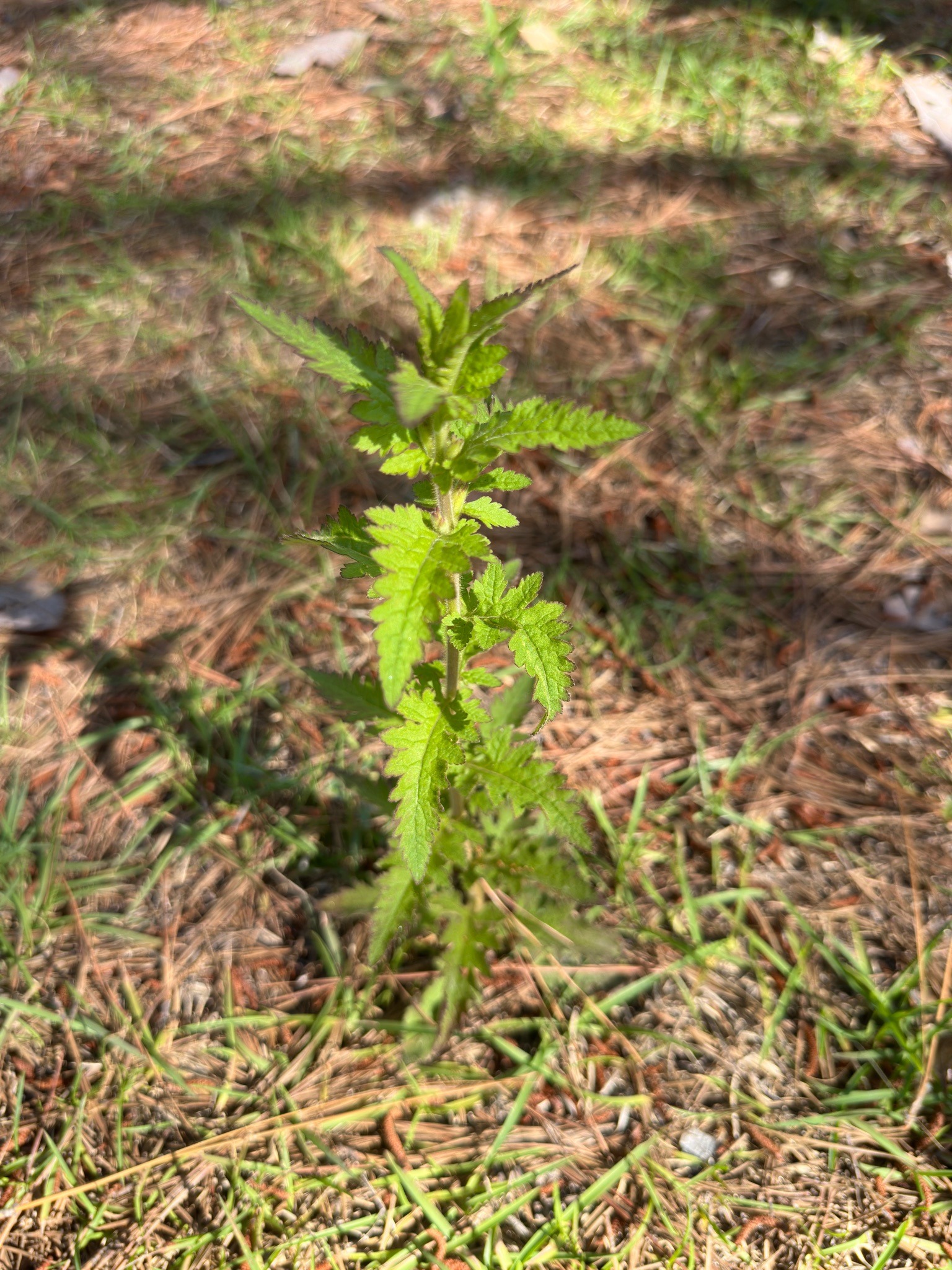
Common Ragweed
Ambrosia artemisiifolia
An annual weed known for its deeply lobed, fern-like leaves and inconspicuous green flower spikes. It has a branched, hairy stem and causes significant seasonal allergies.
- Light
- Full sun, requiring at least 6 to 8 hours of direct light daily.
- Water
- Low to moderate; highly drought-tolerant once established but grows more vigorously with regular moisture.
- Growth
- Summer annual herb; upright growth reaching 1 to 5 feet in height; fast growth rate.
Care instructions
Generally considered a weed, it requires no care. It thrives in disturbed soils, needs full sun, and is highly drought-tolerant. Control involves pulling before it sets seed.
Growing details
Sunlight
Full sun, requiring at least 6 to 8 hours of direct light daily.
Watering
Low to moderate; highly drought-tolerant once established but grows more vigorously with regular moisture.
Soil
Adaptable to most soil types including sandy, loamy, and clay; prefers slightly acidic to neutral pH (6.0-7.0).
Hardiness zone
3-11 (Annual)
Growth habit
Summer annual herb; upright growth reaching 1 to 5 feet in height; fast growth rate.
Bloom season
Late summer to autumn (August-October); produces small, yellow-green inconspicuous flowers on terminal spikes.
Propagation
Mainly by seed; a single plant can produce up to 60,000 seeds that remain viable in the soil for decades.
Common pests & issues
Susceptible to ragweed leaf beetles (Zygogramma suturalis) and various rust fungi, which are sometimes used for biological control.
Similar species
Mugwort (Artemisia vulgaris) which has silver undersides on leaves, and Marigolds (Tagetes) which have distinct floral scents and showy flowers.