
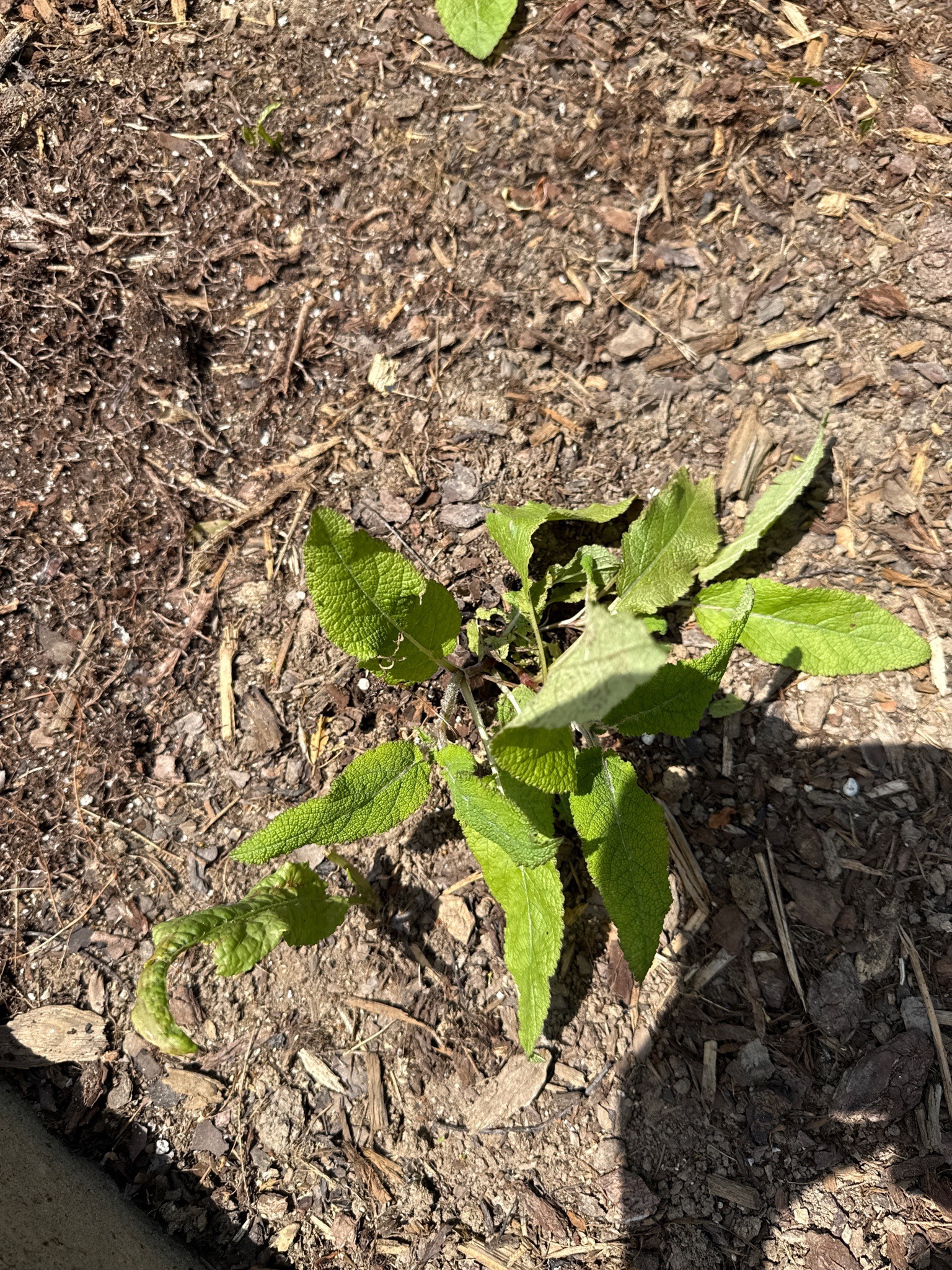
Common Sage
Salvia officinalis
An evergreen perennial subshrub with woody stems, grayish-green leaves, and a strongly aromatic fragrance. The leaves are oblong and have a pebbly or rugose texture.
- Light
- Full sun, at least 6 to 8 hours per day.
- Water
- Low to moderate. Allow the soil to dry out completely between waterings. Highly susceptible to root rot if overwatered or kept in soggy soil.
- Growth
- Perennial subshrub; grows 12 to 30 inches tall and wide in a bushy, mounding form.
Care instructions
Requires full sun and very well-draining soil. It is drought-tolerant once established and prefers a somewhat lean soil over highly fertile ones. Prune in early spring to encourage new growth and prevent the plant from becoming too woody.
Growing details
Sunlight
Full sun, at least 6 to 8 hours per day.
Watering
Low to moderate. Allow the soil to dry out completely between waterings. Highly susceptible to root rot if overwatered or kept in soggy soil.
Soil
Sandy or loamy, well-draining soil with a neutral to slightly alkaline pH (6.5 to 7.0).
Hardiness zone
4 to 8 (some varieties up to 10)
Growth habit
Perennial subshrub; grows 12 to 30 inches tall and wide in a bushy, mounding form.
Bloom season
Late spring to early summer; produces spikes of lavender, blue, or purple two-lipped flowers.
Propagation
Best propagated by softwood cuttings in spring or summer, or by layering. It can be grown from seed, but germination can be slow and inconsistent.
Common pests & issues
Powdery mildew, root rot (due to poor drainage), aphids, and whiteflies. Proper air circulation and avoiding overhead watering help prevent fungal issues.
Similar species
Garden Sage (Salvia officinalis cultivars like 'Berggarten'), Greek Sage (Salvia fruticosa), and Lavender (Lavandula species), which can have similar leaf colors but different shapes and scents.