
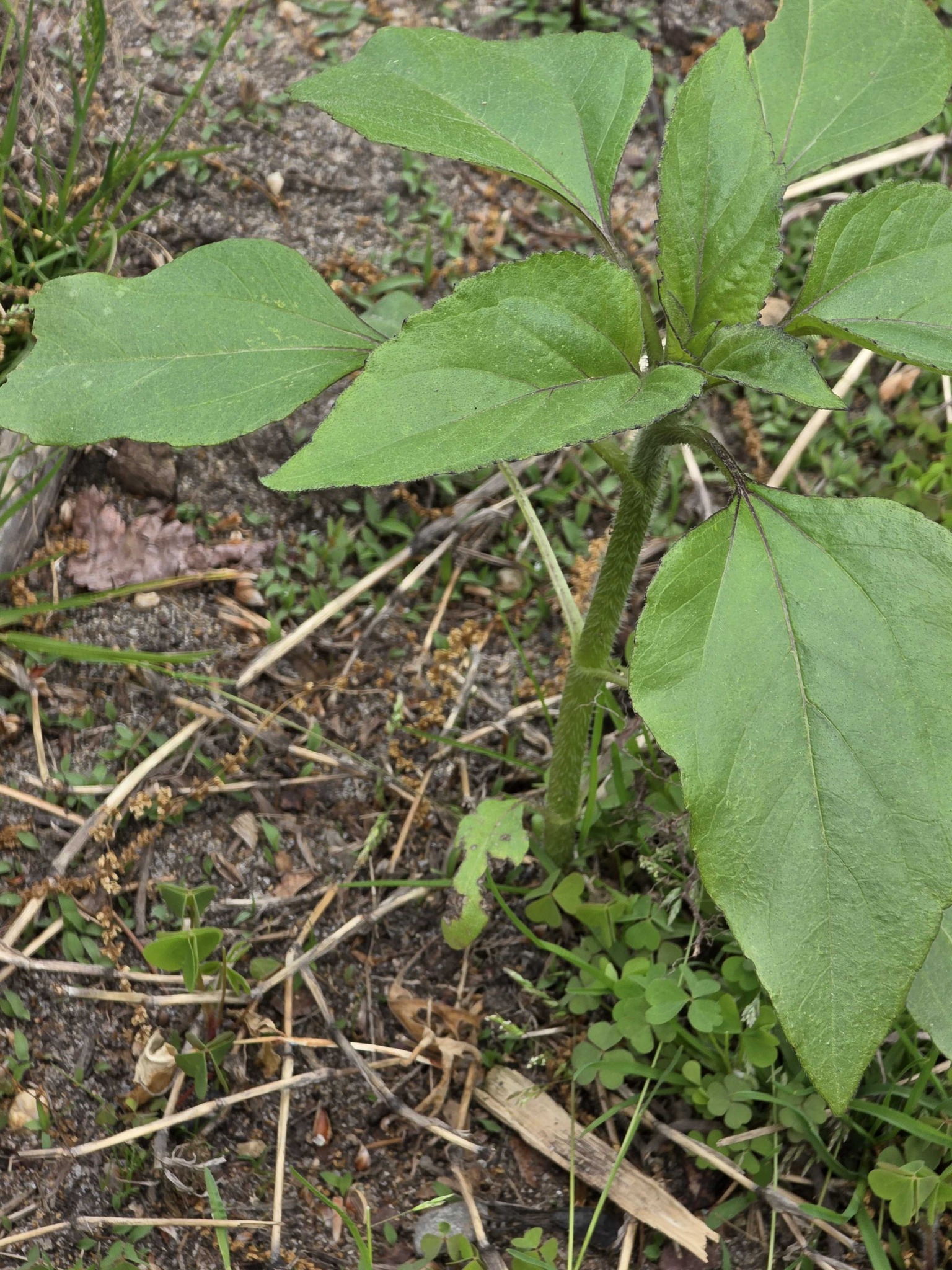
Common Sunflower
Helianthus annuus
A fast-growing annual with a thick, hairy, upright stem and large, heart-shaped, rough-textured leaves with serrated edges. It eventually produces large yellow composite flowers.
- Light
- Full sun, at least 6-8 hours of direct light per day for optimal growth and flowering.
- Water
- Needs regular watering to keep the soil moist but not soggy. Drought tolerant once established, but wilts quickly without water during peak heat.
- Growth
- Tall, upright annual herb reaching 3-10 feet or more depending on variety; fast growth rate.
Care instructions
Provide full sun and a high-nitrogen fertilizer during early growth. Water deeply and regularly, especially in hot weather, but ensure the soil is well-draining. Support tall varieties with stakes to prevent wind damage.
Growing details
Sunlight
Full sun, at least 6-8 hours of direct light per day for optimal growth and flowering.
Watering
Needs regular watering to keep the soil moist but not soggy. Drought tolerant once established, but wilts quickly without water during peak heat.
Soil
Tolerates most soil types but prefers well-draining, fertile soil with a neutral pH (6.0 to 7.5).
Hardiness zone
USDA zones 2-11 (annual)
Growth habit
Tall, upright annual herb reaching 3-10 feet or more depending on variety; fast growth rate.
Bloom season
Mid-summer to early autumn; produces large yellow rays with dark central discs.
Propagation
Propagated by seeds sown directly in the garden after the last frost. High germination rate in warm soil.
Common pests & issues
Prone to sunflower rust, powdery mildew, and aphids. Squirrels and birds often eat the developing seeds.
Similar species
Jerusalem Artichoke (Helianthus tuberosus) which has edible tubers; Wild Sunflower (Helianthus petiolaris) which has smaller leaves and flowers.