
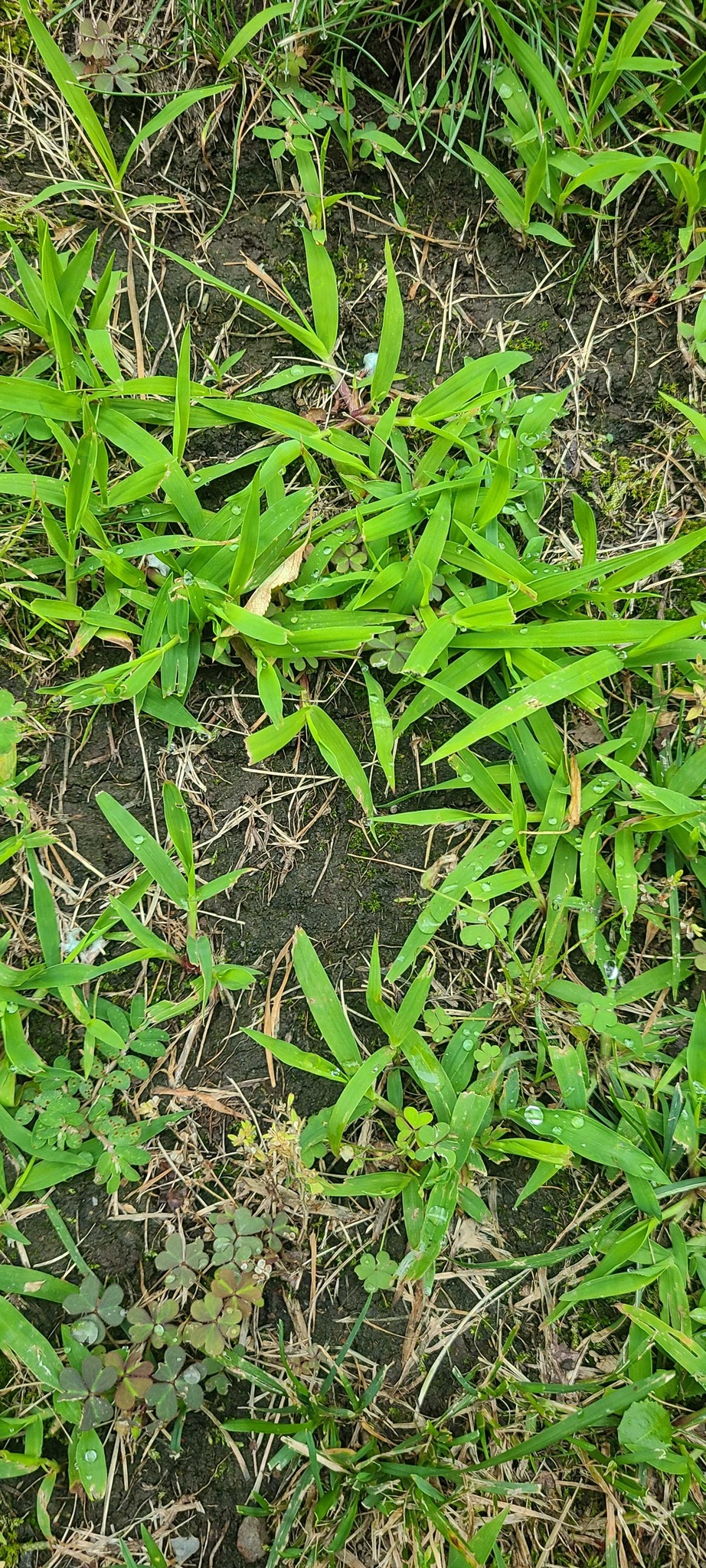
Crabgrass
Digitaria sanguinalis
A low-growing, spreading annual grass characterized by wide, light green leaf blades and stems that sprawl outward from a central root, resembling a crab. It often has a reddish tint at the base of the stems.
- Light
- Full sun (6+ hours per day); it is highly shade-intolerant and will not thrive under dense tree canopies.
- Water
- Highly adaptable; thrives in moist conditions but is very drought-tolerant once established. It often stays green when turf grasses go dormant during hot, dry spells.
- Growth
- Summer annual; prostrate/decumbent growth form. Can reach 1-2 feet in height if not mowed, but typically spreads horizontally via rooting at nodes (stolons).
Care instructions
As a common weed, it requires no care to thrive. It flourishes in full sun and disturbed soil with regular watering. In a lawn context, it is usually managed via pre-emergent herbicides in early spring.
Growing details
Sunlight
Full sun (6+ hours per day); it is highly shade-intolerant and will not thrive under dense tree canopies.
Watering
Highly adaptable; thrives in moist conditions but is very drought-tolerant once established. It often stays green when turf grasses go dormant during hot, dry spells.
Soil
Well-drained to compacted soils; adapts to a wide pH range (5.5 to 7.5). It particularly likes bare, disturbed soil or thin lawns.
Hardiness zone
Generally grown as a summer annual in USDA zones 2-11; dies back at the first hard frost.
Growth habit
Summer annual; prostrate/decumbent growth form. Can reach 1-2 feet in height if not mowed, but typically spreads horizontally via rooting at nodes (stolons).
Bloom season
Mid-summer to early autumn; produces finger-like spikes (racemes) containing hundreds of tiny seeds.
Propagation
Primarily by seeds; a single plant can produce up to 150,000 seeds. Can also spread vegetatively by rooting at the nodes of its stems.
Common pests & issues
Susceptible to various fungal leaf spots, but its main 'issue' is being an invasive nuisance in manicured turf and flower beds.
Similar species
Goosegrass (Eleusine indica) which has a tougher, flatter white center; Quackgrass which has auricles (small appendages) at the leaf base.