
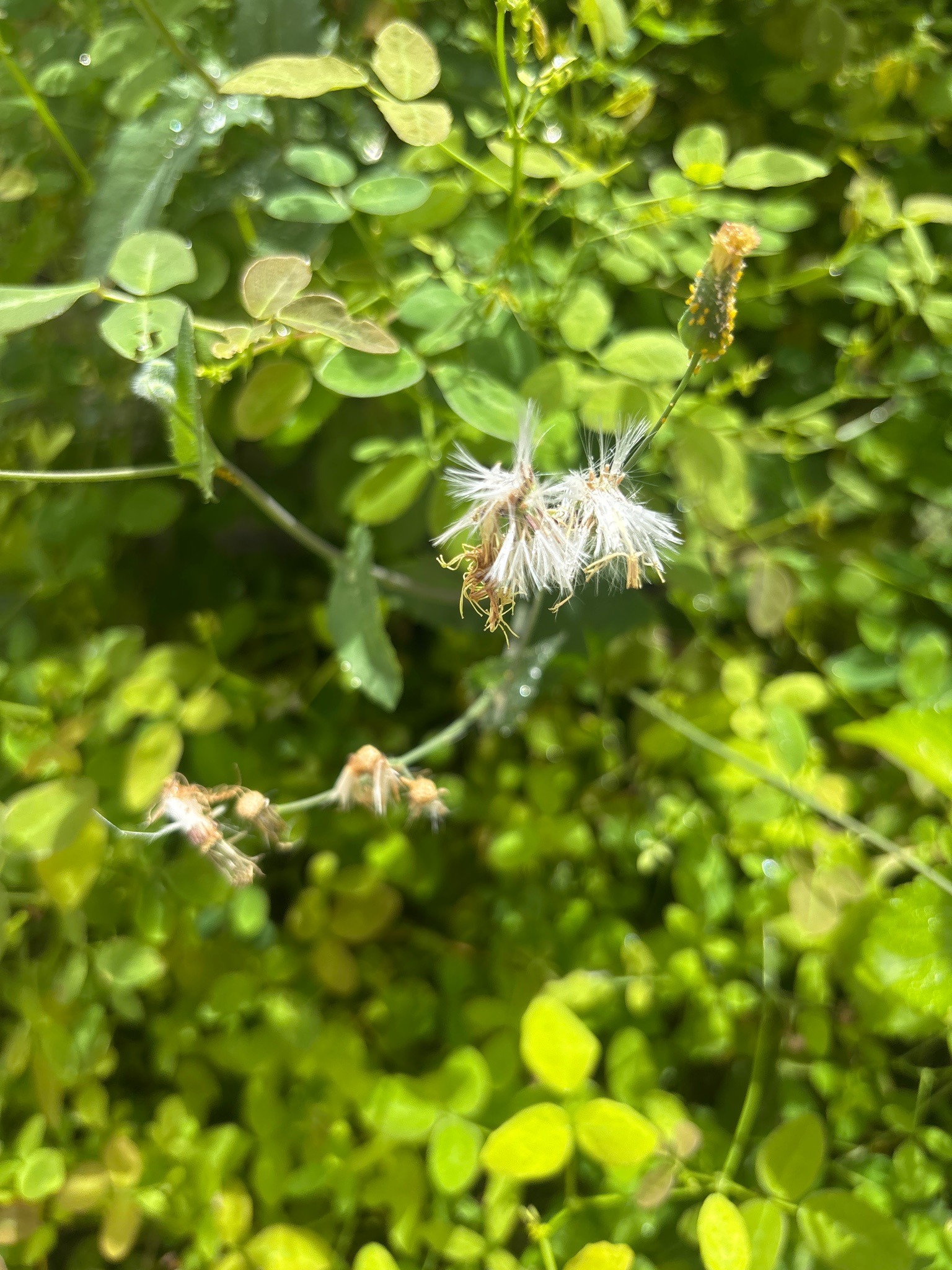
Cupid's Shaving Brush
Emilia sonchifolia
An annual herb characterized by its slender, often branched stems, smooth or slightly hairy leaves, and small, pinkish to purplish flower heads followed by white, silky seed puffs.
- Light
- Full sun to partial shade; ideally 4-6 hours of direct light per day.
- Water
- Moderate; prefers moist soil but can tolerate dry periods once established. Avoid waterlogged conditions.
- Growth
- Annual herb; grows upright or slightly sprawling, typically reaching 20-60 cm in height with a spread of 15-30 cm.
Care instructions
Requires minimal care as it is often considered a weed. Provide full sun to partial shade in well-draining soil and water regularly until established.
Growing details
Sunlight
Full sun to partial shade; ideally 4-6 hours of direct light per day.
Watering
Moderate; prefers moist soil but can tolerate dry periods once established. Avoid waterlogged conditions.
Soil
Adaptable to various soil types, including sandy, loamy, and clay soils, provided there is decent drainage. Prefers neutral to slightly acidic pH.
Hardiness zone
USDA zones 9-11; primarily thrives in tropical and subtropical climates.
Growth habit
Annual herb; grows upright or slightly sprawling, typically reaching 20-60 cm in height with a spread of 15-30 cm.
Bloom season
Year-round in tropical climates; produces small, tubular, pink to purple flower heads without ray florets, appearing in loose clusters.
Propagation
Primarily via seeds, which are easily dispersed by wind due to their white, silky pappus.
Common pests & issues
Generally resilient but can be affected by powdery mildew in humid environments or common garden pests like aphids.
Similar species
Emilia fosbergii (Tassel flower), which typically has larger, brighter red flower heads compared to the smaller, lilac-pink heads of E. sonchifolia.