
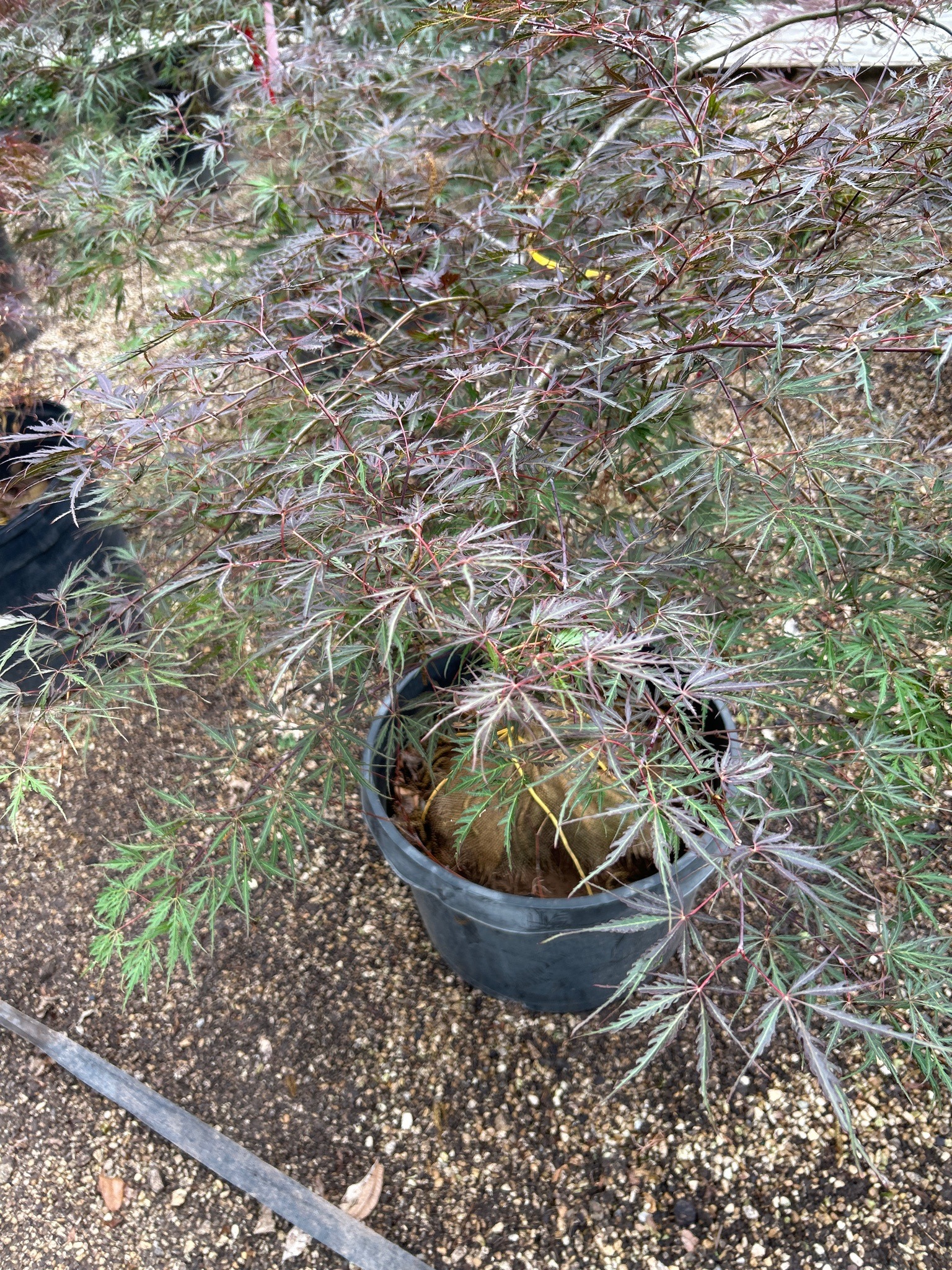
Cutleaf Japanese Maple
Acer palmatum var. dissectum
A small deciduous tree or shrub known for its delicate, lacy, deeply lobed leaves and a weeping or cascading growth habit. Leaf colors range from bright green to deep burgundy.
- Light
- Partial shade is best, especially in hot climates to prevent leaf scorch. Needs 4-6 hours of sun; afternoon shade is preferred.
- Water
- Requires regular watering to keep the soil consistently moist but not waterlogged. Mulching helps retain moisture. Signs of underwatering include crispy leaf edges.
- Growth
- Deciduous perennial with a slow growth rate and mounding, weeping form. Reaches 6-10 feet in height and spread at maturity.
Care instructions
Plant in a sheltered spot with partial shade and well-draining, acidic soil. Maintain consistent moisture and apply a balanced slow-release fertilizer in early spring.
Growing details
Sunlight
Partial shade is best, especially in hot climates to prevent leaf scorch. Needs 4-6 hours of sun; afternoon shade is preferred.
Watering
Requires regular watering to keep the soil consistently moist but not waterlogged. Mulching helps retain moisture. Signs of underwatering include crispy leaf edges.
Soil
Rich, moist, well-drained, acidic to neutral soil (pH 5.5 to 7.0).
Hardiness zone
5 to 8 (USDA)
Growth habit
Deciduous perennial with a slow growth rate and mounding, weeping form. Reaches 6-10 feet in height and spread at maturity.
Bloom season
Spring; flowers are small, reddish-purple, and inconspicuous, followed by winged seeds called samaras.
Propagation
Softwood cuttings in summer, grafting in winter, or seeds (though seeds may not come true to the parent variety).
Common pests & issues
Aphids, scale, and Japanese beetles. Diseases include verticillium wilt and leaf spot. Prone to leaf scorch in windy or high-sun sites.
Similar species
Acer japonicum (Fullmoon Maple) has larger leaves; other Acer palmatum cultivars like 'Bloodgood' have broader, non-laciniate leaves.