
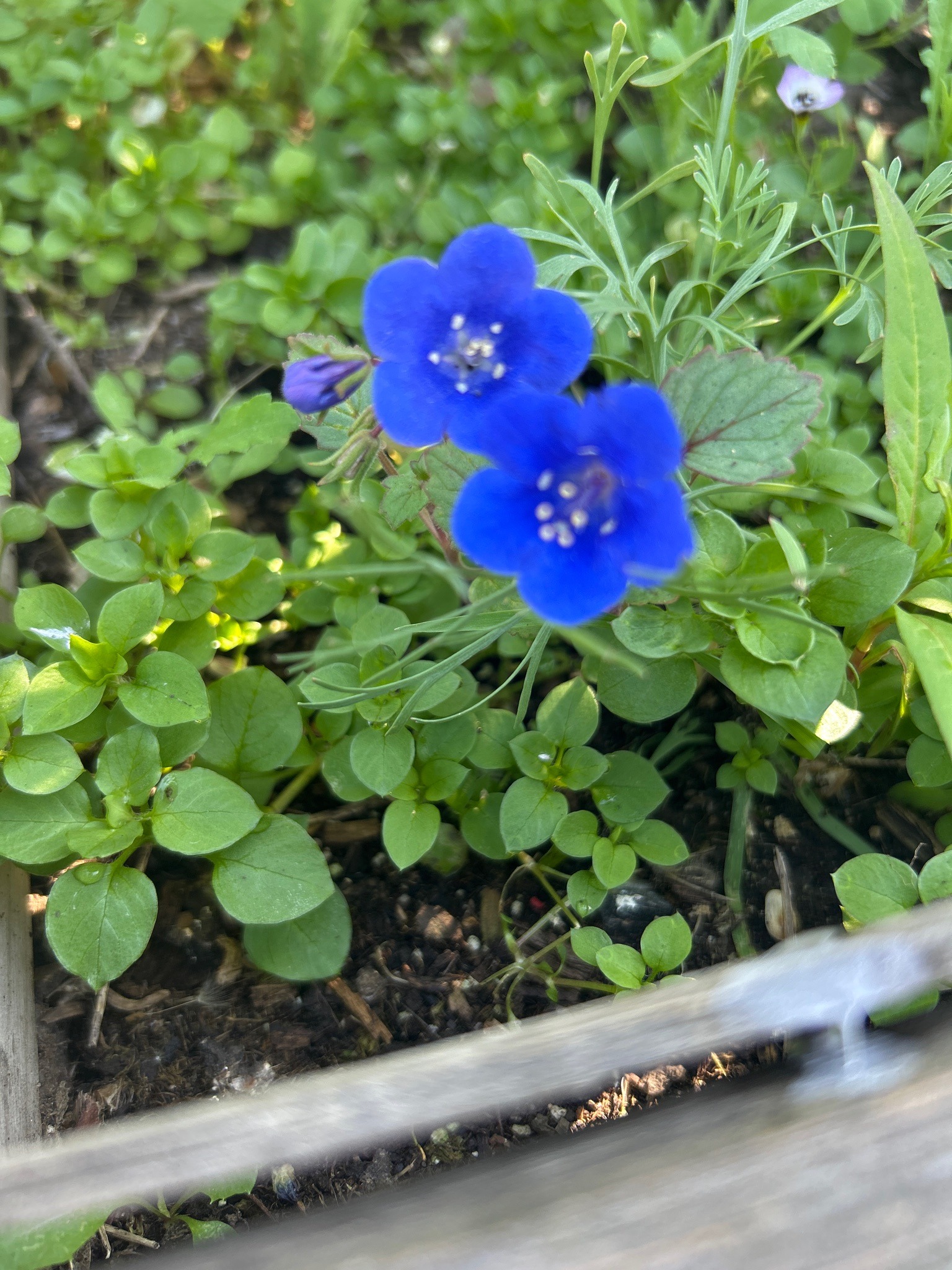
Desert Bluebells
Phacelia campanularia
A low-growing desert annual known for its striking, deep cobalt-blue bell-shaped flowers and dark green, crinkled, rounded leaves.
- Light
- Full sun, 6 to 8+ hours per day
- Water
- Low; water minimally once established. Over-watering can lead to root rot. Well-suited for xeriscaping.
- Growth
- Annual herb; grows 6 to 24 inches tall and wide; moderate to fast growth rate.
Care instructions
Provide full sun and sandy, well-draining soil. Water sparingly as it is extremely drought-tolerant. Avoid heavy fertilizers which can lead to excessive foliage at the expense of blooms.
Growing details
Sunlight
Full sun, 6 to 8+ hours per day
Watering
Low; water minimally once established. Over-watering can lead to root rot. Well-suited for xeriscaping.
Soil
Sandy, rocky, or gravelly soil with excellent drainage; pH 6.0 to 8.0.
Hardiness zone
7 to 11 (as an annual)
Growth habit
Annual herb; grows 6 to 24 inches tall and wide; moderate to fast growth rate.
Bloom season
Late winter to late spring; flowers are deep blue, bell-shaped, about 1 inch long with protruding white stamens.
Propagation
Easily propagated by seed sown in autumn or early spring; seeds require dark and cool temperatures to germinate.
Common pests & issues
Susceptible to aphids and root rot if soil is too wet; may cause skin irritation in some individuals upon contact with the foliage.
Similar species
Phacelia viscida (Tacky Phacelia) has flat-faced flowers rather than bell-shaped ones; Phacelia parryi has more open, saucer-shaped flowers.